

Key takeaways
- A worship guitar is judged by how it behaves in a mix: low stage noise, easy feedback control, quick tuning and a pickup you can plug straight into a DI or the board.
- For acoustics, a cutaway body with an onboard tuner and EQ is the practical default; a thin-body model reduces feedback and weight.
- For electrics, plan for two voices on a team: a bright single-coil rhythm tone and a warmer humbucker or semi-hollow tone for pads and leads.
- Where a guitar is built matters less than whether it holds tune through a set with capo changes; check the nut, tuners and battery access.
The best guitars for worship teams are a plug-in-ready acoustic that stays quiet on a crowded stage and a clean-leaning electric that leaves room for the rest of the band. For acoustics that means a cutaway acoustic-electric like the Taylor 214ce, Yamaha A-Series or Martin Road Series; for electrics, a Telecaster-style single-coil guitar, a semi-hollow humbucker guitar or a versatile PRS SE. Church stages punish loud, feedback-prone and fussy gear, so the shortlist below focuses on reliability, tuning stability and tone that sits well with keys, bass and vocals.
Our top picks


As an Amazon Associate we earn from qualifying purchases at no extra cost to you.
Key takeaways
- A worship guitar is judged by how it behaves in a mix: low stage noise, easy feedback control, quick tuning and a pickup you can plug straight into a DI or the board.
- For acoustics, a cutaway body with an onboard tuner and EQ is the practical default; a thin-body model reduces feedback and weight.
- For electrics, plan for two voices on a team: a bright single-coil rhythm tone and a warmer humbucker or semi-hollow tone for pads and leads.
- Where a guitar is built matters less than whether it holds tune through a set with capo changes; check the nut, tuners and battery access.
Quick comparison: best guitars for worship by role
| Guitar | Role | Body | Stage strength | Tier |
|---|---|---|---|---|
| Taylor 214ce | Main acoustic | Grand Auditorium cutaway | Balanced tone, onboard electronics | Upper-mid |
| Yamaha A1M | Main acoustic | Cutaway, A Series | Solid top plus pickup system | Mid |
| Martin 000-10E Retro | Small-body acoustic | 000 body, satin finish | Quieter, sits well with vocals | Upper-mid |
| Yamaha APX600 | Budget stage acoustic | Thin body cutaway | Feedback-resistant, light | Entry to mid |
| Fender Player II Telecaster | Bright rhythm electric | Solid body | Cuts through without volume | Mid |
| Ibanez Artcore AS73G | Warm pads and leads | Semi-hollow | Smooth sustain, controlled feedback | Mid |
| PRS SE CE24 Standard Satin | All-round electric | Solid body, 24 frets | Versatile tones, stable tuning | Mid |
1. Taylor 214ce: Best main acoustic for worship teams
- Grand Auditorium body with a cutaway · solid Sitka spruce top
- Layered rosewood back and sides on the 200 Series · Taylor Expression System electronics
- About 25.5 inch scale · built in Tecate, Mexico, per Taylor’s own statement of where the 200 Series is made
- Natural finish on the listing, with Plus and K variants also listed
Best for: a team’s primary acoustic that has to sound good both through a PA and in a small room. Skip if: you only need a backup guitar for occasional use.
Pros: balanced, clear tone; well-regarded onboard electronics; comfortable body for long services.
Cons: upper-mid tier; layered back and sides rather than solid.
2. Yamaha A1M: Best solid-top acoustic for a mid-tier budget
- Cutaway body from Yamaha’s A Series, Vintage Natural on the listing
- Solid spruce top and mahogany back and sides, according to Yamaha’s A Series description
- Onboard pickup system with preamp and tone controls
Best for: teams who want a real solid-top acoustic with plug-in capability at a mid tier. Skip if: you want a spruce-and-rosewood brightness.
Pros: solid top at a mid tier; stage-ready pickup; a warm, controlled voice that sits under vocals.
Cons: mahogany-body voicing is less sparkly; check the exact listing for electronics.
3. Martin 000-10E Retro: Best small-body acoustic for quiet stages
- 000 body in the Road Series with a spruce top and sapele back and sides, per the listing
- Satin finish and E1 electronics
- A comfortable body size that sits close to the singer’s microphone without overpowering it
Best for: small rooms, acoustic-led worship sets and vocalists who also play. Skip if: you need dreadnought volume for large sanctuaries.
Pros: manageable volume; satin finish feels natural; includes stage-ready electronics.
Cons: upper-mid tier; smaller body gives less low-end thump.
4. Yamaha APX600: Best budget stage acoustic
- Thin-body acoustic-electric with a cutaway (Black, Natural, Oriental Blue Burst and Matte finishes on the listings)
- Slim body depth that resists feedback and reduces weight
- Onboard preamp and pickup
Best for: beginner worship players, youth teams and church loaners that get used by many hands. Skip if: you want a big, boomy unplugged sound.
Pros: feedback-resistant; light; affordable; durable enough for shared use.
Cons: thinner unplugged tone; not for fingerstyle purists.
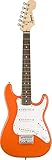
5. Fender Player II Telecaster: Best bright rhythm electric
- Telecaster body with single-coil pickups and a three-way selector
- 25.5 inch scale · Mexico-built Player II range · Polar White with rosewood and 3-color Sunburst with maple are among the finishes
- Simple controls: volume, tone and switch
Best for: chiming clean rhythm, ambient swells with delay and bright leads that cut through. Skip if: your stage has electrical noise that causes hum; single coils pick up interference.
Pros: tuning-stable fixed bridge; sparkle that sits above acoustic guitars; very easy to operate.
Cons: thin when played alone; hum near lights and dimmers.
6. Ibanez Artcore AS73G: Best semi-hollow for warm pads and leads
- Maple semi-hollow body with a rosewood fingerboard and dual humbuckers, per the listing
- Classic Elite pickups (Black Flat and Moonstone Silver Flat finishes listed)
- Semi-hollow construction that reduces feedback compared with a fully hollow guitar
Best for: warm swells, melodic lead lines and players who want a thicker tone than a Telecaster. Skip if: you play very loud; a semi-hollow can still feed back at high volume.
Pros: warm and smooth; good with delay and reverb; sits comfortably under vocals.
Cons: larger body than a solid; not for heavy gain.
7. PRS SE CE24 Standard Satin: Best all-round electric
- Solid body with 24 frets and a bolt-on neck; satin finish with a gig bag, per the listings
- Two humbucking pickups with versatile switching; check the listing for details
- Charcoal and Ice Blue Metallic finishes on listings
Best for: the one electric that has to cover clean, crunch and lead roles on a small team. Skip if: you prefer a vintage-style guitar.
Pros: versatile tones; stable tuning; built to be played often.
Cons: modern look; not every church needs this versatility.
Also consider
- Takamine GD51CE: a solid-spruce-top stage acoustic with onboard tuner and EQ.
- Epiphone J-45 Studio EC: an acoustic-electric in the Gibson J-45 tradition, with a cutaway and a gig bag on the listing.
- Fender Player II Stratocaster: a three-single-coil alternative to the Telecaster for glassy shimmer.
- Epiphone ES-339: a compact semi-hollow for humbucker warmth in a smaller body.
Building a worship team’s guitar lineup
| Role | What it does | Guitar type | Example |
|---|---|---|---|
| Acoustic rhythm | Anchors the groove and fills the midrange | Cutaway dreadnought or 000 | Taylor 214ce, Martin 000-10E |
| Electric rhythm | Adds sparkle and rhythmic drive | Single-coil, bright | Fender Player II Telecaster |
| Ambient or pad | Holds long, delay-washed swells | Semi-hollow or humbucker | Ibanez AS73G |
| Lead | Plays melodic hooks and solos | Versatile electric | PRS SE CE24 |
| Backup or youth guitar | Shared, durable and forgiving | Thin-body acoustic-electric | Yamaha APX600 |
The point of this table is separation. If both electric guitarists play a bright single-coil guitar through the same overdrive, they compete for the same space. Give each player a distinct tone, and the band sounds bigger without getting louder.
Stage realities: feedback, DI and in-ear monitors
- Use a DI or the direct output. Plugging an acoustic-electric into a DI box gives the sound engineer a balanced signal and reduces noise over long cable runs.
- Find the feedback frequency during soundcheck. Raise the guitar until it rings, then cut that frequency on the guitar’s EQ or on the board. Notch filters and phase switches, where fitted, help.
- Keep a soundhole cover in the gig bag. A rubber or foam cover stops the top from ringing when the guitar is idle on stage.
- Mark your settings. A dab of tape or a note on the case with your preamp settings saves time before the service.
- Pack a spare battery. Onboard preamps run on batteries. Change them on a schedule, not mid-song.
- Use a tuner pedal or the onboard tuner. Muting while you tune is courteous and avoids distraction.
Best acoustic guitars for worship: what to check
An acoustic for worship is judged by its pickup and body as much as its unplugged sound. A cutaway helps with upper-fret solos and bridge chords. An onboard tuner keeps you in tune between songs. A body that is not too deep reduces feedback. Spruce tops add clarity that cuts through a mix; mahogany tops sit more quietly under vocals. Make sure the battery is easy to reach and that the output jack is solid, because both get heavy use on Sunday mornings.
Best electric guitars for worship: what to check
For electrics, pickups and stability matter most. Single coils sparkle and cut; humbuckers are warmer and quieter. A fixed bridge or a well-set hardtail keeps tuning steady through a set. A switch or knob layout you can operate in the dark helps during low-light services. Finally, weight matters: a heavy guitar on a thin strap is tiring during a long set.
Best guitars for church: small rooms, large sanctuaries and shared use
A small chapel and a large sanctuary need different instruments. In a small room, a smaller-bodied acoustic, a single electric and a quiet amp are enough; the room itself carries the sound. In a large sanctuary, a cutaway acoustic-electric with a good pickup and a DI feeding the PA is the standard approach. If a guitar is shared by multiple players, durability and ease of use outrank tone. A thin-body instrument, a satin finish and a clearly labeled output jack reduce wear and confusion. Keep a set of spare strings, a capo and a tuner in the same case so that anyone picking up the guitar can start playing.
Ownership realities: what wears first on a church guitar
Church guitars get played often and by many hands. Frets wear in the first-position area where open chords are played. Output jacks wear from repeated plug-ins, so use a locking or right-angle plug. Preamp batteries die at inconvenient times, so schedule replacements. Maker guidance for solid-wood acoustics, such as from Martin and Taylor, recommends about 40 to 50 percent relative humidity, which is easy to lose in a heated sanctuary in winter; a case humidifier helps. Finally, keep guitars in cases between services; stands are convenient but expose the instrument to knocks and temperature swings.
Pick by situation: a decision matrix for worship guitarists
| Your situation | Start with | Why | Watch out for |
|---|---|---|---|
| Solo worship leader with one guitar | Taylor 214ce | Balanced acoustic with onboard electronics | Upper-mid tier; mind the humidity |
| Small room, vocal-led set | Martin 000-10E | Quiet, close body | Less bass thump |
| Youth group or shared church guitar | Yamaha APX600 | Durable, light, feedback-resistant | Thin unplugged sound |
| Band with keys and bass | Fender Player II Telecaster plus a semi-hollow | Two distinct electric voices | Single-coil hum |
| One electric for everything | PRS SE CE24 | Versatile and stable | Modern look |
| Budget-conscious solid top | Yamaha A1M | Solid top with a pickup system | Mahogany voicing is warm, not bright |
Signal chain for worship electrics: a simple pedal order
Worship electric tones rely heavily on ambience. This simple chain covers most needs and comes from common stage practice, not from our own rig.
- Tuner first. A tuner at the start of the chain lets you mute and tune quickly between songs.
- Light overdrive or boost. A transparent drive adds grit for choruses and a boost lifts leads without changing tone.
- Delay. A dotted-eighth or quarter-note delay is a staple of ambient worship playing. Keep the repeats blended low so they support the band instead of crowding it.
- Reverb. A hall or plate reverb adds space. Use less reverb in a naturally echoing sanctuary.
- Volume pedal, optional. Volume swells create pad-like textures without a keyboard.
- A quiet, clean amp or direct box. Many churches prefer a modeler or amp simulator into the board with in-ear monitors, which keeps stage volume low.
Capo and tuning workflow for a Sunday set
Worship sets move across keys quickly, and capos are part of that. A smooth workflow prevents dead air:
- Tune to pitch before service, not at the first note. Warm up the guitar so the strings settle.
- Use a quality capo and place it just behind the fret. A capo placed too far from the fret or clamped too hard raises pitch.
- Retune after placing the capo. Even good capos shift tuning slightly; check the open strings.
- Pencil capo positions on your chart. Knowing the capo fret in advance prevents mistakes in a live set.
- Replace strings before important services. New strings stretch, so change them a day or two earlier and retune.
Pickup or microphone: which is better for a worship acoustic?
| Option | Strengths | Weaknesses | Good for |
|---|---|---|---|
| Under-saddle pickup or onboard system | Consistent level, less feedback, easy setup | Can sound slightly quacky or compressed | Most churches and teams |
| Microphone | Natural, woody tone | Feedback risk, movement sensitivity, needs setup | Quiet rooms and acoustic-only sets |
| Pickup plus microphone blend | Natural tone with stable level | More gear and setup time | Larger spaces with a sound team |
Most worship teams use a pickup because it saves time and works reliably in a mix. If your church has an experienced sound engineer, a small amount of microphone blended with the pickup can add realism.
Keeping stage volume low: silent stage and in-ear practice
Many modern churches use in-ear monitors and a quiet stage to improve the mix in the room. For guitarists, that changes gear choices. An amp simulator or modeler sent directly to the board avoids stage noise, and an acoustic-electric plugged into a DI never competes with the room. A guitar with low noise output, such as a humbucker model or a well-shielded single-coil, helps because there are fewer unwanted sounds in the in-ear mix. Make sure your guitar’s volume knob works smoothly, since you will use it to ride levels. Finally, talk with your sound engineer before service about preferred output levels and cable lengths so your signal arrives clean.
Acoustic strings, tuning and care for a busy church guitar
A worship acoustic is played hard and often, so string choice matters. Coated phosphor-bronze strings in a light gauge, typically .012 to .053, resist the corrosion that comes from sweaty hands and hold their brightness longer between changes. If your guitar tends to sound harsh through the PA, try an 80/20 bronze set for a slightly warmer feel, or reduce the treble on the preamp. Change strings on a schedule, such as monthly for weekly players, rather than waiting for a dead sound mid-service.
Wipe the strings and fingerboard after each use, and loosen the strings slightly if you plan to leave the guitar for several weeks. Keep a small kit in the case: spare strings, a string winder, a tuner, a capo, a spare battery and a soft cloth. This is basic maintenance advice rather than a claim about any one model, but it prevents the most common problems that interrupt a service.
Guitars for young players and new volunteers
Many churches rely on volunteers who are still learning. A forgiving, comfortable guitar encourages practice and improves confidence. Lower action, a slim neck and a lighter body, as found on thin-body models like the Yamaha APX600, reduce hand fatigue. A satin finish is easier to hold than a sticky gloss finish. Labeling the output jack and battery compartment with tape saves confusion. If several volunteers share a guitar, place a short setup sheet in the case with preferred preamp settings, capo advice and battery information. Small touches like these make a guitar easier for anyone to use well and extend its life.
How We Chose
We did not play or handle these guitars ourselves. The list comes from maker statements and listing details, published descriptions of how thin-body, cutaway and semi-hollow guitars behave on stage and general stage practice for feedback and DI use. Where specifications were unclear, such as the exact electronics on a listing, we say to confirm on the page. We chose at most two guitars per brand, included a budget option for shared use and focused on separating tones across a team.
Buying guide: how to choose among the best guitars for worship
Acoustic body shape
A dreadnought is loud and bass-rich; a Grand Auditorium is balanced; a 000 is smaller and quieter. For a vocalist who plays, smaller bodies are easier to blend. For a lead acoustic in a big sanctuary, choose a larger body with good electronics.
Top wood
Spruce is bright and clear. Cedar is warm and quick. Mahogany is dry and focused. For mixes with keys and bass, spruce usually sits best.
Electronics and controls
Prefer an onboard tuner, a clear EQ and, if possible, a phase switch or notch filter. Make sure the battery is easy to change.
Scale length and nut width
Most acoustics here sit near 25.5 inches with a nut around 1.6875 inches. Fender and PRS electrics use 25.5 inches and 25 inches respectively. A shorter scale, like a Gibson-style 24.75 inches, is looser and easier to bend.
Weight and strap comfort
For two-hour rehearsals plus a service, pick a guitar you can carry comfortably. A wide, padded strap is a small investment with a large payoff.
Capo and tuning stability
Worship sets use capos often. A guitar with reliable tuners and a well-cut nut stays in tune after a capo is moved. A fixed-bridge electric is more stable than one with a vibrato.
Left-handed note
Some models are offered in left-handed versions, but stock is limited.
Frequently Asked Questions
What are the best guitars for worship?
For acoustics, the Taylor 214ce, Yamaha A1M and Martin 000-10E. For electrics, a Telecaster, a semi-hollow and a versatile PRS SE.
What are the best acoustic guitars for worship?
Cutaway acoustic-electrics with an onboard tuner and EQ, such as the Taylor 214ce and Yamaha A1M, are the standard picks.
What are the best electric guitars for worship?
A single-coil Telecaster for bright rhythm, a semi-hollow like the Ibanez AS73G for warm pads and a PRS SE CE24 for versatility.
What are the best guitars for church on a small budget?
The Yamaha APX600 is a durable, feedback-resistant, entry-tier acoustic-electric that suits shared use.
How many guitars does a worship team need?
Many teams use one acoustic and one or two electrics with different tones. A single guitarist can cover a small service with one good acoustic-electric.
Do I need an acoustic-electric or can I use a microphone?
A pickup is more convenient and more resistant to feedback in a live mix. A microphone can sound natural but needs careful placement and a quieter stage.
How do I stop my acoustic from feeding back?
Use a soundhole cover, cut the problem frequency on the EQ or board, engage a phase switch or notch filter and choose a thin-body guitar if the problem is constant.
Which one should you buy?
Buy the Taylor 214ce for a main acoustic. Buy the Yamaha A1M for a mid-tier solid-top option. Buy the Martin 000-10E for a smaller, quieter guitar. Buy the Yamaha APX600 for shared or youth use. Buy the Fender Player II Telecaster for bright rhythm. Buy the Ibanez AS73G for warm pads. Buy the PRS SE CE24 for an all-round electric.
Sources
- Taylor Guitars product pages
- Yamaha acoustic and electric product pages
- Martin Guitar product pages
- Fender, Ibanez and PRS product pages
- Maker care guidance from Martin and Taylor
Last updated: October 2026.




Write Your Review
No reviews yet. Be the first to share your experience!