

Key takeaways
- Scale length is the headline spec: baritones run longer than the 24.75 to 25.5 inches of a regular guitar, and the extra length is what keeps B standard or A standard in tune and clear.
- Pick the tuning first (B standard, A standard or drop), then buy strings of the right gauge; baritone sets start much heavier than regular sets.
- Humbuckers suit heavy and metal tones; single coils and P-90 style pickups suit surf, indie and cinematic work.
- An acoustic baritone is a niche choice, but it is wonderful for low folk, singer-songwriter and cinematic parts.
The best baritone guitars are the ones with a long enough scale to keep low-tuned strings tight: the PRS SE 277 and Schecter Kenny Hickey Solo-6 EX S for heavy riffs, the Squier Classic Vibe Baritone Custom Telecaster and Squier Paranormal Baritone Jazzmaster HH for value and twang, the Danelectro Vintage Baritone for surf and cinematic textures, and the Alvarez ABT60E for acoustic players who want a deeper voice. A baritone guitar is a six-string with a longer scale length, built to be tuned a fourth or a fifth lower than a standard guitar without the strings going floppy.
Key takeaways
- Scale length is the headline spec: baritones run longer than the 24.75 to 25.5 inches of a regular guitar, and the extra length is what keeps B standard or A standard in tune and clear.
- Pick the tuning first (B standard, A standard or drop), then buy strings of the right gauge; baritone sets start much heavier than regular sets.
- Humbuckers suit heavy and metal tones; single coils and P-90 style pickups suit surf, indie and cinematic work.
- An acoustic baritone is a niche choice, but it is wonderful for low folk, singer-songwriter and cinematic parts.
Our top picks


As an Amazon Associate we earn from qualifying purchases at no extra cost to you.
How We Chose These Baritone Guitars
We did not play any of these guitars. The shortlist is based on maker information, dealer listings and published reviews, and it covers the main ways people use baritones: low-tuned riffing, twangy clean parts, surf and film textures, and acoustic accompaniment. We compared scale length where it was confirmed, body style, pickup type and typical budget tier. Where exact scale lengths were not confirmed in the sources available to us, we say so and recommend checking the maker page before you buy. We stayed to two models per brand and describe prices only in broad tiers.
Why Scale Length Is the Point of a Baritone
String tension depends on three things: pitch, string mass and vibrating length. If you tune a regular guitar down to B standard (a fourth below E standard) without changing anything else, the strings go slack, bends sound flabby, and notes buzz. You can fix that with heavier strings, but only up to a point, because a very thick string on a short scale sounds dull and feels stiff. A baritone solves the problem by lengthening the scale, which raises tension at any given pitch and lets you use strings that are heavy enough to sound clear but still feel playable.
The result is a guitar that keeps its definition at low pitch. Chords sound thick instead of muddy, single-note riffs retain their bite, and the guitar sits between a regular guitar and a bass in a mix. That is also why baritones can sound magical on clean parts: low, resonant arpeggios with a sense of weight.
Baritone Guitar Comparison Table
| Model | Type | Best for | Pickup character | Budget tier |
|---|---|---|---|---|
| PRS SE 277 Baritone | Electric, double-cut | Rock and metal riffs | Humbuckers | Under 1000, upper end |
| Squier Classic Vibe Baritone Custom Telecaster | Electric, single-cut | Twang to rock, great value | Tele style; confirm on maker page | Under 1000, lower-middle |
| Squier Paranormal Baritone Jazzmaster HH | Electric, offset | Indie, shoegaze, alt-rock | Dual humbuckers | Under 1000, lower end |
| Cort KX500 Baritone | Electric, solid body | Hard rock and modern metal | Confirm on maker page | Under 1000, upper end |
| Danelectro Vintage Baritone | Electric, retro | Surf, cinematic and country twang | Single-coil character; confirm on maker page | Under 1000, mid-range |
| Schecter Kenny Hickey Solo-6 EX S | Electric, heavy rock | Detuned heavy riffs | Confirm on maker page | Above 1000 |
| Alvarez ABT60E | Acoustic-electric | Low folk, singer-songwriter | Onboard pickup | Under 1000, lower-middle |
1. PRS SE 277 Baritone: Best for Heavy Riffing on a Real Scale
- Electric baritone, listed in Charcoal Burst
- The 277 in the name points to a long scale of roughly 27.7 inches; confirm on PRS’s page
- Double-cut body with humbuckers
- Upper end of the under-1000 band
Best for: players who tune to B standard or lower and want clear definition.
Skip if: you want a lightweight, small-bodied guitar.
Pros
- A long scale gives low tunings real tension.
- Humbuckers handle high gain well.
- A familiar, comfortable body style.
Cons
- Priced at the top of the budget band.
- Long scale takes a short adjustment period if you only play regular guitars.
The SE 277 is a purpose-built riff machine. Tune down, add gain, and play low power chords that stay articulate rather than sounding smeared.
2. Squier Classic Vibe Baritone Custom Telecaster: Best Value Baritone
- Baritone Telecaster-style, listed in black with laurel fingerboard
- Comes with a two-year warranty per the listing
- Lower-middle of the under-1000 band
- Check Squier’s page for scale length and pickup details
Best for: players who want a flexible, affordable baritone that handles clean twang as well as crunchy rock.
Skip if: you want an extended-range or active-pickup tone.
Pros
- One of the lowest-cost routes to a proper baritone.
- The familiar Telecaster shape makes the transition easy.
- Versatile across genres.
Cons
- Entry-level hardware.
- Stock strings may need replacing for your tuning.
It is the safe recommendation for anyone who is curious about baritones but does not want to commit a big budget.
3. Squier Paranormal Baritone Jazzmaster HH: Best for Indie and Alt-Rock Textures
- Baritone Jazzmaster-style offset, HH pickup configuration per the listing
- Listed in Sea Foam Green with a parchment pickguard and laurel fingerboard
- Lower end of the under-1000 band
- Confirm scale length on the maker page
Best for: players who like the offset look and want thick, moody low-end textures.
Skip if: you want a traditional shape or single-coil sparkle.
Pros
- Humbuckers add weight.
- Offset body is comfortable for sitting.
- Stylish finish.
Cons
- Offset bridges can be fussy with heavy strings.
- May need a setup for stable tuning.
It is a fun choice for atmospheric and alt-rock parts, where a bit of extra weight makes a chord progression feel larger.
4. Cort KX500 Baritone: Best Modern Hard Rock Baritone
- Solid-body baritone, listed in Natural Black Burst
- Modern hard rock design
- Upper end of the under-1000 band
- Check Cort’s page for scale length and hardware
Best for: players who want a modern, aggressive baritone for hard rock and metal.
Skip if: you prefer a vintage look.
Pros
- Built with heavy tunings in mind.
- A modern design with comfortable access to upper frets.
- Heavy-rock oriented design suits high gain.
Cons
- Less known than the PRS and Squier options.
- Details are brief in listings, so verify the specs.
The KX500 is a straightforward modern guitar aimed at players who tune low and play hard.
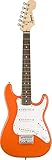
5. Danelectro Vintage Baritone: Best for Surf, Twang and Cinematic Sound
- Retro baritone electric, listed in Red Metallic
- Danelectro vintage-style design
- Mid-range of the under-1000 band
- Check Danelectro’s page for scale and pickups
Best for: surf, spaghetti-western, country and cinematic playing.
Skip if: you play high-gain metal.
Pros
- A distinct, twangy voice that sounds like nothing else on this list.
- Light and comfortable.
- Perfect for reverb-soaked parts.
Cons
- Not a metal machine.
- Unconventional construction may need a careful setup.
A baritone does not have to be heavy. The Danelectro proves that low pitch can be glassy and moody instead of crushing.
6. Schecter Kenny Hickey Solo-6 EX S: Best Baritone for Detuned Heavy Riffs
- Signature baritone electric, listed in Steele Green
- Schecter’s Solo-6 style body
- Above the under-1000 band
- Check Schecter’s page for scale and pickups
Best for: heavy rock and metal players who want a baritone with a serious build.
Skip if: you are budget-limited.
Pros
- A signature model designed for low, heavy playing.
- Upper-tier build and appointments.
- Stylish finish.
Cons
- Priced above most options.
- Signature models carry a premium.
It is the choice if you know you will be playing detuned riffs and want a guitar built for that job.
7. Alvarez ABT60E: Best Baritone Acoustic-Electric
- Artist Series baritone acoustic-electric
- Designed for lower tunings and deeper tone
- Lower-middle of the under-1000 band
- Check Alvarez’s page for top wood, scale length and electronics
Best for: acoustic players, songwriters and anyone who wants a deep-voiced acoustic.
Skip if: you want a conventional acoustic range.
Pros
- One of the few baritone acoustics at an accessible tier.
- Deep, resonant voice.
- Electronics for stage use.
Cons
- Niche instrument; fewer reviews and options.
- Needs baritone-specific strings.
It is a lovely instrument for low arpeggios and moody folk songs, with a gravity regular acoustics do not offer.
Also Consider
- ESP LTD BB-600 Ben Burnley Signature: a baritone-oriented signature model with a satin finish, aimed at heavier players, above the under-1000 band.
- Guild BT-258E Deluxe: a baritone acoustic-electric from Guild for players who want an upper-tier acoustic baritone.
- Ernie Ball 6-String Baritone Slinky (13-72): a nickel-wound baritone set for electric guitars.
- Jim Dunlop nickel-wound baritone strings (13-62): a lighter baritone set for those who tune up rather than down.
- Elixir 80/20 bronze baritone strings (16-70): a coated baritone set for acoustic guitars.
Choosing Your Tuning and Strings
The tuning you choose determines everything else. These are the most common options.
| Tuning | Notes (low to high) | Character | Typical use |
|---|---|---|---|
| B standard | B E A D F# B | A fourth below E standard; thick but clear | Rock, alt-rock, clean low parts |
| A standard | A D G C E A | A fifth below E standard; dark and heavy | Heavy riffs, doom, cinematic |
| Drop A | A E A D F# B | B standard with the low string dropped a step | Metal and hard rock power chords |
| E standard | E A D G B E | Same pitch as a regular guitar, but with a longer scale | Thick tone with extra tension |
Baritone sets are sold in specific gauges. The Ernie Ball Baritone Slinky listed at 13-72 is a heavier set suited to lower tunings, the Jim Dunlop baritone set listed at 13-62 is lighter, and Elixir’s baritone acoustic set is listed at 16-70. Lighter gauges give more flexibility; heavier ones give more tension and clarity at a given pitch. Choose a gauge after you decide your tuning, and expect to adjust the truss rod and bridge after any change.
A Worked Example: Why B Standard Needs the Longer Scale
Take a regular electric with a 25.5-inch scale and a typical light set. Tune the whole guitar down a fourth to B standard and the strings lose a large share of their tension, because pitch drops while vibrating length stays the same. The practical effects are easy to hear: the low strings flap when you pick hard, notes drift sharp as you press the fret, bends overshoot, and the strings sit close to the frets so buzz appears. You can compensate with a heavier set, and many players do, but the string must be thick enough to restore tension, and a thick string on a short scale can sound dull and stiff.
A baritone with a scale of roughly 27 inches or longer starts from a higher tension baseline at the same pitch. You can use a baritone set in the 13-72 range, like Ernie Ball’s baritone Slinky, or a lighter one in the 13-62 range such as the Dunlop set, and still have enough tension to keep notes clear. The same logic explains why the longer scales on the PRS SE 277 and its relatives are popular for A standard and drop tunings. Longer scale does not make the guitar louder; it makes the tuning stable and the tone more focused.
Match the Baritone to the Music
| Genre or role | What the sound needs | Good fits here |
|---|---|---|
| Metal and hard rock riffs | Tight low end, high-gain stability, solid body | PRS SE 277, Cort KX500, Schecter Kenny Hickey Solo-6 EX S |
| Alt-rock and indie | Thick but airy textures, offset feel, character | Squier Paranormal Baritone Jazzmaster HH, Squier Classic Vibe Baritone Custom Telecaster |
| Surf, western and film scores | Twang, reverb, glassy low notes | Danelectro Vintage Baritone |
| Folk and singer-songwriter | Deep, resonant acoustic voice | Alvarez ABT60E |
| Studio layering | Weight under a standard guitar, mix-friendly low mids | Any electric baritone with a pickup you like |
How Baritones Sit in a Mix
Because a baritone covers the same range as the lower half of a bass guitar plus the lower half of a regular guitar, it can bridge the two. In a band, doubling a bass riff with a baritone adds definition to the note attack, since the guitar’s pick attack and upper harmonics cut through where a bass may blur. In a studio, a baritone layered under a regular guitar part gives a sense of size without needing extra distortion. The trick is to leave space: do not let the baritone play the same rhythm as the bass in the same octave with the same tone, or the two will fight.
On clean parts, a baritone adds depth to open chords and arpeggios. A little reverb and a gentle compressor are enough to create a cinematic sound. For heavy playing, tighten the low end with an overdrive pedal in front of the amp, keep gain moderate, and use a high-pass filter in the mix to keep the low mids from stacking up.
Setup Checklist for Your First Baritone
- Decide the tuning first. Choose B standard, A standard or a drop tuning before you buy strings.
- Fit the right string set. Match the gauge to your tuning and scale. If you change tuning later, expect to adjust the truss rod and bridge.
- Cut or check the nut slots. Heavy strings need properly sized slots to avoid buzzing and pinging.
- Set intonation carefully. Use a strobe tuner or a good clip-on tuner and check the 12th fret against the open string on every string.
- Stretch the strings. Heavier strings stretch more at first, so retune several times in the first day.
- Check the strap and balance. A longer neck can make a baritone neck-heavy. A wide strap helps.
Common Mistakes When Buying a Baritone Guitar
- Buying a long scale and then using light strings. The guitar will sound thin and unstable. Use a set made for baritone scales.
- Expecting it to feel like a regular guitar. The wider fret spacing takes time to learn, especially for chord shapes and bends.
- Ignoring the amp. Small speakers can sound muddy with baritone tones. Test with your amp or add a bass-friendly cabinet.
- Choosing a floating bridge for heavy tunings. It can drift out of tune. A fixed bridge is easier for low tunings.
- Skipping the setup. A baritone almost always benefits from a professional setup after delivery.
Baritone Guitar Buying Guide
Scale length and body size
A baritone’s scale usually runs from about 26.5 inches to 30 inches. A guitar at the shorter end is easier to play and works well with B standard; a guitar at the longer end is better for A standard and below. A longer scale feels like a bass at first, with a wider fret spacing. Try before you buy if you can.
Pickups
Humbuckers give a thicker, more focused tone that works well for heavy riffs. Single-coil style pickups give a clearer, twangier sound that suits clean parts. A baritone amplifies low-frequency content, so muddiness can appear quickly in a high-gain rig; choose pickups with a controlled low end if you play metal.
Bridge and tuners
Heavy strings and low tunings stress the hardware. A solid, fixed bridge or a well-designed tune-o-matic gives more stable tuning than a floating tremolo. Locking tuners are a bonus, and good nut slots matter more than the label on the pegs.
Intonation and setup
Baritones need careful intonation, particularly at lower tunings. Have a technician set the action, relief and intonation to match the strings you will use. A guitar that feels wrong on delivery often comes right after an hour of adjustment.
Amps and pedals
A baritone puts out low-end energy that can overwhelm small speakers. A larger speaker or a bass-friendly cabinet helps. Reduce the bass on your amp, add a high-pass filter or tighten the response with an overdrive pedal in front of a distortion channel to keep the sound clear.
Acoustic baritones
An acoustic baritone uses a longer scale and often a larger body. Strings are heavy, and tuning stability is crucial. Consider a model with built-in electronics if you plan to gig.
Left-handed players
Left-handed baritones are uncommon; some makers list them, but availability is limited, so confirm before ordering.
Baritone Guitar for Metal: What Changes
Metal players choose baritones for tight low tunings. The long scale means a drop-A or A standard riff can stay punchy and the guitar sits clearly below a regular guitar in a mix. Look for humbuckers, a solid body for sustain, a sturdy fixed bridge and a comfortable neck profile for fast playing. The PRS SE 277, Cort KX500 and Schecter Kenny Hickey Solo-6 EX S are the best fits here. A seven-string guitar is another route to low notes, and several seven-string baritone models exist in the ESP LTD range, but a six-string baritone keeps the familiar feel of a regular guitar.
Frequently Asked Questions
What is a baritone guitar?
A baritone guitar is a six-string guitar with a longer scale length than a regular guitar, designed to be tuned lower, usually a fourth or fifth below standard.
What are the best baritone guitars for metal?
The PRS SE 277, Cort KX500 and Schecter Kenny Hickey Solo-6 EX S are the heaviest-oriented options in this guide, with humbuckers and long scales.
What are the best baritone electric guitars on a budget?
The Squier Classic Vibe Baritone Custom Telecaster and Squier Paranormal Baritone Jazzmaster HH are the most affordable options.
Can I tune a regular guitar down instead?
You can, with heavier strings and a setup, but the strings will feel looser and may buzz. A baritone is built for low tunings from the start.
Are baritone acoustic guitars worth it?
If you want a deeper acoustic voice, yes. The Alvarez ABT60E is an accessible option, and Guild offers an upper-tier baritone acoustic.
How is a baritone different from a bass?
A baritone guitar has six strings and plays chords and melodies in a lower register. A bass guitar has four or five strings tuned an octave below the lowest guitar strings and plays a different role.
What strings should I use on a baritone?
Use a baritone set made for your tuning. Ernie Ball and Dunlop offer electric baritone sets, and Elixir offers an acoustic set. Check the gauge range against your scale length and tuning.
Which Baritone Guitar Should You Buy?
- Heavy riffs on a real long scale: PRS SE 277 Baritone.
- Best value overall: Squier Classic Vibe Baritone Custom Telecaster.
- Indie and alt textures: Squier Paranormal Baritone Jazzmaster HH.
- Modern hard rock: Cort KX500 Baritone.
- Surf and cinematic twang: Danelectro Vintage Baritone.
- Detuned metal with a premium build: Schecter Kenny Hickey Solo-6 EX S.
- Acoustic baritone: Alvarez ABT60E.
Sources
PRS, Fender and Squier, Cort, Danelectro, Schecter, Alvarez, ESP and Guild product listings; Ernie Ball, Jim Dunlop and Elixir string pages.
Last updated: October 2026





Write Your Review
No reviews yet. Be the first to share your experience!