

Key takeaways
- For quiet playing, a silent guitar or an electric guitar with headphones is far quieter than any acoustic; small-body acoustics are the next best option.
- Lap comfort comes from body depth, weight and an arm-friendly edge, not from price.
- Keep the guitar on a stand in the room where you relax; a visible guitar gets played far more than one in a case.
- Campfire guitars need volume and toughness: laminate or solid-top dreadnoughts are the usual choices.
- We did not personally play these guitars. Picks come from maker specs and published reviews.
The best couch guitars are the ones you will actually pick up every evening: light, comfortable on the lap and quiet enough not to bother the people around you. The Yamaha SLG200S silent guitar is the quietest option, the Gretsch Jim Dandy Parlor is the best easy-to-hold acoustic, and the Yamaha Pacifica PAC112V is the best electric to plug into headphones. If you also want a guitar for campfires, the Fender CD-60S is a durable dreadnought that handles a crowd.
A couch guitar and a campfire guitar sound like opposites, but they share one idea: low friction. You want a guitar that lives within arm’s reach and survives casual treatment, not a precious instrument that stays in its case. This guide ranks guitars by volume, comfort and how easy they are to grab, and it adds a campfire section for readers who want a loud, rugged strummer for the outdoors.
Our top picks


As an Amazon Associate we earn from qualifying purchases at no extra cost to you.
Key takeaways
- For quiet playing, a silent guitar or an electric guitar with headphones is far quieter than any acoustic; small-body acoustics are the next best option.
- Lap comfort comes from body depth, weight and an arm-friendly edge, not from price.
- Keep the guitar on a stand in the room where you relax; a visible guitar gets played far more than one in a case.
- Campfire guitars need volume and toughness: laminate or solid-top dreadnoughts are the usual choices.
- We did not personally play these guitars. Picks come from maker specs and published reviews.
Best Couch Guitars Compared: Quietness, Comfort and Campfire Use
| Pick | Type | Volume | Comfort | Best use |
|---|---|---|---|---|
| Yamaha SLG200S | Steel-string silent guitar | Silent with headphones | Minimal frame, very portable | Late-night practice |
| Yamaha Pacifica PAC112V | Electric, contoured body | Quiet unplugged, silent with a headphone amp | Balanced and contoured | Daily practice |
| Gretsch Jim Dandy Parlor | Parlor acoustic | Soft acoustic volume | Small body, easy on the lap | Couch and songwriting |
| Traveler Guitar Ultra-Light Acoustic | Travel acoustic-electric | Quiet unplugged | Ultra-light, lap rest | Travel and sofa |
| Fender CD-60S | Dreadnought, solid spruce top | Full acoustic volume | Standard body | Campfire and group strumming |
| Ibanez Artwood Dreadnought | Dreadnought, okoume top | Full acoustic volume | Standard body | Budget campfire |
How We Chose These Couch Guitars
We did not personally play any of these guitars. We used manufacturer descriptions, retailer specification tables and published reviews. A guitar had to satisfy at least one of three practical needs: quiet playing, lap comfort or outdoor durability. We favoured established makers so that strings, parts and support are easy to find, kept each brand to two entries or fewer, and left out novelty instruments and bundles filled with filler accessories.
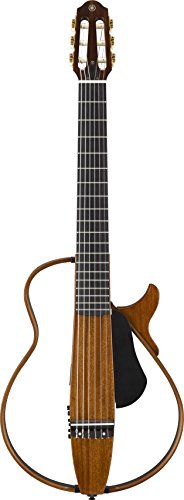
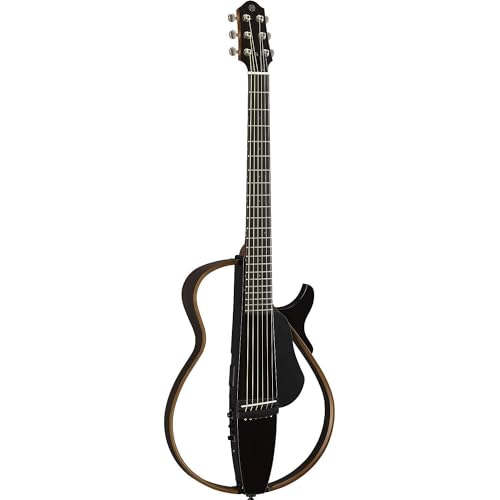
1. Yamaha SLG200S: Best Silent Guitar for Late-Night Practice
- Steel-string silent guitar with a slim, removable frame
- Headphone output with onboard effects, per the maker description
- Hard gig bag included in the listing
- A nylon-string SLG200N version is also available
Best for: anyone who must practise without disturbing others, such as apartment dwellers and late-night players.
Skip if: you want the sound and feel of a traditional acoustic body in the room.
Pros
- Practically silent when played through headphones
- Very small footprint and easy to store
- Portable enough to travel with
- Works as a stage instrument through an amplifier
Cons
- Higher cost than most couch guitars
- Unconventional look and feel
The silent guitar is the only pick here that genuinely removes the noise question. Without a resonating body, the strings produce only a faint acoustic sound, and the real tone comes through headphones or an amplifier. For anyone with thin walls or sleeping family members, it is the best answer to the “quiet” part of couch playing.
2. Yamaha Pacifica PAC112V: Best Electric for Quiet Daily Practice
- Alder body with contoured edges · maple neck with rosewood fingerboard
- HSS pickup layout with coil-splitting
- 25.5-inch scale
- Budget to mid-tier price
Best for: players who want a versatile electric they can plug into a headphone amp for silent practice.
Skip if: you want something you can pick up and play without any gear; an electric is quiet unplugged but not loud enough to enjoy.
Pros
- Unplugged volume is low enough for most households
- Contoured body is comfortable seated or standing
- Versatile pickups for many genres
- Strong reputation as a practice electric
Cons
- Needs a headphone amp or small amp for full enjoyment
- Standard long scale
An electric guitar is arguably the best quiet couch instrument if you have a headphone amp, because the strings are light and the volume is controllable down to nothing. The Pacifica’s balance and contours make it comfortable for long sessions, and its price tier keeps it an easy purchase.
Why the Pacifica works as a couch electric: it does not ask you to think about the guitar at all. The body contours rest against the ribs, the neck is a conventional modern profile and the pickups cover clean, crunchy and driven sounds if you later add an amp. For anyone who finds acoustics too loud for the household, a Pacifica plus a headphone amp is a very cheap route to near-silent practice that still feels like a real guitar.
3. Gretsch Jim Dandy Parlor: Best Easy-to-Hold Acoustic
- Parlor body · laminate tonewoods · X-bracing
- Retailers list it as a short-scale instrument
- Rex Burst, Frontier Stain and Deep Cherry Burst finishes
- Budget tier
Best for: couch players who want an acoustic that is comfortable on the lap and mellow enough for a living room.
Skip if: you want loud projection or a premium tone.
Pros
- Small body is easy to hold seated
- Soft volume that does not dominate a room
- Low cost
- Retro look that suits visible display on a stand
Cons
- Laminate construction limits tonal depth
- Modest volume
The Jim Dandy is the “leave it on a stand” acoustic. The shallow body and short-scale design are friendly to a lap, the volume is soft enough for a living room and the price removes any fear of casual use. It is the kind of guitar that ends up being played more simply because you are not worried about it. Treat it as a comfortable, characterful sofa guitar rather than a serious recording instrument.
4. Traveler Guitar Ultra-Light Acoustic: Best Lightweight Sofa Guitar
- Compact acoustic-electric with a removable lap rest
- Ultra-light construction
- Available in multiple finishes
- Mid-tier price
Best for: players who want something light to leave on the sofa or take on trips.
Skip if: you want a traditional acoustic voice.
Pros
- Easy to hold and carry
- Quiet unplugged, usable with an amplifier or headphones when plugged in
- Lap rest supports seated play
Cons
- Sound is smaller than a conventional acoustic
- Unusual shape takes adjustment
The Traveler is a niche pick that solves a clear problem: weight and bulk. It is easy to leave within reach, easy to carry between rooms and easy to pack. If your couch guitar will double as a travel guitar, or if you have wrist or shoulder fatigue with larger instruments, it deserves a place on the shortlist even though its sound is more modest than a standard acoustic.
5. Fender CD-60S: Best Campfire Guitar
- Dreadnought body · solid spruce top · mahogany back and sides
- Full-size scale and a standard acoustic neck
- Natural and black finishes, with bundles including a gig bag available
- Budget to mid-tier price
Best for: group singalongs, camping trips and anyone who wants a loud, simple strummer.
Skip if: you need a small, quiet guitar for the sofa.
Pros
- Dreadnought projection carries over a crowd
- Solid spruce top at a modest price
- Rugged enough for casual outdoor use
- A cutaway electric version, the CD-60SCE, exists for plugging in
Cons
- Large body is less comfortable for long seated sessions
- Not quiet
The CD-60S is the practical campfire choice. A solid spruce top on a dreadnought body gives volume and a full strumming tone, and the price tier means you can take it outdoors without anxiety. It is not the best guitar for tight quarters, but it is exactly what a singalong needs: loud, simple and tough.
6. Ibanez Artwood Dreadnought: Best Budget Campfire Acoustic
- Dreadnought body · okoume top with mahogany body, per the listing
- Advantage bridge design
- Open-pore natural finish
- Budget tier
Best for: an inexpensive guitar to take outdoors without worrying about knocks.
Skip if: you want a solid-wood top.
Pros
- Low cost makes it comfortable to use outdoors
- Open-pore finish is less shiny and less prone to showy scratches
- Full-size volume
Cons
- Laminate top limits tone
- Large body
The Artwood is for the buyer who wants the cheapest sensible dreadnought for outdoor use. The open-pore finish, which has a matte feel, is less precious than a high-gloss finish and hides small scuffs. It will not match a solid-top guitar for tone, but for rough-and-ready use around a fire it is a fair compromise, and it leaves budget for a gig bag and a capo.
Also Consider
- Yamaha FG800J: a solid-top dreadnought with more tonal depth for campfire and home use.
- Yamaha F400: a beginner acoustic described by the maker as having a comfortable scale length and spacing.
- Yamaha SLG200N: the nylon-string silent guitar for classical players.
- Squier Mini Stratocaster: a compact, very light electric for sofa practice.
Building a Quiet Couch Corner: Step by Step
- Choose a visible spot. A stand within arm’s reach of your usual seat means you play more often, because there is no case to open.
- Pick a stable location. Keep the guitar away from radiators, vents and direct sun to protect finish and tuning.
- Add a clip-on tuner. Leave it on the headstock so you can tune in seconds.
- Prepare silent practice gear. If you use an electric or silent guitar, keep the headphone amp and headphones next to the stand.
- Store spare strings and a capo nearby. A tiny drawer or basket cuts friction.
- Use a small humidity pack in dry rooms. This applies mostly to solid-top acoustics.
This setup takes ten minutes and is arguably the most effective way to improve how much you play, whichever guitar you choose.
Quiet Playing: What Really Controls Volume
Acoustics are as loud as their bodies
An acoustic guitar’s volume depends on body size, top material and string tension. A parlor like the Gretsch Jim Dandy is noticeably softer than a dreadnought like the Fender CD-60S. Nylon-string guitars are quieter still, because the strings are lower in tension. If you must play in a shared space, a small-body nylon-string guitar is the quietest acoustic option.
Electric guitars are the quiet default
A solid-body electric makes very little sound unplugged. Add a headphone amp, and you can practise at any hour. The trade-off is that you need a small piece of gear and a cable, which is slightly more friction than grabbing an acoustic.
Silent guitars remove the question
The Yamaha SLG200S is designed for exactly this problem. It is quiet by design, comes with a headphone output and fits into a small space. If cost is not the main issue, it is the best quiet couch guitar.
Mutes and damping accessories
For acoustics, a soundhole cover or a simple string damper reduces volume. These are cheap, and they help in thin-walled apartments, though they change the feel and tone.
Comfort on the Lap: What to Look For
- Body depth: shallow bodies, such as parlors and travel guitars, rest more comfortably on a thigh.
- Weight: lighter guitars cause less arm and wrist fatigue.
- Arm bevel or contour: a rounded edge where the forearm rests prevents pressure marks.
- Neck feel: a slim neck profile and a short scale reduce hand strain over long sessions.
- Balance: a neck-heavy guitar needs constant support from the left hand.
How Much Volume Is Too Much? A Simple Rule of Thumb
There is no universal number, but a practical rule works well: if you can comfortably hold a conversation at normal speaking volume while you strum, the guitar is quiet enough for most shared homes. Small-body and nylon-string acoustics generally pass that test, dreadnoughts played with a pick usually do not, and solid-body electrics unplugged almost always do. If you live with someone who works from home or sleeps early, the headphone route removes any debate. Consider also the time of day: a parlor guitar that is fine at four in the afternoon may still be too much at eleven at night.
It is also worth remembering that sound travels through floors and walls more than through open air. A guitar played on a couch, with a sound-absorbing cushion behind it, is noticeably quieter to neighbours than the same guitar played at a hard wall. Rugs, curtains and soft furniture all help, and they cost nothing.
Strings and Tuning Choices for Easy Daily Playing
String choice affects both comfort and volume. Extra-light and custom-light steel strings reduce finger effort on acoustics, while light-gauge electric strings are easy to bend and press. Coated strings last longer between changes, which helps if you play a lot at home. Nylon strings are the quietest and softest option and are available for the Yamaha SLG200N, the Traveler classical and other nylon-string guitars.
For campfire guitars, medium-gauge strings project better but are harder on the fingers. If you play both ways, keep the couch guitar on light strings and the campfire guitar on mediums. That keeps each instrument comfortable for its purpose.
Campfire Guitars: Volume, Toughness and Care
If your main use is outdoors, you want a guitar that projects, survives bumps and doesn’t cost a fortune. Dreadnoughts are the standard campfire shape because they are loud and produce a full strumming tone. Laminate or satin-finished guitars tolerate knocks and weather swings better than high-gloss solid-wood guitars, and a bag or hard case protects against dampness and dust.
Practical campfire tips include keeping the guitar away from heat and smoke, wiping the strings after playing and using a capo to adjust the key for singers. Avoid leaving the guitar in a hot vehicle or in damp night air, because rapid humidity and temperature changes can cause finish cracks and tuning drift. Maker care guidance from Martin and Taylor suggests keeping acoustic guitars at about 40 to 50 percent relative humidity, so give the instrument time to adjust before tuning after bringing it indoors.
Best Practice Guitars and Guitars to Learn On
If you are shopping for a guitar to learn on, comfort and low friction matter more than prestige. A short-scale or small-body acoustic like the Gretsch Jim Dandy Parlor is easy to hold and gentle on the hands. An electric guitar like the Yamaha Pacifica PAC112V has light strings and silent practice options. A silent guitar suits those who need to practise at odd hours. Choose based on where you will play and who will hear you, and you will find that the best practice guitar is the one that lives in view.
A Silent-Practice Chain, Explained
If your goal is to practise without disturbing anyone, here is a simple chain for an electric guitar. Plug the guitar into a small headphone practice amp, connect wired headphones to the amp, and adjust the gain until the sound is clear without harshness. Many headphone amps include a line input, which lets you jam along with music from a phone. The same principle applies to silent guitars: they have a built-in headphone output, so no additional gear is needed.
For acoustic players, a soundhole cover, a damper or simply choosing a smaller, softer guitar reduces volume. If you do not want any extra gear, a parlor or nylon-string guitar played gently is the quietest acoustic arrangement.
Which Couch Guitar Fits Your Household?
| Your situation | Best match | Why |
|---|---|---|
| Apartment with thin walls | Yamaha SLG200S | Headphone output, minimal sound in the room |
| Shared living room, soft acoustic wanted | Gretsch Jim Dandy Parlor | Small body, gentle volume |
| Late-night electric practice | Yamaha Pacifica PAC112V | Quiet unplugged, silent with a headphone amp |
| Wrist or shoulder fatigue | Traveler Ultra-Light Acoustic | Very light and compact |
| Weekend camping and singalongs | Fender CD-60S | Loud dreadnought with solid top |
| Tight budget, rough use | Ibanez Artwood Dreadnought | Low cost, matte finish |
Mistakes That Leave a Couch Guitar Unplayed
- Keeping it in a case. Out of sight means out of mind. A stand makes a bigger difference than any upgrade.
- Buying a guitar that is too loud for the home. A dreadnought in a small apartment tends to be played less, not more.
- Ignoring the setup. High action makes casual playing tiring. A quick adjustment makes the guitar inviting.
- Leaving old strings on. Dead strings sound dull and feel rough, which discourages playing.
- Forgetting the extras. An electric needs a headphone amp and a cable, and without them it may sit unused.
What Wears First on a Daily-Use Guitar
Daily use puts steady wear on strings, the fingerboard and the finish where the forearm rests. Strings are the first item to replace, typically every one to three months for regular playing, sooner if they feel gritty. Next, check the tuners and strap buttons if you use a strap. Finally, wipe down the body and strings with a soft cloth after playing to reduce sweat and oils. Solid-top acoustics also appreciate stable humidity, so a small humidifier in winter is a cheap precaution.
If you play several nights a week, a yearly visit to a technician for a basic setup keeps the action comfortable and the guitar easy to pick up. That small habit is worth more than almost any accessory you could buy.
Frequently Asked Questions
What is the best guitar to play on the couch?
A small-body acoustic like the Gretsch Jim Dandy Parlor, a lightweight travel guitar like the Traveler Ultra-Light Acoustic or an electric with a headphone amp are the best choices. Pick the one that matches the volume you need.
What is the quietest guitar?
A silent guitar such as the Yamaha SLG200S is the quietest, followed by a solid-body electric played through headphones.
What is the best campfire guitar?
A dreadnought acoustic such as the Fender CD-60S or the Ibanez Artwood is a strong, loud and durable choice for singalongs.
What are the best campfire acoustic guitars on a budget?
The Ibanez Artwood Dreadnought and the Fender CD-60S are both budget-friendly dreadnoughts. The Yamaha FG800J is a step up with a solid top.
What is the best practice guitar?
An electric guitar with a headphone amp is the most flexible practice setup. The Yamaha Pacifica PAC112V is a good example, and the Yamaha SLG200S suits players who want acoustic feel without the noise.
What are the best guitars to learn on?
Choose a comfortable, well-set-up guitar from an established maker. Small-body acoustics and short-scale electrics are easier for many beginners than large dreadnoughts.
Should I keep my guitar on a stand?
Yes, if the environment is stable. A stand in a visible spot makes you play more often. Avoid placing it near radiators, windows or vents.
Which One Should You Buy?
- Quietest: Yamaha SLG200S.
- Best electric for silent practice: Yamaha Pacifica PAC112V.
- Best easy-to-hold acoustic: Gretsch Jim Dandy Parlor.
- Lightest sofa guitar: Traveler Guitar Ultra-Light Acoustic.
- Best campfire guitar: Fender CD-60S.
- Best budget campfire guitar: Ibanez Artwood Dreadnought.
Decide where the guitar will live and who will hear it. The answer to that question narrows the choice faster than any spec sheet.
Sources
- Yamaha product specifications
- Gretsch product pages
- Traveler Guitar product pages
- Fender product specifications
- Ibanez product pages
- Martin Guitar and Taylor Guitars care guidance
Last updated: October 2026





Write Your Review
No reviews yet. Be the first to share your experience!