

Key takeaways
- Match the pickup format to the routing first: humbucker, Strat single-coil, or P-90 soapbar are not interchangeable without woodwork.
- Lower DC resistance (roughly 7k to 9k) usually means open, dynamic and vintage; higher (roughly 13k to 17k) means thicker, louder and more compressed.
- Active pickups (EMG 81, Fishman Fluence) trade a 9-volt battery for low noise and consistent output.
- Swapping pickups is the biggest tone change you can make short of changing the guitar, and most swaps need only basic soldering.
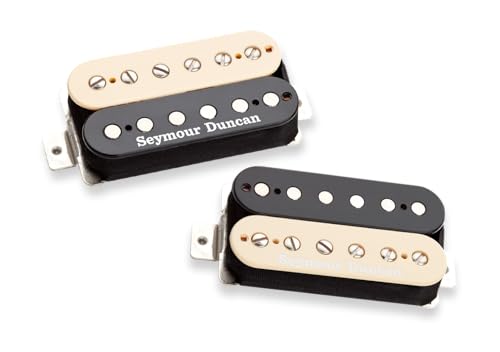
The best electric guitar pickups for most players are a Seymour Duncan JB in the bridge for high-output rock and lead, a Gibson Burstbucker for vintage-voiced humbucker tone, and the Fender Gen 4 Noiseless set when you want Strat sparkle without the hum. The right choice depends less on brand than on three facts about your guitar: what pickup size the cavity holds, how much output your amp can handle, and which style of music you actually play.
Our top picks



As an Amazon Associate we earn from qualifying purchases at no extra cost to you.
Key takeaways
- Match the pickup format to the routing first: humbucker, Strat single-coil, or P-90 soapbar are not interchangeable without woodwork.
- Lower DC resistance (roughly 7k to 9k) usually means open, dynamic and vintage; higher (roughly 13k to 17k) means thicker, louder and more compressed.
- Active pickups (EMG 81, Fishman Fluence) trade a 9-volt battery for low noise and consistent output.
- Swapping pickups is the biggest tone change you can make short of changing the guitar, and most swaps need only basic soldering.
Quick Comparison: Best Electric Guitar Pickups by Format and Voice
| Pickup | Format | Magnet | Published DC resistance | Best for | Price tier |
|---|---|---|---|---|---|
| Seymour Duncan JB | Humbucker, bridge | Alnico 5 | about 16.4k to 16.6k | Hard rock, classic metal leads | Mid |
| Gibson Burstbucker Type 1 | Humbucker, neck/rhythm | Alnico 2 | roughly 7.5k to 8k | Blues, classic rock, jazz-leaning cleans | Mid |
| DiMarzio Super Distortion | Humbucker, bridge | Ceramic | 13.68k | Punchy hard rock and distortion | Mid |
| EMG 81 | Active humbucker | Ceramic | Active (about 4.2k per coil) | High-gain metal, tight palm mutes | Mid to upper |
| Fishman Fluence Modern Humbucker | Active humbucker set | Alnico or ceramic versions | Active (2k output impedance) | Switchable voicings in one guitar | Upper |
| Fender Gen 4 Noiseless Stratocaster | Strat single-coil set | Alnico 5 | about 10.3k (retailer-listed) | Hum-free Strat clean and edge-of-breakup | Upper |
| Seymour Duncan Antiquity P90 Soapbar | P-90 soapbar set | Alnico 2 | 7.8k neck, 8.6k bridge | Raw, mid-forward rock and garage tones | Upper |
Why Pickup Choice Changes More Than You Expect
A pickup is a magnet wrapped in thousands of turns of fine copper wire. Strings disturb the magnetic field, the coil turns that into a voltage, and your amp does the rest. Change the magnet type, the number of turns, or the way the coils are arranged, and you change how the guitar attacks, sustains, and reacts when you roll the volume knob down.
That is why the best electric guitar pickups are described in terms of voice rather than quality. A hot ceramic bridge humbucker is not “better” than a vintage-style Alnico single-coil; it is built for a different job. This guide is organised around those jobs, not around a single ranking.
How We Chose These Pickups
This is a research-based guide. We did not personally play or install these pickups. Selections come from maker specification sheets, retailer listings, and published reviews in guitar magazines and long-running guitar sites. We favoured models that:
- Have been sold for years under the same name, so there is a deep pool of published feedback.
- Cover all three common formats (humbucker, Strat single-coil, P-90) instead of one.
- Offer a clearly different voice from the others on the list, so the picks are not near-duplicates.
- Are widely available as single pickups or sets, with standard mounting sizes.
Where specifications differ between sources, we say so. Resistance figures in particular vary slightly between a maker’s own page and retailer charts, and we round them accordingly.
1. Seymour Duncan JB: Best for Hard-Rock Bridge Output
- Humbucker · bridge position · Alnico 5 bar magnet
- Published DC resistance about 16.4k to 16.6k (older charts say 16.4k, the maker’s current page lists 16.6k)
- 4-conductor wiring for coil-split options
- Also sold in a trembucker spacing for some Floyd Rose guitars
Best for: Players who want a loud, punchy bridge humbucker that cuts through a loud band without getting harsh. The JB has been a standard upgrade for stock bridge pickups for decades.
Skip if: You mainly play clean or want vintage chime. The upper-mid push can sound crowded on a bright guitar.
Pros:
- Strong lows with a vocal upper-mid lead voice
- Alnico 5 magnet keeps the top end from turning icy
- Coil-split capable with the four-wire lead
- Huge installed base, so setup advice is easy to find
Cons:
- Can feel dense on already-dark mahogany guitars
- Needs a matching neck pickup to balance well
2. Gibson Burstbucker Type 1: Best for Vintage PAF-Style Warmth
- Humbucker · neck or rhythm position · Alnico 2 magnet
- Unpotted, per Gibson’s description of the Burstbucker range
- Gibson lists roughly 7.8k resistance for Type 1, 8.4k for Type 2, and 8.7k for Type 3
- Covered in nickel with a double-black bobbin
Best for: Blues, classic rock, and jazz-leaning players who want the open, dynamic character of late-1950s-style humbuckers. The lower resistance leaves headroom for your amp’s own breakup.
Skip if: You play high-gain tones with heavy tuning. Vintage-output pickups can sound loose and wide there.
Pros:
- Responds clearly to pick attack and volume-knob changes
- Alnico 2 gives a softer, sweeter top end
- Gibson’s Type 1, 2, and 3 numbering lets you pick a hotter bridge and cooler neck
- Drops into standard humbucker routes
Cons:
- Two-conductor wiring on the standard versions means no easy coil-tap
- Unpotted designs can squeal at high gain
3. DiMarzio Super Distortion: Best for Punchy Ceramic Aggression
- Humbucker · bridge position · ceramic magnet
- DiMarzio lists 13.68k DC resistance
- Four-conductor wiring
- Introduced in 1974, which makes it one of the longest-running high-output designs
Best for: Rock and distortion players who want a bright, aggressive attack from a bridge humbucker that tightens up the low end. It is a common swap for mushy stock pickups.
Skip if: Your guitar is already bright (maple neck, basswood body, bolt-on construction). Published comparisons of this pickup often call it brighter than a JB.
Pros:
- Fast, tight response with a clear high-mid edge
- Four-wire lead supports coil-split wiring
- Available in standard and F-spaced versions for different bridge widths
Cons:
- Can be too bright for small amps
- Ceramic magnet voicing is less “sweet” on clean tones
4. EMG 81: Best for Tight High-Gain Rhythm
- Active humbucker · ceramic magnet · requires a 9-volt battery
- Roughly 4.2k per coil (ElectroSmash measurement); output specs differ between sellers, so compare cautiously
- Current draw around 80 microamps, with battery life listed in the thousands of hours
- Quik-connect harness for easy installs
Best for: Metal and hard-rock players who want maximum clarity and tight palm mutes with low noise at high gain. The active circuit holds a consistent level regardless of cable length.
Skip if: You dislike the idea of a battery or want a woolly vintage feel. The response is very controlled, and some players describe it as clinical.
Pros:
- Very low noise even with high-gain amp settings
- Consistent output makes volume and tone pots feel different from passive setups
- Long battery life, since the circuit draws very little current
- Ceramic magnet adds snap and bite
Cons:
- Needs a battery compartment or space in the cavity
- Different pot values (usually 25k) mean a full rewire in most guitars
5. Fishman Fluence Modern Humbucker: Best for Switchable Voices
- Active humbucker set · Alnico or ceramic versions
- Three voicings per pickup on Fishman’s current spec page, selected with a push-pull pot
- 2k output impedance
- Runs on a 9-volt battery or an optional rechargeable pack; listed life is up to about 200 hours per set
Best for: Players who want a single guitar to cover several tonal jobs, such as tight modern crunch plus a more open, passive-style voice, without installing extra switches or coil-splits.
Skip if: You prefer an all-passive guitar with no battery. The battery draw is much higher than EMG, so check it periodically.
Pros:
- Multiple voices from one set, including a more passive-feeling option
- Alnico and ceramic options for different gain styles
- Rechargeable pack avoids buying 9-volt batteries
- Designed as a drop-in for standard humbucker routes
Cons:
- Higher cost than most passive pickups
- Battery life is far shorter than EMG, per published specs
- Requires a push-pull pot and battery wiring
6. Fender Gen 4 Noiseless Stratocaster: Best for Hum-Free Single-Coil Tone
- Strat-style single-coil set · neck, middle, and bridge
- Alnico 5 magnets with staggered pole pieces
- Retailer-listed resistance around 10.3k for all three (one retailer lists slightly higher)
- Shielded lead wire and a noise-cancelling construction
Best for: Stratocaster players who gig in rooms with bad wiring or lighting dimmers and still want a single-coil feel. They fit standard Strat pickguard routes.
Skip if: You love the slightly wild, noisy character of old single-coils. The Noiseless voice is clean and polished.
Pros:
- Removes much of the hum that plagues standard single-coils
- Staggered pole pieces match the string radius of a vintage Strat
- Works with a standard 5-way switch
- Bridge pickup is slightly hotter than the other two
Cons:
- Costs more than basic replacement sets
- Can sound a touch smoother than true vintage single-coils
7. Seymour Duncan Antiquity P90 Soapbar: Best for Raw Mid-Forward Grit
- P-90 soapbar set · neck and bridge
- Alnico 2 bar magnets per the maker
- Published resistance about 7.8k (neck) and 8.6k (bridge)
- Fits standard P-90 soapbar routes
Best for: Rock, punk, blues, and garage players who want something between a Strat single-coil and a humbucker: fat, mid-heavy, and slightly raw when pushed.
Skip if: Your guitar has humbucker routes and you do not want to modify the wood. Adapter rings exist, but the sound changes.
Pros:
- Aggressive mid presence that cuts through without much gain
- Alnico 2 magnets keep the top end smooth
- Vintage-style cover and aged look match older guitars
Cons:
- Standard single-coil designs can hum under lights and screens
- Higher cost than basic P-90 replacements
Also Consider
- Seymour Duncan Pearly Gates: A PAF-style humbucker listed in both neck and bridge versions; the bridge is described as having extra bite for a vintage-flavoured set.
- Seymour Duncan Hot Rails Strat: A rail-style pickup in a single-coil footprint that aims for humbucker-level output in a Strat route.
- Lace Sensor set (Blue, Silver, Red): A long-running Strat-format alternative with a distinct sound; the colour code ranks neck, middle, and bridge output.
- Wilkinson M Series Alnico 5 humbucker set: A budget route to try an Alnico 5 pair before committing to more expensive models.
Buying Guide: How to Choose Electric Guitar Pickups
Start with the cavity, not the catalogue
Open the control cavity and look at the pickup routes. A standard humbucker is about 1.5 inches wide (the “full-size” format used by most Les Paul and SG guitars). A Strat route is a long, narrow cut for single-coils. A P-90 soapbar is wider than a Strat single-coil but not as tall as a humbucker. If your guitar has two humbucker routes, a P-90 or single-coil swap will need a new pickguard or custom cuts.
Use resistance as a rough compass
DC resistance does not predict tone on its own, but it is a handy first filter. As a rough rule: under about 8k suggests vintage-style, open and dynamic; 8k to 12k is a middle ground; above about 13k leans powerful and compressed. The JB (about 16k) and Super Distortion (about 13.7k) sit in the louder zone, while the Burstbucker line (about 7.5k to 8.7k) is in the vintage zone. Do not compare magnet types by resistance alone; a ceramic pickup at 13k will sound different from an Alnico pickup at 13k.
Match the magnet to your gain stage
- Alnico 2: Soft attack, warm top end. Pairs well with clean-to-crunch amps.
- Alnico 5: Balanced, strong mids, versatile for rock and blues.
- Ceramic: Tight, bright, and loud. Often chosen for distortion and metal.
Decide on passive or active
Passive pickups need no power and respond naturally to your guitar’s volume knob. Active pickups need a 9-volt battery (and in some cases a rechargeable pack), draw small amounts of power continuously, and often require different pots. An active swap is usually a full-rewire job, so budget for pots, a battery clip, and a few hours of work.
Check the wire count
Two-conductor pickups are the simplest to install. Four-conductor pickups (JB, Super Distortion) let you coil-split, run in series or parallel, or phase-reverse with the right switch. If you want those options, buy a four-wire model; if you do not, a two-wire pickup works fine.
Pair neck and bridge pickups
A bridge pickup is usually hotter than the neck to compensate for string tension. When you mix brands, a good rule is to keep the neck lower in output than the bridge by a few thousand ohms. Matched sets save you from guessing, but mixing a Burstbucker neck with a JB bridge is a time-honoured route to a clear neck and a punchy bridge.
Plan for installation
Basic pickup swaps involve desoldering and resoldering two to four wires per pickup, plus adjusting pickup height. Take a photo of the original wiring before you start. If you are not comfortable with a soldering iron, a guitar tech can usually do a swap in under an hour; ask about labour before you buy expensive sets. Pickup height is the final tuning step: closer to the strings means more output and sustain but a higher chance of string-pull on the magnet.
Which Pickup Fits Which Guitar: A Quick Decision Matrix
Use this table when you know the guitar you own and want a shortlist. It assumes you want to keep the original routes and avoid cutting wood.
| Your guitar | Typical route | Blues / classic rock | Hard rock / metal | Clean and quiet |
|---|---|---|---|---|
| Les Paul or SG style | Two humbuckers | Gibson Burstbucker pair | Seymour Duncan JB bridge | Burstbucker Type 1 neck, cooler bridge |
| Stratocaster style | Three single-coils | Standard Alnico 5 set | Seymour Duncan Hot Rails bridge | Fender Gen 4 Noiseless set |
| Super-Strat (HSS or HH) | Humbucker bridge | Burstbucker bridge | DiMarzio Super Distortion or EMG 81 | Fishman Fluence Modern (passive voice) |
| Single-cut with P-90 routes | Two soapbars | Seymour Duncan Antiquity P90 | Higher-output P-90 bridge | P-90 neck with volume rolled back |
Telecaster owners have a slightly different problem: the bridge pickup sits in a metal plate, and the neck pickup sits under a chrome cover. Those pickups are usually sold as Tele-specific parts, so none of the seven picks above is a direct drop-in for that route, although the Seymour Duncan Hot Rails line is also made in a Tele version.
Ownership Realities: What Wears and What Does Not
A passive pickup has no moving parts, so the usual failures are mechanical. The thin lead wire can break at the solder joint after repeated pickguard removals, a pickup cover can loosen, and a pole piece screw can seize if it has been wound past its range. Wax-potted pickups are less prone to squeal; unpotted designs like the vintage-style Burstbucker line trade some of that stability for a more open sound.
Active pickups add one consumable: the battery. The EMG 81 draws so little current that its listed battery life runs to thousands of hours, so many players change it only when they change strings for another reason. The Fishman Fluence set draws far more current and lists life in the low hundreds of hours, so a rechargeable pack or a habit of unplugging the cable after playing matters. A plugged-in guitar cable keeps the circuit switched on in most active setups, which is the usual cause of a flat battery.
Common Mistakes When Upgrading Pickups
- Buying output you cannot use. A hot bridge pickup into a small practice amp can sound compressed and loud before it sounds good. If your amp breaks up early, start in the mid-output range.
- Ignoring string spacing. Standard and F-spaced humbuckers differ in pole-piece spacing. A mismatch can leave the outer strings sitting off the poles, which weakens the high and low E.
- Skipping the setup. Pickup height, string height, and pole-piece adjustment change the result. Too close to the strings causes a warbling note from magnetic pull, particularly with strong magnets.
- Mixing wiring colours without a diagram. Humbucker wire colours vary between brands, and the wrong pairing can put the coils out of phase and thin the tone out. Always read the maker’s colour chart.
- Changing everything at once. Replace the bridge pickup first, play it for a week, and then decide about the neck. It is cheaper than guessing.
Frequently Asked Questions
What are the best electric guitar pickups for a Les Paul?
For a vintage-voiced Les Paul, a Burstbucker-style set is the usual starting point. For more aggression, a JB or Super Distortion in the bridge with a gentler neck pickup is a common pairing. Check that your guitar has standard humbucker routes first.
Are active pickups better than passive pickups?
Neither is better in every case. Active pickups offer lower noise and a consistent level, which suits high-gain playing. Passive pickups give a more dynamic response and need no battery. Choose based on your music and how comfortable you are with wiring changes.
Can I put a humbucker in a Strat?
Not without modification, because the route is sized for single-coils. Rail-style options such as the Seymour Duncan Hot Rails Strat fit the single-coil footprint while aiming for humbucker output. Alternatively, a Strat-format noise-cancelling set like the Fender Gen 4 Noiseless keeps the sparkle without the hum.
Do new pickups make a cheap guitar sound better?
They can make a clear difference, since the stock pickups are often the weakest part of a budget guitar. But wood, bridge, nut, and setup all play a role, so expect an improvement, not a transformation. A fresh setup before or alongside a pickup swap is money well spent.
How long do guitar pickups last?
Passive pickups can last for decades because they have no electronics to wear out. Magnets can lose a small amount of strength over very long periods, and wires can break from heavy handling. Active pickups last as long, but their batteries need replacing.
What is the difference between a humbucker and a single-coil?
A humbucker uses two coils wired out of phase to cancel hum, giving a thicker and quieter tone. A single-coil uses one coil, so it is brighter and more detailed but picks up more noise. A P-90 is a wider single-coil that sits between the two in tone.
Do I need new pots when changing pickups?
Not always. Passive-to-passive swaps can use your existing pots. A change to or from active pickups usually requires new pots and wiring, and some brighter pickups may call for a different tone-cap value.
Which One Should You Buy?
- Heavy rock and classic metal bridge: Seymour Duncan JB or DiMarzio Super Distortion, depending on whether you want warmer (JB) or brighter (Super Distortion).
- Blues, classic rock, and jazz-leaning cleans: Gibson Burstbucker Type 1, paired with a hotter Type 2 or 3 in the bridge.
- Modern high-gain, clean low end: EMG 81.
- One guitar that covers many voices: Fishman Fluence Modern.
- Quiet single-coil sparkle: Fender Gen 4 Noiseless Stratocaster.
- Raw, mid-forward grit: Seymour Duncan Antiquity P90 Soapbar.
If you are unsure, start with the bridge pickup. It is the one most players hear and judge first, and swapping only the bridge is the cheapest way to hear whether new pickups suit your guitar before committing to a full set.
Sources
Seymour Duncan product specifications; DiMarzio product specifications; Gibson Burstbucker product pages; Fishman Fluence user guide and spec page; EMG product information; ElectroSmash EMG 81 analysis; Fender Gen 4 Noiseless retailer specifications; Guitar World; Guitar Chalk.
Last updated: October 2026








Write Your Review
No reviews yet. Be the first to share your experience!