

Key takeaways
- Thickness sets feel and volume: thin picks (under 0.6 mm) suit strumming, medium (0.6 to 0.85 mm) suit mixed playing, and heavy (0.88 mm and above) suit single-note picking and flatpicking.
- Material sets tone and grip: celluloid is warm and slightly flexible, Tortex is bright and durable, Ultex is crisp and long-lasting, acetal is smooth and warm, and acrylic is bright and loud.
- Shape matters too: the standard 351 shape is the all-round choice, jazz shapes suit fast picking, and triangle picks offer more edges.
- Picks are cheap, so buy a variety pack and compare before settling on a favorite.
- Picks wear out; replace one when the edge becomes rounded, flat or noisy.
The best picks for acoustic guitars are medium-gauge Dunlop Tortex Standard picks for all-round strumming, celluloid picks such as the Fender 351 for a warm, classic sound, and heavy Ultex or acetal picks for flatpicking and fast single-note lines. Pick material and thickness change the attack, brightness and noise of your guitar more than most people expect. This guide compares seven picks and four alternatives for acoustic strumming and picking, explains how each material behaves and shows how to choose a thickness for your playing style.
Our top picks


As an Amazon Associate we earn from qualifying purchases at no extra cost to you.
Key takeaways
- Thickness sets feel and volume: thin picks (under 0.6 mm) suit strumming, medium (0.6 to 0.85 mm) suit mixed playing, and heavy (0.88 mm and above) suit single-note picking and flatpicking.
- Material sets tone and grip: celluloid is warm and slightly flexible, Tortex is bright and durable, Ultex is crisp and long-lasting, acetal is smooth and warm, and acrylic is bright and loud.
- Shape matters too: the standard 351 shape is the all-round choice, jazz shapes suit fast picking, and triangle picks offer more edges.
- Picks are cheap, so buy a variety pack and compare before settling on a favorite.
- Picks wear out; replace one when the edge becomes rounded, flat or noisy.
Quick Comparison: Best Picks for Acoustic Guitars
| Pick | Material | Gauge / size | Tone | Best for |
|---|---|---|---|---|
| Dunlop Tortex Standard .73 | Tortex | 0.73 mm medium | Bright, crisp | All-round strumming |
| Dunlop Ultex Jazz III | Ultex | 1.38 mm small jazz shape | Bright, articulate | Fast picking, bluegrass lines |
| Fender 351 Premium Celluloid | Celluloid | Thin, medium or heavy | Warm, soft attack | Strumming, vocal accompaniment |
| D’Addario Pearl Celluloid | Celluloid | Light to heavy | Warm, rounded | Strumming and mixed styles |
| Ernie Ball Everlast | Durable polymer | 0.48 mm and other gauges | Balanced, smooth | Light strumming, long wear |
| Clayton Acetal | Acetal | 0.38 to 1.90 mm | Warm, smooth | Mixed playing, flatpicking |
| Gravity Classic Mini | Acrylic | 2.0 mm heavy | Bright, loud | Single-note leads, fast picking |
Materials, gauges and shapes come from the manufacturers’ product pages as summarised by retailers. Pick sellers often offer multiple gauges under one name, so choose the thickness you want when ordering.
How Pick Material Changes the Sound of an Acoustic Guitar
The pick is the first thing to touch the string, so it shapes the attack of every note. A harder, thicker pick pushes the string with less give and creates a bright, defined attack. A softer, thinner pick flexes more and produces a rounder, more mellow strum. The following guide describes the typical character of each common material.
| Material | Tone | Grip / feel | Pick noise | Wear |
|---|---|---|---|---|
| Celluloid | Warm, classic | Smooth, slightly slick | Soft, quiet | Wears faster; can chip |
| Nylon | Mellow, soft | Flexible, a little grippy | Quiet | Moderate |
| Tortex (Dunlop) | Bright, clear | Matte, textured | Slight scrape | Durable |
| Ultex (Dunlop) | Bright, crisp | Hard, smooth | Noticeable on strings | Very durable |
| Acetal | Warm and smooth | Stiff, polished | Moderate | Durable |
| Acrylic | Bright and loud | Hard, glassy | Bright click | Durable but can chip on edges |
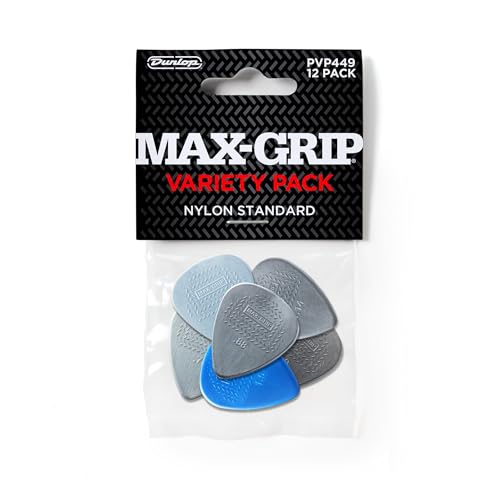
1. Dunlop Tortex Standard .73 mm: Best All-Round Strumming Pick
Tortex is the pick many people picture when they hear the word. The 0.73 mm gauge sits in the middle of the range, which is why this pick is recommended so often as a first purchase: it is stiff enough to give a clear attack, but flexible enough for strummed chords. Because it comes in a 12-pack, you can distribute a few picks across your cases and still have spares.
Dunlop Tortex Standard · 0.73 mm medium · Tortex material · classic 351 shape
- The yellow 0.73 mm pick is a medium-gauge entry in the Tortex Standard range, which spans from 0.50 mm to 1.14 mm.
- Matte, textured surface provides grip without a coating.
- Sold in 12-packs, which is useful for sharing picks or keeping spares.
- Classic shape that suits most hands.
Best for: strumming and mixed-style players who want a pick that is easy to control and lasts for weeks.
Skip if: you want a warm, soft strum or a very heavy pick for fast single-note work.
Pros:
- Durable and consistent.
- Good grip even with sweaty hands.
- Available in a wide range of gauges.
Cons:
- Brighter than celluloid.
- Texture can create slight scraping noise on wound strings.
2. Dunlop Ultex Jazz III: Best for Fast Picking and Flatpicking
Dunlop Ultex Jazz III · 1.38 mm · Ultex · small pointed shape
- Small body with a pointed tip for precise single-note work.
- Ultex material is hard and durable and gives a crisp attack.
- Available in multiple thicknesses, including 1.38 mm and 2.0 mm.
- Sold in 6-packs and 24-packs.
Best for: flatpicking, fast bluegrass runs and electric-style leads on an acoustic.
Skip if: you primarily strum chords with a loose wrist; the small shape can feel less natural.
Pros:
- Precise and articulate on single notes.
- Long-lasting.
- Small shape reduces pick drag on strings.
Cons:
- Can sound sharp on bright guitars.
- Smaller body takes time to adjust to.
3. Fender 351 Premium Celluloid: Best for Warm, Classic Strumming
The 351 teardrop is the shape that most people associate with the word pick, and celluloid is the material that made it famous. Celluloid picks sound warm and a bit rounded, which suits vocal accompaniment because the strum does not fight with the singer. They are also quiet against the strings. If you prefer a vintage character, this is a natural place to start, and a pack of 12 or more costs little.
Fender Premium Celluloid 351 · thin, medium or heavy · celluloid · classic teardrop shape
- Traditional celluloid in a 351 teardrop shape, widely used for decades.
- Available in thin, medium and heavy gauges.
- Sold in packs of 12 or more.
- Smooth finish with a slightly rounded tip.
Best for: singer-songwriters, strummers and anyone who wants a warm, soft attack that sits well with vocals.
Skip if: you play very hard and wear picks quickly, or need a pick with a textured grip.
Pros:
- Warm, rounded tone.
- Quiet on the strings.
- Inexpensive and widely available.
Cons:
- Wears faster than modern polymers.
- Smooth surface can feel slippery when hands are sweaty.
4. D’Addario Pearl Celluloid: Best Celluloid Alternative With Colour Variety
D’Addario Pearl Celluloid · light to heavy · celluloid · pearl finishes
- Celluloid picks made by D’Addario, sold under the Planet Waves name in some listings.
- Offered in several gauges and in larger packs of 10, 25 or 100.
- Pearl patterns make it easier to see your pick when you drop it.
- Comparable to other premium celluloid options.
Best for: players who like the celluloid feel and want a sizeable supply for lessons, band mates or gigs.
Skip if: you prefer a more durable polymer or a grippy surface.
Pros:
- Pleasant warm sound.
- Large packs available for lower cost per pick.
- Easy to spot in a gig bag.
Cons:
- Not as hard-wearing as Tortex or Ultex.
- Pearl finishes can feel slippery.
5. Ernie Ball Everlast: Best for Long-Wearing Light Strumming
Ernie Ball Everlast · 0.48 mm · durable polymer · smooth surface
- Manufacturer describes Everlast picks as long-wearing, with a smooth, comfortable feel.
- 0.48 mm light gauge for easy strumming; other gauges available.
- Packs of 12 are common.
- Bright blue colour in the listing, with other colours available.
Best for: beginners and light strummers who want a pick that lasts.
Skip if: you want a heavy pick for aggressive picking.
Pros:
- Long life.
- Comfortable flex for chord work.
- Good value in multi-packs.
Cons:
- Light gauge reduces note definition.
- Less variety in tone than premium materials.
6. Clayton Acetal: Best for Smooth, Warm Flatpicking
Acetal sits between celluloid and harder polymers in feel. It has a smooth, polished surface that releases cleanly from the string, with a warm tone that does not sound as bright as acrylic or Ultex. Clayton offers many gauges and shapes, which makes it easy to try different options while staying within one brand. Flatpickers who find Ultex too bright sometimes switch to acetal for a rounder, sweeter note.
Clayton Acetal · gauges from 0.38 to 1.90 mm · acetal material · polished edges
- Picks known for smooth, polished edges.
- Acetal material gives a warm, even tone.
- Sold in many gauges and sometimes in multi-packs of 12.
- Available in different shapes, including standard and jazz types.
Best for: flatpickers and mixed-style players who want a warm but defined pick.
Skip if: you want a bright, aggressive attack.
Pros:
- Smooth release across strings.
- Durable and consistent.
- Wide range of gauges.
Cons:
- Higher price per pick than basic options.
- Stiffer feel than celluloid.
7. Gravity Classic Mini 2.0 mm: Best for Heavy, Loud Single-Note Picking
Heavy picks demand a different right-hand motion. Because the pick does not flex, all the movement comes from the wrist and fingers, and the pick releases from the string with a sharp snap. That is why bluegrass and fast flatpicking players favor them: the result is a loud, clear note with strong attack. If you are used to thin picks, expect an adjustment period and start with shorter practice sessions.
Gravity Classic Mini · 2.0 mm heavy · acrylic · polished bevel
- Thick, polished acrylic pick with a rounded grip hole.
- Designed to project a bright, loud sound.
- Mini size suits fast, precise picking.
- Higher price tier than standard polymer picks.
Best for: bluegrass leads, flatpicked melodies and players who want maximum volume and attack.
Skip if: you strum or need a soft, warm tone.
Pros:
- Very loud and clear single notes.
- Polished bevels reduce drag.
- Durable.
Cons:
- Costs more than mainstream picks.
- Can feel stiff and sound harsh on bright guitars.
Also Consider
- Dunlop Tortex Flex Triangle .88 mm: triangle shape · flexible Tortex. A larger triangular pick with a forgiving feel.
- Ernie Ball Nylon Thin: nylon · thin. A soft, mellow pick for gentle strumming.
- BoloPick felt picks: felt · soft. A very quiet pick for ukulele and mellow guitar strumming.
- Thumb picks: celluloid or plastic · thumb-mounted. A good option for fingerstyle and country-style bass-note picking.
Pick Thickness Guide: How to Choose Gauge by Playing Style
| Playing style | Thickness | Why |
|---|---|---|
| Light strumming, singer-songwriter | 0.46 to 0.60 mm (thin) | Flexes for a smooth, quiet strum |
| General strumming and mixed picking | 0.60 to 0.85 mm (medium) | Balanced flex and control |
| Hard strumming, rock rhythm | 0.73 to 1.0 mm | Stiff enough to drive the strings |
| Flatpicking and bluegrass | 1.0 to 2.0 mm (heavy) | Precise single notes and volume |
| Electric guitar leads | 1.0 mm and above, jazz shapes | Speed and accuracy |
| Fingerstyle with thumb pick | Medium thumb pick | Strong bass notes with finger accuracy |
Pick Shape Guide: 351, Jazz, Triangle and Mini
| Shape | Feel | Best for | Watch out for |
|---|---|---|---|
| 351 (standard teardrop) | Familiar, balanced | Strumming and mixed styles | Tip wears over time |
| Jazz (small, pointed) | Precise, less pick on the string | Fast single-note lines, solos | Smaller grip area; easy to drop |
| Triangle | Larger, three usable corners | Players who rotate wear, hard strummers | Bigger tip can feel clumsy on lead lines |
| Mini / small round | Compact and quick | Heavy-gauge lead picking | Needs a firm grip, especially with sweaty hands |
| Thumb pick | Worn on the thumb | Fingerstyle with strong bass notes | Needs fitting to your thumb |
What a Pick Does to Your Technique
A pick is a lever, not just a plectrum. Its stiffness changes how much the string deflects before the pick slips past it, and that deflection is what makes the attack of the note. These practical points help you get more from whichever pick you choose.
- Angle. Tilting the pick slightly so that its edge, not its flat face, meets the string makes the stroke quieter and smoother. Playing with the face flat gives a brighter, louder attack but more scrape.
- Depth. Letting only a small part of the pick tip touch the string gives control for single notes. Letting more of it hit the strings gives a fuller strum.
- Grip. A light grip keeps the strum smooth; a tight grip causes arm tension and sloppy rhythm. A pick with a textured surface lets you hold it more lightly.
- Stiffness and speed. A stiffer pick cuts through the string faster, which helps with rapid alternate picking, but it can also feel harsh on strummed chords.
- Strum direction. A thin pick bends differently on down and up strokes, giving a natural dynamic difference that suits folk rhythms. A stiff pick makes the two strokes sound more equal.
Ownership Realities: Wear, Storage and Spares
- Wear shows in sound first. A tip that has rounded off gives a duller, noisier attack. Replace the pick before that becomes a habit.
- Celluloid can warp and shrink. Keep it away from heat, direct sun and humid cars. Moderate temperatures extend its life.
- Sweat and grip. If a smooth pick keeps slipping, try a matte or textured one, or rub a small amount of chalk on your fingers.
- Keep spares everywhere. A few picks in the gig bag, one in the guitar case pocket and one in your pocket prevent missing a rehearsal because of a lost pick.
- Do not use picks as bookmarks or tools. Prying or scraping bends picks and damages the edges.
Picks for Fingerstyle, Ukulele and Bass
If you play fingerstyle, a thumb pick or a set of finger picks can add volume and definition without giving up the independent bass line. Thumb picks come in several sizes and angles, and are common in country, blues and folk fingerpicking. On ukulele, soft felt picks or very thin picks are a common choice, because the nylon or fluorocarbon strings respond poorly to hard plastic. Bass players often use a heavier pick, though many prefer fingers or a thumb.
A Simple Seven-Day Pick Trial Plan
Because picks are inexpensive, the quickest way to find the right one is a structured comparison. Buy a variety pack in one material, then follow this plan.
- Days 1 and 2: play with the thinnest gauge. Strum a few familiar songs and note how the pick feels and sounds.
- Days 3 and 4: switch to medium. Play the same songs. If your strumming feels more controlled and louder, medium may be your match.
- Days 5 and 6: try the heaviest pick. Play a few single-note melodies or scales. Heavy picks show their value in picking, not strumming.
- Day 7: choose and repeat the test with a second material. Pick the gauge that felt best, then compare it in a different material, such as celluloid against Tortex.
Write short notes after each session, such as “warm,” “scrapey,” “slippery” or “perfect for fast runs.” You will quickly see a pattern, and the notes make it easy to reorder the same gauge and material when your supply runs low.
How We Chose
This list is built from research, not from playing every pick. We reviewed manufacturer product pages from Dunlop, Fender, D’Addario, Ernie Ball, Clayton and Gravity, retailer listings and published reviews from guitar magazines and players. We selected picks that cover the main materials (Tortex, Ultex, celluloid, acetal, acrylic and durable polymers), the main thickness classes and the most common shapes. We limited each brand to two picks at most and skipped unbranded novelty packs.
Buying Guide: Choosing the Best Pick for Your Acoustic Guitar
Start with medium thickness
A medium pick, in the 0.60 to 0.85 mm range, handles both strumming and picking. If you find your strumming sounds thin or your picking sounds sloppy, adjust by a step in either direction. Most players settle on one or two gauges for acoustic playing.
Match material to guitar tone
A bright guitar, such as a spruce-topped dreadnought, often sounds well balanced with a warm pick like celluloid or acetal. A warm, mellow guitar, such as a mahogany parlor, may open up with a brighter pick like Tortex or Ultex. Use pick choice as a quick tone control.
Consider shape
The 351 teardrop shape is the standard. Jazz-style picks have a smaller body and sharper tip for precision. Triangle picks give three edges that wear evenly. Pick a shape that feels comfortable in your grip.
Think about grip and finish
Matte or textured surfaces help if your fingers sweat, while polished surfaces glide across strings but can slip. Some picks have grip holes, dimples or coatings that improve control.
Buy variety packs first
Most makers sell variety packs with several gauges. Spending a little on a variety pack and trying each gauge for a week is the best way to find your preference without guessing.
Check the edge and replace when worn
As a pick wears, the tip becomes rounded and the sound gets duller. For a polymer pick this can take weeks; for celluloid it can take less. A worn pick also makes more noise against strings.
Pack size and value
Picks are cheapest per piece in larger packs, but only buy a big pack once you are sure of the gauge. A simple rule is to buy a 6- or 12-pack first, and move to 24 or more once you have used up the first pack without wanting to change. That way you avoid a drawer full of picks you never use.
Left-handed players
Picks are symmetrical, so they work in either hand.
Frequently Asked Questions
What are the best picks for acoustic guitars?
Medium-gauge Dunlop Tortex Standard picks and Fender 351 celluloid picks are the most common starting points. Move to heavier Ultex or acetal picks for flatpicking.
What is the best guitar pick material?
There is no single best. Celluloid is warm and classic, Tortex is bright and durable, Ultex is crisp and long-lasting, acetal is warm and smooth, and acrylic is loud and bright.
What are the best picks for electric guitars?
Heavier picks with a pointed tip, such as the Dunlop Ultex Jazz III, are popular for electric leads, while medium Tortex picks work well for rhythm.
What thickness pick should I use for strumming?
Most strummers prefer a thin to medium pick, between about 0.46 and 0.85 mm. Thin picks flex more and give a softer attack.
What pick is best for fingerpicking?
Many fingerstylists use no pick, or a thumb pick with fingers. A thumb pick adds a strong bass note and works well for country and folk styles.
How long do guitar picks last?
It depends on the material and how hard you play. Celluloid wears fastest, Tortex lasts weeks to months and Ultex or acetal can last longer. Replace a pick when the tip is rounded or the sound is dull.
Do different picks change the sound of my guitar?
Yes. Thickness and material change the attack, brightness and volume. A pick is a cheap way to adjust the tone without touching the guitar.
Which One Should You Buy?
- One pick for most acoustic playing: Dunlop Tortex Standard .73 mm.
- Fast flatpicking and single notes: Dunlop Ultex Jazz III.
- Warm, vocal-friendly strumming: Fender 351 Premium Celluloid.
- Celluloid in bulk or colour variety: D’Addario Pearl Celluloid.
- Long-lasting light strumming: Ernie Ball Everlast.
- Smooth flatpicking: Clayton Acetal.
- Loud, heavy single-note leads: Gravity Classic Mini 2.0 mm.
Sources
Dunlop, Fender, D’Addario, Ernie Ball, Clayton and Gravity Picks product pages; retailer listing specifications; published reviews from guitar magazines and players.
Last updated: October 2026



Write Your Review
No reviews yet. Be the first to share your experience!