

Key takeaways
- Headless guitars are shorter and usually better balanced, which helps with comfort and with fitting a bag or a case.
- Tuning happens at the bridge end, so you need a hex key and the correct strings; always check what ball-end style the bridge uses.
- Most models keep a 25.5 inch scale, so string feel is the same as a full-size Fender-style guitar.
- Entry-tier headless guitars from EART, Donner and Grote cost far less than Ibanez or Cort, but hardware and fretwork vary, so confirm what the listing says.
- If you want a silent, hotel-friendly guitar, look at the Donner HUSH range, which includes built-in amp modeling.
The best headless guitars right now are the Ibanez Q Standard line for a brand-name modern headless, the Cort Space G6TR for a gig-bag-ready mid-tier option, and the EART GW2 or Donner HLX-500 if you want the headless idea at a much lower price tier. If you want a headless for hotel rooms and silent practice, the Donner HUSH X LIVE adds a detachable speaker and onboard amp modeling. A headless guitar drops the traditional headstock, moves the tuners to the bridge end, and shortens the whole instrument by several inches without shrinking the 25.5 inch scale.
That design solves two real problems: the neck dive that plagues many full-size guitars, and the awkward length of a case or gig bag on a train or plane. It also brings new habits, from locking-nut hex keys to string compatibility. This guide covers what changes when you go headless, which models make sense at each budget tier, and how to avoid the common first-time mistakes.
Our top picks

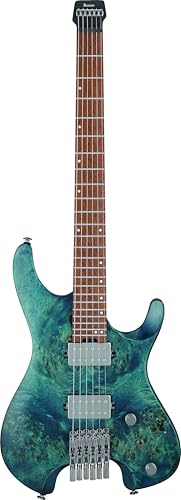
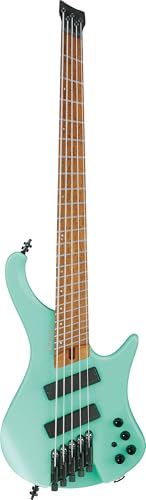
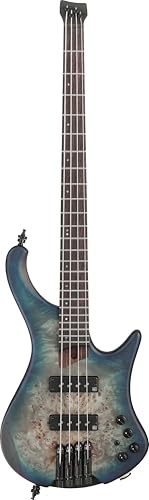
As an Amazon Associate we earn from qualifying purchases at no extra cost to you.
Key takeaways
- Headless guitars are shorter and usually better balanced, which helps with comfort and with fitting a bag or a case.
- Tuning happens at the bridge end, so you need a hex key and the correct strings; always check what ball-end style the bridge uses.
- Most models keep a 25.5 inch scale, so string feel is the same as a full-size Fender-style guitar.
- Entry-tier headless guitars from EART, Donner and Grote cost far less than Ibanez or Cort, but hardware and fretwork vary, so confirm what the listing says.
- If you want a silent, hotel-friendly guitar, look at the Donner HUSH range, which includes built-in amp modeling.
Quick comparison: best headless guitars at a glance
| Guitar | Best for | Key spec (per listing) | Scale | Budget tier |
|---|---|---|---|---|
| Grote GRHL-004 | Cheapest way to try headless | Mahogany body, maple neck, gig bag | Check listing | Entry |
| EART GW2-SE | Low-cost serious headless | Roasted mahogany body, stainless frets, fixed headless bridge | Check listing | Entry to lower-mid |
| Donner HLX-500 | Beginner-friendly headless | 24 frets, ergonomic body | Check listing | Lower-mid |
| EART GW2 | Upgraded materials | Roasted padauk body, 5-piece maple neck, Alnico V pickups, stainless frets | 25.5 in | Lower-mid |
| Donner HUSH X LIVE | Travel and silent practice | Detachable speaker, amp modeling and effects | Check listing | Lower-mid |
| Cort Space G6TR | Gig-ready value | Headless, gig bag included | Check listing | Mid to upper-mid |
| Ibanez QX52 (Q Standard) | Brand-name modern playing | Q Standard headless line | Check listing | Upper end |
How a headless guitar works, and why it feels different
A conventional guitar anchors the strings at the headstock, where the tuning machines pull them tight. A headless guitar removes that part. The strings are clamped at the nut end of the neck by a small locking block, and the tuning mechanism sits in the bridge at the other end of the body. Because the headstock is gone, the guitar is shorter, lighter at the neck end and easier to balance on a strap. The weight that normally sits beyond the nut disappears, which is why many players describe headless guitars as the cure for neck dive.
The trade-off is that tuning and string changes follow a new routine. You usually need a small hex key for the locking block and sometimes a second one for the bridge saddles. Many headless bridges accept ordinary strings with the ball end cut off, but others require single-ball strings, double-ball strings or a specific clamp type. Always check the maker’s description before ordering strings.
String change on a typical headless guitar, step by step
- Loosen the string at the bridge. Use the tuning wheel or hex screw until the string goes slack.
- Release the nut clamp. Loosen the hex screw on the locking block at the neck end and pull the old string free.
- Prepare the new string. Check whether the bridge needs a ball end or a trimmed end, as stated by the maker.
- Seat the string in the bridge. Slide the string into the bridge saddle and pull it through to the neck end.
- Clamp at the nut. Tighten the locking block firmly but not overtight, and tune with the bridge-mounted tuner.
- Stretch and retune. Gently stretch each string a few times and retune until pitch holds.
1. Grote GRHL-004: Best very low-cost headless to try
- Headless body with mahogany body and maple neck, per the listing
- Lightweight build · gig bag included · listed in Black and Blue
Best for: curious players who want to find out whether the headless shape suits them before spending more.
Skip if: you want a refined factory setup, reliable resale value or stainless frets.
Pros
- Lowest entry cost in this list
- Gig bag included for easy transport
- Light enough for travel and casual use
- Good for experimenting with headless techniques
Cons
- Hardware and fretwork are basic
- Specification details vary by seller, so check the exact listing
2. EART GW2-SE: Best low-cost headless with better materials
- Roasted mahogany body · stainless steel frets · fixed headless bridge
- Artones H2SE pickups, per the listing title
Best for: players who want stainless frets and a fixed bridge for tuning stability on a modest budget.
Skip if: you need a tremolo or a known big-brand warranty network.
Pros
- Stainless frets wear much more slowly than nickel
- Fixed bridge keeps tuning simple and stable
- Roasted mahogany adds an upgraded feel to the body
- Entry-to-lower-mid price tier
Cons
- Brand has less retail presence than Ibanez or Cort
- Spec details differ between seller listings
3. Donner HLX-500: Best beginner-friendly headless
- 24 frets · ergonomic body · Natural Wood and Black finishes
- Stable tuning design and an ultra-portable headless layout, according to the listing
Best for: new and returning players who want a first headless with a familiar feel and a manageable price.
Skip if: you want a premium brand name or boutique fretwork.
Pros
- 24 frets give extra range for lead playing
- Simple layout reduces the learning curve
- Natural wood finish is eye-catching
- Lower-mid tier price
Cons
- Less proven in long-term use than major brands
- Check scale length and string requirements on the exact listing
4. EART GW2: Best upgraded-materials headless
- 25.5 inch scale · roasted padauk solid body · five-piece maple neck
- Alnico V pickups · stainless steel frets
- Also listed in a fixed-bridge, poplar-burl-veneer-top version for travel use
Best for: players who want a more premium material list at a lower-mid tier price.
Skip if: you want major-brand support or a tremolo bridge.
Pros
- Five-piece maple neck is designed for stability
- Alnico V pickups give a classic, balanced tone
- Stainless frets last longer
- Full 25.5 inch scale keeps string feel familiar
Cons
- Roasted padauk body may feel heavier than basswood alternatives
- Variants differ in bridge type, so confirm before ordering
5. Donner HUSH X LIVE: Best for travel and silent practice
- Headless electric guitar with a detachable speaker · built-in amp modeling and effects
- Designed as a travel guitar, per the listing
Best for: hotel rooms, commutes and apartments where an all-in-one rig makes more sense than a separate amp.
Skip if: you play loud stages and want a traditional pickup-and-amp setup.
Pros
- Built-in modeling means you can practise without extra gear
- Detachable speaker adds flexibility
- Compact format is easy to carry
- Lower-mid tier for a self-contained rig
Cons
- Battery and electronics add potential failure points
- Onboard sounds are not a substitute for a dedicated amp on stage
6. Cort Space G6TR: Best gig-ready mid-tier headless
- Headless guitar in Lagoon and Lava finishes · gig bag included
- Part of Cort’s Space series, which also includes a multi-scale G6 version
Best for: players who want a respected builder’s take on the headless idea with a bag included.
Skip if: you want the cheapest possible option or a flagship-level brand name.
Pros
- Established manufacturer with a wide dealer network
- Bag included for travel
- Multi-scale option exists in the same series
- Mid-tier price with a solid reputation
Cons
- Costs more than entry models like Grote and EART
- Check the listing for exact hardware, bridge and pickup details
7. Ibanez QX52: Best brand-name modern headless
- Part of the Ibanez Q Standard line, which also includes a quilted-top QX54QM and a seven-string QX527
- Headless design from a major guitar maker with a global dealer network
Best for: players who want the headless concept from a major brand with wide support and strong resale.
Skip if: your budget is tight or you prefer a traditional headstock.
Pros
- Major brand, easier to service and sell
- Q Standard line offers six-string and seven-string options
- Modern hardware and design
- Strong choice for committed headless players
Cons
- Upper-tier price among the picks here
- Confirm the exact pickup and bridge spec on the listing for your variant
Also consider
- Mooer MHL100: a headless electric in Blue Burst from a pedal-maker. Check the listing for hardware details.
- IYV ISHL-500: a six-string headless at a very low tier. Expect basic fit and finish.
- Anygig travel headless: full-scale 25.5 inch rosewood fingerboard, aimed at portable, quiet use.
- Donner HUSH X PRO: a smart travel kit with preset combinations, for players who want a self-contained rig.
How We Chose
This is a research-based list: we did not personally use the products. We reviewed maker spec sheets, retailer listings and published reviews to select headless guitars that cover several budget tiers and use cases. The market for headless guitars is changing quickly, and many lower-cost models list limited specs, so we mark where a detail should be confirmed on the live listing. We limited each brand to two main picks and avoided quoting prices.
Headless versus traditional guitar: practical differences
| Aspect | Headless guitar | Traditional guitar |
|---|---|---|
| Overall length | Several inches shorter at the same scale length | Longer because of the headstock |
| Balance on a strap | Usually level, little or no neck dive | Varies; some shapes dive forward |
| Where you tune | At the bridge end of the body | At the headstock |
| Tool needed for string changes | Hex key for the clamp, sometimes a second key | Wire cutters and a string winder |
| String compatibility | Must match the bridge system | Almost any standard set |
| Case and bag | Shorter, more compact bags work | Needs a full-length bag |
| Resale and parts support | Smaller market, varies by brand | Very wide market and parts support |
The comparison shows why headless guitars attract travelling players and people who struggle with weight on the neck side, and why they are less attractive to anyone who changes strings and tunings constantly.
Packing a headless guitar for travel
The shorter length of a headless guitar makes it easier to fit into overhead spaces, car boots and compact luggage, but protection still matters. Check an airline’s rules about instruments before you travel, because policies change and vary by carrier. These steps keep the guitar safe.
- Loosen the strings slightly. A small drop in tension protects the neck from temperature and pressure changes.
- Secure the locking clamp. Make sure the nut-end clamp is tight so strings cannot shift in the bag.
- Use a padded bag or hard case that fits closely. A snug fit stops the guitar sliding around and reduces stress on the bridge.
- Pack the hex keys separately. Keep a spare set in your carry-on, since you will need them to adjust or change strings on arrival.
- Carry spare strings in the correct type. Replacement strings for headless bridges can be hard to find away from home.
- Retune after arrival. Let the guitar rest for a while in the new environment before final tuning.
A small repair and tool kit for headless owners
- Hex keys: the set that matches your clamp and bridge, ideally two of each size.
- Spare strings: at least one full set of the correct type and gauge.
- Small string cutter: for trimming ball ends if your bridge needs a trimmed string.
- Soft cloth: to wipe the neck and finish after each session.
- Clip-on tuner: useful at the body end where there is no headstock to clip on to; a tuner pedal or app is easier.
Because a headless guitar has no headstock to hold a clip-on tuner, many players use a pedal tuner, a phone app or a built-in tuner. This is a small change but worth planning for before your first practice session.
Silent practice with a headless guitar
Many headless guitars, especially travel-focused models, are designed for quiet practice. Headphones, a small headphone amp or an amp-modeling guitar such as the Donner HUSH X LIVE let you practise at any hour. A simple setup includes a short cable, a pair of closed-back headphones and a free amp-simulator app or a small headphone amplifier. Because there is no body resonance from a large amp, aim for settings that sound good at low volume: moderate gain, a touch of reverb and the tone control rolled back slightly to soften harsh highs.
If you plan to record, you can plug a headless electric straight into an audio interface and use amp-modeling software. The guitar’s compact body fits easily beside a laptop, and the balanced weight makes long sessions more comfortable.
Buying guide: what to check before you buy a headless guitar
Balance and weight
Headless guitars usually hang level on a strap because there is no weight past the nut. This helps tired shoulders and fretting hands. Body weight still matters, so look for stated weights where available.
String system and bridge type
A fixed headless bridge is simple and stable. A headless tremolo adds vibrato but is harder to set up. Check which string type the guitar needs: single-ball, double-ball or trimmed ball-end. If the listing does not say, ask the seller or look up the bridge model.
Scale length and frets
Most headless guitars keep a 25.5 inch scale. Some use 24 or more frets, as the Donner HLX-500 does at 24. Multi-scale or fanned-fret versions exist in the same family, including the Cort Space G6 Multi-Scale, and are covered in guides to extended-range instruments.
Neck shape and fingerboard
Thin, flat necks are common on modern headless guitars, which helps fast playing but can feel different if you are used to a vintage C shape. Stainless frets last longer, and a satin neck feels smoother to many players.
Pickups and electronics
Alnico V pickups give a balanced, familiar tone. Active pickups add clarity at high gain. Built-in modeling, as on the Donner HUSH range, replaces an amp for practice but not for stage use.
Case and bag fit
One of the biggest advantages of headless guitars is bag size. Standard electric guitar gig bags may be longer than needed, so a compact bag or a bag included with the guitar is more efficient. Always measure the bag against the guitar’s published length if travel is your priority.
Compact electric alternatives
If you want a smaller guitar but not necessarily a headless one, consider short-scale and mini models, which also reduce length and weight. They change string tension, so they feel different from a headless full-scale instrument.
Budget thresholds
Entry-tier headless guitars give you the shape and a place to learn. Lower-mid models add better materials, stainless frets or pickups. Mid and upper tiers bring established brand support and refined hardware. If you plan to gig, lean toward the mid tier or above.
Getting the best tuning stability from a headless guitar
Headless designs have a built-in advantage: the string path between the clamp and the bridge saddle is short, so there are fewer places for a string to slip or bind. That advantage only shows up if the setup is right. A few habits make the difference between a guitar that holds pitch for weeks and one that drifts every few minutes.
- Seat the strings fully. Pull each new string firmly through the bridge and clamp it evenly so nothing creeps under tension.
- Tighten the clamp with care. Overtightening can damage the string end, while undertightening lets it slide. Follow the maker’s torque guidance if one is given.
- Stretch new strings. Pull gently along the length of each string and retune several times; new strings settle fastest this way.
- Check the nut slots. A slot that grips a string will cause tuning pings after bends; a little graphite from a pencil often helps.
- Avoid sudden temperature swings. Maker guidance for most guitars recommends steady conditions and roughly 40 to 50 percent relative humidity; sudden changes affect tuning on any guitar, headless or not.
Choosing a headless guitar by budget: three worked scenarios
Scenario 1: you are curious and have little to spend
Pick a very low-cost model such as the Grote GRHL-004 or the entry EART GW2-SE and treat it as an experiment. Plan to spend a little extra on spare strings, a set of hex keys and a basic setup if the action is high. If you like the shape after a month, you have lost very little; if not, you can sell it or keep it as a travel spare.
Scenario 2: you want one guitar for home, travel and the occasional jam
The Donner HLX-500 or the EART GW2 offers a better materials list and a playable neck without crossing into the mid-tier price band. Add a padded bag, a clip-free tuner solution and a spare string set, and you have a complete travel rig.
Scenario 3: you are a committed player who will gig with it
Look at the Cort Space G6TR or the Ibanez Q Standard line. These come from makers with established dealer networks, so servicing, warranty claims and resale are simpler. Take time to try them if you can, because necks and bridge systems differ more than the specifications suggest.
What wears first on a headless guitar
- Clamp screws and hex fittings: repeated string changes can wear small screws; replace them if the head starts to round off.
- Bridge saddles: they hold string tension constantly, so check for grooves or looseness during string changes.
- Strings: expect to change them as often as on any other guitar, but keep the correct spare set because replacements are less universal.
- Frets: nickel frets wear with heavy playing; stainless frets resist that wear.
- Bag and straps: compact bags can be thinner, so check zips and padding if you travel often.
Who should not buy a headless guitar
- Players who change tunings or gauges often. The locking nut and bridge tuners make big changes slower than turning a peg.
- Players who love the traditional look. Headless guitars look very different on stage.
- Players who need quick string changes mid-gig. The process is slower than on a conventional guitar.
- Players who cannot find compatible strings locally. Check availability first.
Which one should you buy?
- Try headless on a tiny budget: Grote GRHL-004.
- Best low-cost build quality: EART GW2-SE.
- Beginner-friendly: Donner HLX-500.
- Better materials: EART GW2.
- Travel and silent practice: Donner HUSH X LIVE.
- Established mid-tier brand: Cort Space G6TR.
- Brand-name modern flagship: Ibanez QX52.
Frequently Asked Questions
Are headless guitars good for beginners?
They can be, especially lighter models. The main learning curve is string changes and tuning, which are different from a standard guitar. If you are comfortable with a hex key and reading a manual, a headless guitar is perfectly playable for a beginner.
Do headless guitars stay in tune?
Many do very well, because the string path is short and there are fewer contact points. Good locking hardware and proper stretching are important.
Can I use regular strings?
Sometimes, but not always. Some headless bridges use a trimmed string, while others need a specific ball-end style. Check the maker’s instructions.
Do headless guitars sound different?
Tone is mostly set by body, neck wood and pickups, not the headstock. Some players notice slightly different resonance, but published reviews generally describe the tone as close to conventional equivalents.
Are headless guitars more comfortable?
Many players find them more balanced and compact, which reduces strain, particularly when seated or travelling.
Are there seven-string or fanned-fret headless guitars?
Yes. Ibanez, Cort and several smaller brands make seven-string and multi-scale headless models. These are covered in our extended-range guitar guides.
Are left-handed headless guitars available?
Some models are, but availability varies. Check the specific listing.
Sources
Ibanez product pages; Cort Guitars product pages; Donner product pages; EART product pages; Guitar World; Guitar.com; retailer specification listings.
Last updated: October 2026





Write Your Review
No reviews yet. Be the first to share your experience!