

Key takeaways
- True bypass: The pedal is largely removed from the signal path when off. This can preserve the direct sound, especially in a short or carefully managed chain.
- Buffered bypass: An active circuit remains in the path and can drive long cables more effectively. It may be helpful on a large stage, although several buffers or poorly designed pedals can alter the feel of a rig.
- Switchless optical activation: The effect responds to treadle movement instead of a mechanical toe switch. It is quick and quiet, but requires a different foot technique.
The best wah pedals for expressive guitar tones are the Dunlop 535Q Cry Baby for maximum control, the Vox V847-A for classic vocal sweep, the Xotic XW-1 for premium shaping, and the Morley 20/20 Power Wah for players who prioritize a rugged, switchless live design.
A wah pedal is not just a foot-operated tone control: its sweep range, resonance, bypass circuit, switching system, and power requirements determine whether it feels expressive or frustrating onstage. The right choice depends on whether you need one recognizable voice, several usable sounds, silent switching, compact dimensions, or the ability to survive frequent transport.
Our top picks

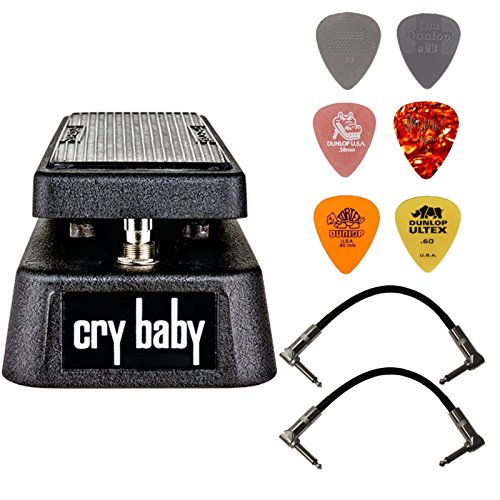

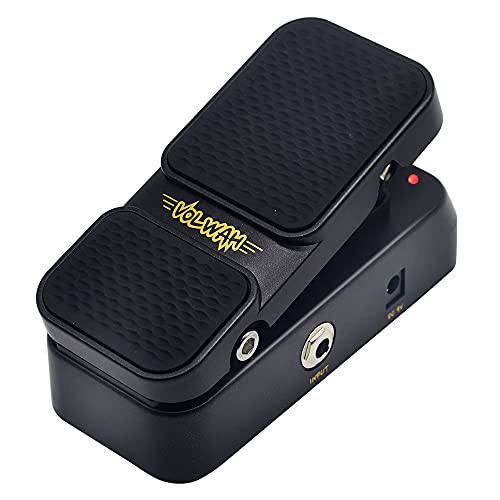
As an Amazon Associate we earn from qualifying purchases at no extra cost to you. Ratings are shown as listed on Amazon.
Best wah pedals at a glance
| Pedal | Best for | Wah range or voicing | Bypass and switching | Power | Approx. size and weight |
|---|---|---|---|---|---|
| Dunlop Cry Baby 535Q | One pedal covering many styles | Adjustable sweep, Q, and boost | Buffered bypass; toe switch | 9V battery or optional adapter | 10 x 4 x 2.5 in; about 3.7 lb |
| Vox V847-A | Traditional rock and blues tones | Classic, mid-forward sweep | Buffered bypass; toe switch | 9V battery or optional adapter | 10 x 4 x 2.5 in; about 3.5 lb |
| Xotic XW-1 | Studio-level frequency shaping | Adjustable bias, bass, treble, and Q | True bypass; toe switch | 9V battery or external 9V DC | 8.75 x 4.75 x 2.5 in; about 2.1 lb |
| Morley 20/20 Power Wah | Heavy live use and hands-free engagement | Broad, modern sweep with contour control | Buffered bypass; optical, switchless activation | 9V battery or 9V DC adapter | 9.5 x 4.75 x 2.75 in; about 3.0 lb |
| Ibanez WH10V3 | Distinctive, aggressive sounds | Range and resonance controls; guitar/bass modes | True bypass; toe switch | 9V battery or external 9V DC | 8.7 x 3.9 x 2.4 in; about 1.6 lb |
Dimensions and weights are approximate published figures and can vary slightly by production version. The comparison is most useful as a planning guide: the physical differences are small, but the mechanical and electrical differences are significant.
Our top picks by playing situation
Best all-purpose choice: Dunlop 535Q Cry Baby
The 535Q is the safest recommendation when you do not yet know which wah voice you want. Its frequency-range control moves the sweep from a narrower, focused response to a broader effect, while the Q control changes how sharply the pedal emphasizes the moving frequency. A variable boost also helps the wah remain audible in a dense band mix.
That flexibility makes it suitable for clean funk, classic rock, metal leads, and experimental textures. Its traditional treadle and toe-operated switch feel familiar, and the buffered bypass can help preserve signal strength over a long cable run. The trade-off is complexity: a fixed-voice pedal is faster to understand, while the 535Q rewards time spent marking preferred settings.
Best classic voice: Vox V847-A
The V847-A is a strong fit for blues, classic rock, and players who want the pedal to sound recognizable without extensive adjustment. Its sweep has a pronounced vocal quality and a midrange emphasis that can make single-note lines speak clearly.
Compared with the 535Q, it offers less control over the frequency window and resonance. That limitation is also its appeal. If your reference sound is the familiar “wah” heard on vintage-style rhythm parts and solos, fewer controls reduce setup decisions. The buffered circuit is generally more dependable with long cable runs than a purely passive bypass design, although it may not be the first choice for a player assembling a carefully optimized true-bypass chain.
Best for detailed tone shaping: Xotic XW-1
The XW-1 is aimed at players who hear a wah as part of their full signal design rather than as a one-sound effect. Bass, treble, bias, and Q controls let you adjust how the pedal interacts with bright single-coil pickups, hot humbuckers, fuzz, and high-gain amplifiers.
Its true bypass is useful when the pedal is disengaged and placed among sensitive vintage-style effects. The compact enclosure also saves board space. The main compromise is physical: the treadle is smaller than a full-size Cry Baby, so players with large feet or a very active rocking technique should try it before buying. It is also usually more expensive than standard wahs, commonly occupying the upper-middle to premium market range.
Best for demanding live performance: Morley 20/20 Power Wah
The Morley 20/20 Power Wah uses optical sensing rather than a conventional mechanical potentiometer. You engage it by stepping onto the treadle and disengage it by lifting your foot, eliminating the separate toe-switch press. That is especially useful when moving quickly between rhythm and lead parts.
The switchless design also removes one common failure point: the small toe switch that receives repeated impact during performances. Its contour control provides more tonal flexibility than older single-voice Morley designs, and the housing is built for touring. Some players prefer the tactile click and positive on/off state of a traditional switch, so the Morley is not automatically better for every technique.
Best unusual or aggressive character: Ibanez WH10V3
The WH10V3 has a more pronounced, edgy character than a traditional Cry Baby or Vox. Its range and resonance controls allow sharp, synth-like peaks as well as more conventional wah sounds, and its guitar/bass modes make it useful in a multi-instrument setup.
It is a good match for alternative rock, funk, indie, and players who want the wah to impose a recognizable character on the amplifier. The lighter, narrower enclosure is board-friendly, but it may feel less planted than a heavy full-size pedal under vigorous footwork. True bypass helps when the effect is off, while the compact construction makes careful mounting and secure power connections important.
How the key specifications change the sound
Sweep range and frequency voicing
A broad sweep travels through more of the frequency spectrum, producing greater contrast between heel-down bass and toe-down treble. That can sound dramatic but may become harsh or thin with a bright amplifier. A narrower range often feels more focused and vocal, which is useful for lead lines that need to sit in a mix.
Frequency voicing matters as much as the amount of travel. Vintage-style wahs commonly emphasize the midrange, whereas modern designs may offer deeper bass, sharper treble, or a stronger resonance peak. A guitarist using single-coil pickups may prefer less treble emphasis; a dark humbucker and clean amplifier may benefit from a brighter, broader sweep.
Bypass behavior
- True bypass: The pedal is largely removed from the signal path when off. This can preserve the direct sound, especially in a short or carefully managed chain.
- Buffered bypass: An active circuit remains in the path and can drive long cables more effectively. It may be helpful on a large stage, although several buffers or poorly designed pedals can alter the feel of a rig.
- Switchless optical activation: The effect responds to treadle movement instead of a mechanical toe switch. It is quick and quiet, but requires a different foot technique.
There is no universally superior bypass type. If the wah is first in a long chain, test it with the same cables and pedals you use live rather than judging it alone in a shop.
Power and battery realities
Most current full-size wah pedals accept a 9V battery and an optional 9V DC adapter, but connector polarity and current requirements still need checking. A battery is convenient for a rehearsal or emergency backup; an isolated pedalboard supply is more predictable for regular performance.
Many traditional wahs do not disconnect the battery merely because the effect is bypassed. A plug inserted into the input jack can keep the circuit active, so remove the input cable after playing. A practical live setup is one fresh battery installed as backup, with the pedal powered from the board during the show. Do not assume a daisy chain is safe if other pedals introduce noise or unusual current demands.
Decision matrix for choosing quickly
| Your situation | Most suitable choice | Why |
|---|---|---|
| First wah, broad musical tastes | Dunlop 535Q | Several useful sweep and resonance options in one unit |
| Classic rock tone and simple operation | Vox V847-A | Focused, familiar voicing with few controls to manage |
| Small pedalboard and detailed tweaking | Xotic XW-1 | Compact enclosure and extensive frequency shaping |
| Frequent gigging and fast transitions | Morley 20/20 Power Wah | Optical, switchless operation and durable live-oriented design |
| Distinctive alternative or bass-friendly voice | Ibanez WH10V3 | Resonant character, range control, and guitar/bass modes |
| Lowest reasonable budget | Standard Cry Baby or used conventional wah | Simple mechanics, widely available parts, and familiar operation |
Durability, maintenance, and common mistakes
The first parts to wear on a conventional wah are usually the potentiometer, treadle friction surfaces, rubber feet, and toe switch. Scratchy movement or dead spots during the sweep often indicate a dirty or worn pot rather than an amplifier problem. Replacement pots and switches are available for many established models, which makes a serviceable pedal more valuable over years than a sealed design that must be discarded.
Keep the treadle hinge and pot area free of grit, but do not flood the mechanism with general-purpose oil. Use the manufacturer’s recommended contact cleaner only when appropriate, and disconnect power before maintenance. Tighten loose enclosure or treadle hardware carefully; overtightening can restrict movement or damage threads.
For live reliability, use a right-angle patch cable only when it does not stress the jack, secure the pedal with proper hook-and-loop or mounting brackets, and keep a spare battery and adapter cable in the gig bag. Before a show, sweep from heel to toe while listening for crackle, confirm that bypass does not mute the signal, and verify that the pedal powers from the same supply output used at rehearsal.
Final recommendation
Choose the Dunlop 535Q if you want one of the best wah pedals for covering multiple styles. Choose the Vox V847-A for a classic, focused voice, the Xotic XW-1 for precise studio and pedalboard control, the Morley 20/20 Power Wah for switchless touring convenience, and the Ibanez WH10V3 when a more assertive, unconventional sweep is part of your sound. The best choice is the one whose frequency response, foot feel, bypass behavior, and power setup match your complete rig—not simply the pedal with the longest feature list.


Write Your Review
No reviews yet. Be the first to share your experience!