

Key takeaways
- Alloy sets the tone: 80/20 bronze is bright and crisp, phosphor bronze is warmer and rounder, and 92/8 bronze sits close to phosphor bronze for many players.
- Gauge sets the feel: extra light (10-47) is easiest on the fingers, light (12-53) is the common standard, and medium (13-56) pushes more volume from a dreadnought.
- Coated strings usually cost more per set but last several times longer, so they often cost less per month of playing.
- Acoustic-electric guitars, parlors and round-back models each have a favorite gauge; see the table in the buying guide.
- Replace strings when they sound dull, feel rough or refuse to hold tune, not on a fixed calendar.
The best strings for acoustic guitars are phosphor bronze light-gauge sets for a warm, balanced sound, with 80/20 bronze for a brighter, snappier tone and coated sets when you want them to last longer. In this guide, Elixir Nanoweb Phosphor Bronze 12-53 is our default coated pick, D’Addario EJ16 is the dependable uncoated pick, and the Martin Authentic Lifespan 2.0 set is the one to try if you own a Martin. We explain the alloy, gauge and coating choices behind each recommendation so you can match strings to your guitar rather than guess.
Our top picks

As an Amazon Associate we earn from qualifying purchases at no extra cost to you.
Key takeaways
- Alloy sets the tone: 80/20 bronze is bright and crisp, phosphor bronze is warmer and rounder, and 92/8 bronze sits close to phosphor bronze for many players.
- Gauge sets the feel: extra light (10-47) is easiest on the fingers, light (12-53) is the common standard, and medium (13-56) pushes more volume from a dreadnought.
- Coated strings usually cost more per set but last several times longer, so they often cost less per month of playing.
- Acoustic-electric guitars, parlors and round-back models each have a favorite gauge; see the table in the buying guide.
- Replace strings when they sound dull, feel rough or refuse to hold tune, not on a fixed calendar.
Quick Comparison: Best Strings for Acoustic Guitars
| Set | Alloy | Gauge | Coating | Best for |
|---|---|---|---|---|
| Elixir Nanoweb Phosphor Bronze | Phosphor bronze | 12-53 Light | Nanoweb coating | Long life, warm balance |
| Elixir Nanoweb 80/20 Bronze | 80/20 bronze | 10-47 Extra Light | Nanoweb coating | Easy fretting, bright tone |
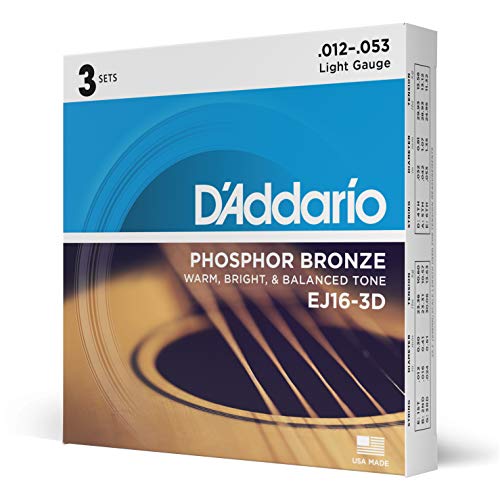
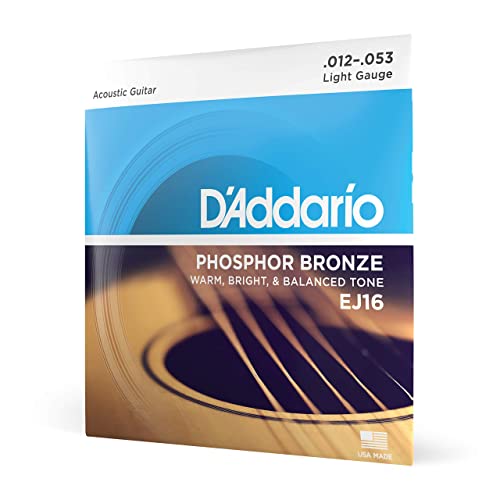
| D’Addario EJ16 | Phosphor bronze | 12-53 Light | Uncoated | All-round value |
| D’Addario EJ11 | 80/20 bronze | 12-53 Light | Uncoated | Bright strumming, recording |
| Martin Authentic Lifespan 2.0 | 92/8 phosphor bronze | Light | Treated | Martin guitars, steady tone |
| Ernie Ball Earthwood Light | Phosphor bronze | 11-52 Custom Light | Uncoated | Parlors and small bodies |
| Stringjoy Naturals Balanced | Bronze (check listing) | 11-52 Super Light | Uncoated | Balanced feel, fingerstyle |
Alloy, gauge and coating details come from the manufacturers’ product pages as summarised by retailers. Gauge numbers are in thousandths of an inch for the thinnest and thickest string.
How Acoustic Strings Differ: Alloy, Gauge and Coating
Alloy: bronze, phosphor bronze or something else
80/20 bronze is 80 percent copper and 20 percent zinc. It rings brightly with a crisp attack, which many players like for strumming and recording, but it can lose its sparkle sooner. Phosphor bronze adds a little phosphorus for corrosion resistance and a warmer, rounder voice. Martin’s 92/8 sets use a different ratio of copper and zinc and fall somewhere between the two. Silk-and-steel and monel sets exist too; they are softer in feel and tone and are discussed in the also-consider list below.
Gauge: how heavy is “light”?
The standard gauge ladder, thinnest string to thickest, is:
- Extra light: 10-47. Easy on the fingers and on older or small-bodied guitars.
- Custom light: 11-52. A compromise between ease and volume.
- Light: 12-53. The most common factory gauge for dreadnoughts.
- Medium light: 12-54 or 13-53. A touch more bass and volume.
- Medium: 13-56. Louder and fuller, but harder to fret and heavier on the guitar’s top.
Coated or uncoated
Coatings such as Elixir’s Nanoweb and D’Addario’s XS seal the windings against skin oils and moisture. The strings feel slick, last longer, and tend to sound a touch softer at the high end than a fresh uncoated set. A rule-of-thumb decision: if a coated set lasts three times as long as an uncoated one, it is cheaper per week whenever its price is less than three times the uncoated price. Run that arithmetic with the current prices in your shop.
1. Elixir Nanoweb Phosphor Bronze 12-53: Best Overall Coated Set
Elixir pioneered the polymer-coated acoustic string, and the Nanoweb version is the lighter of its two coating levels, designed to keep the feel closer to an uncoated set. For players who change strings because they sound dull rather than because they break, the longer life is the selling point. The phosphor bronze alloy also keeps the tone warm, so the set suits most steel-string guitars without surprising anyone.
Elixir Nanoweb Phosphor Bronze · 12-53 Light · coated · warm and balanced
- Phosphor bronze windings with Nanoweb coating, the thinner of Elixir’s two coating technologies.
- Light 12-53 gauge, the usual standard on dreadnoughts and grand auditoriums.
- Smooth feel that reduces finger squeak.
- Available in multi-pack formats for lower cost per set.
Best for: players who practice daily, travel with their guitars or hate changing strings.
Skip if: you want the raw, bright bite of fresh uncoated strings or are very sensitive to price.
Pros:
- Long life that stays consistent over weeks of use.
- Even tone from the lows through the trebles.
- Feels smooth for sliding and fingerstyle.
Cons:
- Higher up-front price than uncoated sets.
- Slightly less bright than the first day of an uncoated set.
2. Elixir Nanoweb 80/20 Bronze 10-47: Best Easy-Playing Coated Set
Elixir Nanoweb 80/20 Bronze · 10-47 Extra Light · coated · bright and easy
- 80/20 bronze windings give a brighter voice than phosphor bronze.
- Extra-light 10-47 gauge reduces finger pressure.
- Nanoweb coating protects the windings.
- Suits small bodies, older necks and players with tender fingers.
Best for: beginners, returning players or anyone who struggles with barre chords on a light set.
Skip if: you flatpick hard on a large dreadnought; thinner strings can feel loose and rattle.
Pros:
- Comfortable under the fingers.
- Bright tone helps lighter strings stay clear.
- Long life.
Cons:
- Lower volume and bass than heavier sets.
- May need a small truss rod adjustment when moving from heavier gauges.
3. D’Addario EJ16 Phosphor Bronze Light: Best All-Round Value
If you do not know which strings to try, the EJ16 is the sensible default. It matches the factory strings on many guitars, sounds balanced on a wide range of body types, and is easy to replace. It also makes a good baseline for comparing other sets: change to a new brand or alloy, and you will quickly hear what differs.
D’Addario EJ16 · phosphor bronze · 12-53 Light · uncoated · warm and full
- The EJ16 is a long-standing staple light-gauge set.
- Phosphor bronze for a warm, balanced voice.
- Light 12-53 gauge for dreadnoughts and OM bodies.
- Sold singly or in three-set packs.
Best for: players who change strings often, want a trustworthy baseline or are setting up a new guitar.
Skip if: you rarely change strings, because uncoated sets age faster.
Pros:
- Easy to find and consistent from set to set.
- Warm tone with good projection.
- Affordable per set.
Cons:
- Loses brightness faster than coated sets.
- Can feel rough after heavy playing.
4. D’Addario EJ11 80/20 Bronze Light: Best for Bright Strumming and Recording
D’Addario EJ11 · 80/20 bronze · 12-53 Light · uncoated · bright and punchy
- 80/20 bronze windings for a crisp attack.
- Light 12-53 gauge.
- Available in three-set packs for regular changes.
- Commonly used for studio sessions where fresh strings add sparkle.
Best for: strummers, singer-songwriters who record, and guitars that sound dull or dark.
Skip if: your guitar is already bright, or you prefer a warmer sound.
Pros:
- Instant brightness on a fresh set.
- Good projection for strumming.
- Value in multi-packs.
Cons:
- Tone fades quickly compared with phosphor bronze.
- Not ideal for harsh, bright guitars.
5. Martin Authentic Lifespan 2.0: Best for Martin Guitars
Martin sells several lines of acoustic strings. The Lifespan 2.0 sets use a treatment on the string rather than a full coating, which keeps the feel closer to a standard set while adding life. Because Martin voices these strings for its own guitars, they are a safe match for a Martin owner who wants a recommendation straight from the company that built the instrument. Check the alloy and gauge in the listing, since the family includes both 92/8 and 80/20 variants.
Martin Authentic Acoustic · Lifespan 2.0 treated · 92/8 phosphor bronze · Light
- Treated windings designed to extend life without a full coating, per Martin.
- 92/8 phosphor bronze for a warm, even tone.
- Light gauge suited to dreadnoughts, OM and Grand Auditorium bodies.
- Designed by the same company that builds Martin guitars.
Best for: Martin owners who want strings voiced for their guitar’s response, and anyone who wants a step beyond basic uncoated sets.
Skip if: you prefer the thicker, slick feel of a full coating.
Pros:
- Balanced tone that complements Martin’s voicing.
- Longer life than standard uncoated sets.
- Natural feel with limited coating sensation.
Cons:
- Not the longest-lasting option.
- Different Lifespan variants exist, so verify the alloy and gauge.
6. Ernie Ball Earthwood Light Phosphor Bronze 11-52: Best for Parlors and Small Bodies
Ernie Ball Earthwood Light · phosphor bronze · 11-52 Custom Light · uncoated
- Phosphor bronze windings in a custom-light gauge.
- Lower tension than a 12-53 set, easier on short-scale guitars.
- Widely available in single and multi-pack options.
- Warm tone with a clear top end.
Best for: parlors, travel guitars, smaller auditorium bodies and fingerpickers.
Skip if: you need extra volume for a large dreadnought.
Pros:
- Easier on fingertips.
- Even tone on lower-tension guitars.
- Good price per set.
Cons:
- Lighter bass response on large bodies.
- Uncoated sets age quickly in humid conditions.
7. Stringjoy Naturals Balanced Super Light 11-52: Best for Balanced Feel
Standard sets can feel uneven: the plain strings can feel tight while the wound bass strings feel slack. A balanced set adjusts the individual gauges so that tension feels more even from string to string. Players who bend notes on the high strings but also play bass runs often find this noticeable. It is a specialist option, but it is a good demonstration of how gauge choice goes beyond the headline numbers.
Stringjoy Naturals · balanced super light · 11-52 · uncoated
- A balanced set, meaning string gauges are chosen so tension feels more even across the strings.
- Designed to reduce the common “floppy bass strings” feeling of some standard sets.
- 11-52 gauge aimed at comfortable fingerstyle and strumming.
- Sold directly by a specialist string brand.
Best for: players who find ordinary sets uneven, especially fingerstyle players who want even response across the strings.
Skip if: you want a standard off-the-shelf set that every shop stocks.
Pros:
- Even feel from bass to treble.
- Smooth bends and fretting.
- Tonal clarity for finger-style parts.
Cons:
- Less ubiquitous than the major brands.
- Fewer coated or treated options.
Also Consider
- Martin Retro Monel Light: monel alloy · light gauge. A softer, vintage-flavored tone for parlors and old guitars.
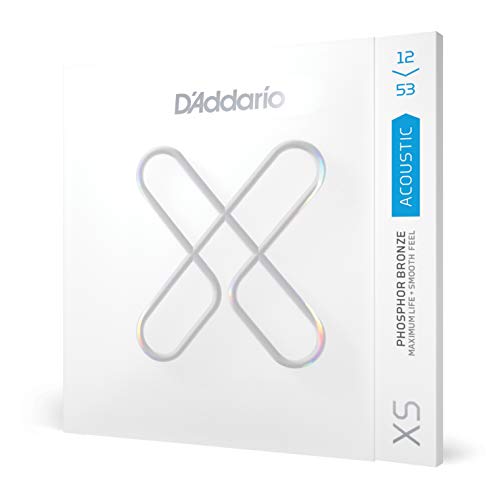
- D’Addario XS Phosphor Bronze 12-53: coated · phosphor bronze · light. A thin-coated alternative to Elixir.
- Ernie Ball Earthwood Medium Light 12-54: phosphor bronze · medium light. A shade more punch for bigger bodies.
- D’Addario EJ15 Extra Light 10-47: phosphor bronze · extra light. A budget alternative for easy fretting.
Which Strings for Which Guitar: Acoustic-Electric, Martin, Parlor and Ovation
| Guitar type | Suggested set | Why |
|---|---|---|
| Acoustic-electric (steel string) | Phosphor bronze, light or custom light, coated if you play often | Even output into the pickup and longer life reduces tone swings over time |
| Martin guitars | Martin Authentic 92/8 or 80/20 sets in light | Matches the company’s voicing; follow your model’s owner guidance |
| Parlor and travel guitars | Custom light (11-52) or extra light (10-47) | Short scale means lower tension; heavier sets can stress small tops |
| Ovation and other round-back models | Follow maker guidance; many players use light or custom light bronze | Round-back composite bodies are built differently from wooden flat-tops, so the maker’s gauge advice carries extra weight |
| Dreadnought flat-top | Light 12-53 phosphor bronze or 80/20 | The standard factory choice |
Strings by Playing Style
The best set often depends less on the guitar than on what your right hand does. Use these matches as a starting point.
- Heavy strumming and flatpicking: light or medium-light 80/20 or phosphor bronze. The extra mass handles aggressive picking without rattling. D’Addario EJ16 and EJ11 are reference sets here.
- Fingerstyle: custom light or balanced sets such as Ernie Ball Earthwood Light 11-52 or Stringjoy Naturals. Lower tension makes thumb-and-finger patterns easier, and a clear top end helps melodies stand out.
- Singer-songwriter writing and recording: fresh 80/20 or phosphor bronze for presence on a microphone, or a coated set when you play every day and want consistent tone between takes.
- Open tunings and slide: a slightly heavier set helps hold the pitch, and polished or silk-and-steel strings reduce squeaks. Check tuning charts so heavier strings do not overload the neck.
- Beginners: extra light or custom light so that barre chords and early finger pain are less of a barrier. Many teachers recommend starting here and moving up as calluses build.
How to Change Acoustic Strings Step by Step
A clean string change is part of getting good tone from any set. This routine takes around fifteen minutes.
- Loosen and remove one string at a time or all at once. Removing all strings lets you clean the fingerboard; replacing one at a time keeps neck tension steady. For a routine change, either approach works.
- Clean the fingerboard. Wipe away grime with a dry cloth, and use a suitable fretboard conditioner on unfinished rosewood or ebony if your maker suggests it.
- Seat the ball end properly. Push the string through the bridge pin hole with the groove of the pin facing the saddle, then pull gently on the string until the ball end seats against the bridge plate.
- Wind with two or three wraps on the post. Too many wraps cause tuning slip and too few cause slippage; make the wraps go downward, neatly stacked.
- Tune up and stretch. Bring each string to pitch, pull it gently away from the fingerboard, and retune. Repeat two or three times until the pitch holds.
- Trim the excess. Cut the tail about a half inch past the tuning post to avoid scratching your hand.
Common String Mistakes and Ownership Realities
- Using the wrong type of string. Classical guitar strings and electric strings should not go on a steel-string acoustic. The tension and materials are different.
- Jumping straight to a much heavier gauge. A move from extra light to medium raises tension noticeably, and may require a truss-rod and action adjustment.
- Leaving strings on too long. Dull sound, poor intonation and rough texture are signs they are past their best.
- Ignoring humidity. Dry air can crack a solid top and affect string feel; maker guidance suggests 40 to 50 percent relative humidity.
- Forgetting to wipe strings. A quick wipe after playing slows corrosion on uncoated sets, which improves lifespan and tone.
- Stacking coatings and polishing sprays. Coated strings do not need extra lubricants, and sprays can build residue on the fretboard.
Acoustic-electric guitars deserve a few more words. An under-saddle piezo pickup reads string vibration through the saddle, so a set with consistent tension and a stable alloy gives a steadier amplified signal. Fresh bright strings can sound harsh through a piezo, which is one reason many plugged-in players prefer phosphor bronze or coated sets, whose slightly softer top end is easier to tame on stage. A magnetic soundhole pickup only works with strings that have a magnetic response, so check that a set is suitable for your pickup type before you commit; bronze and phosphor bronze strings work with magnetic soundhole pickups, but their output is lower than with electric-guitar strings, according to pickup makers’ guidance.
For round-back and parlor guitars, remember that body shape, scale length and bracing differ from a standard flat-top, so the best gauge shifts accordingly. When in doubt, ask the guitar’s maker, or check the owner’s manual for the factory gauge and stay close to it.
How We Chose
This list is built from research, not from playing every set. We compared manufacturer product pages from Elixir, D’Addario, Martin, Ernie Ball and Stringjoy, retailer listings and published reviews. We prioritised alloy variety, a spread of gauges, and a mix of coated, treated and uncoated sets so each reader can find a fit for a specific guitar. We kept each brand to two picks at most and excluded unbranded bulk packs and sets with unclear alloy or gauge information.
Buying Guide: Choosing the Best Strings for Acoustic Guitars
Start from your guitar’s factory gauge
Most dreadnoughts leave the factory with light (12-53) strings, while many small-bodied guitars and travel models ship with custom light or extra light. Matching that gauge is the safest start. Going one step heavier adds volume but also stresses the top and neck; going one step lighter softens the tone but eases the playing.
Pick the alloy for the guitar’s character
A dark, mahogany-heavy guitar often responds well to bright 80/20 bronze, whereas a bright, rosewood-backed guitar can sound better with the warmer phosphor bronze. A guitar that already sounds balanced can take either, depending on your music.
Decide whether coating makes sense
If you play several hours a week, or in humid or sweaty conditions, coated strings usually pay off. If you change strings every couple of weeks for recording, uncoated sets can be fine and cheaper. The break-even formula earlier in this guide gives you a quick check.
Know when to change strings
Typical signs include dull sound, a rough feel on the underside of the strings, notes that will not intonate and tuning that drifts after bends. Frequent players often change monthly, casual players every two or three months, and coated users on a longer cycle.
Humidity and storage
Maker care guidance from Martin and Taylor recommends 40 to 50 percent relative humidity for acoustic guitars, and it helps strings last as well. Wiping strings after playing extends life for every type.
Check neck and truss-rod response
Changing gauge changes tension, which changes neck relief. After a switch, allow a day for the neck to settle and check relief; adjust the truss rod only if you are comfortable doing so, or ask a repair shop.
Left-handed note
Strings are not handed, but check that the set is for a standard six-string guitar rather than a 12-string or classical.
Frequently Asked Questions
What are the best strings for acoustic guitars?
For most guitars, light-gauge phosphor bronze sets such as the D’Addario EJ16 or the coated Elixir Nanoweb 12-53 are the best all-round starting points. Switch to 80/20 bronze if you want more brightness.
What are the best strings for acoustic-electric guitars?
Phosphor bronze light or custom light sets are common. Coated strings keep the tone more consistent for the pickup and last longer between changes.
What are the best strings for Martin guitars?
Martin’s own Authentic sets, including Lifespan 2.0, are made to complement their guitars. D’Addario and Elixir sets in the same gauge are also widely used on Martins.
What are the best strings for parlor guitars?
Parlors have a short scale and light bracing, so custom light (11-52) or extra light (10-47) strings are the usual choice to keep tension comfortable.
What are the best strings for Ovation guitars?
Ovation guitars use a composite round-back, so follow the maker’s guidance on gauge. Many players use light or custom light bronze sets, and coated strings are popular with those who play plugged in.
Are coated strings worth it?
If you play often and dislike changing strings, yes. If you change strings regularly for the brightest tone, uncoated sets may suit you better.
Can I use electric strings on an acoustic guitar?
No. Electric strings are made for magnetic pickups and use different materials and tensions; they will sound weak and can damage an acoustic guitar’s neck.
Which One Should You Buy?
- Best overall for most players: Elixir Nanoweb Phosphor Bronze 12-53.
- Easiest on the fingers: Elixir Nanoweb 80/20 Bronze 10-47.
- Best value uncoated: D’Addario EJ16.
- Brightest for recording: D’Addario EJ11.
- Martin owners: Martin Authentic Lifespan 2.0.
- Small-bodied guitars: Ernie Ball Earthwood Light 11-52.
- Even feel: Stringjoy Naturals Balanced 11-52.
Sources
Elixir, D’Addario, Martin, Ernie Ball and Stringjoy product pages; Martin and Taylor guitar care guidance; retailer listing specifications; published reviews from guitar magazines and players.
Last updated: October 2026




Write Your Review
No reviews yet. Be the first to share your experience!