

Key takeaways
- A flamenco guitar is built to be bright, dry and percussive, with fast decay; a classical guitar is built to sustain and sing.
- A tap plate (golpeador) is essential if you plan to play golpes, because bare wood will mark quickly.
- Low action produces the characteristic buzz that flamenco players accept; if you want a clean classical sound, a classical guitar is the better tool.
- Beginners do not need an all-solid handmade guitar, but they do need a guitar that plays easily and holds tune.
The best flamenco guitars share a handful of traits that a classical guitar does not: a lighter, shallower body, a cypress or similar pale tonewood, low action, and a tap plate to protect the top from percussive hits. For most players the Cordoba GK Studio Negra and GK Studio Flamenco are the sensible plug-in options, the Kremona Rosa Blanca and Rosa Luna CW are the step-up handmade choices, and the WishMade flamenco guitars are the low-cost way to find out whether the style suits you.
Key takeaways
- A flamenco guitar is built to be bright, dry and percussive, with fast decay; a classical guitar is built to sustain and sing.
- A tap plate (golpeador) is essential if you plan to play golpes, because bare wood will mark quickly.
- Low action produces the characteristic buzz that flamenco players accept; if you want a clean classical sound, a classical guitar is the better tool.
- Beginners do not need an all-solid handmade guitar, but they do need a guitar that plays easily and holds tune.
Our top picks


As an Amazon Associate we earn from qualifying purchases at no extra cost to you.
How We Chose These Flamenco Guitars
We did not play any of these guitars. The shortlist uses maker descriptions, dealer listings and published reviews, and it only includes guitars sold as flamenco instruments or the black-back (negra) variants aimed at the same players. We weighed body build (cypress versus rosewood), tap plate, action, electronics and the practical budget tier. Where a listing was short on specifics such as scale length or nut width, we say so and recommend checking the maker page before you buy. We stayed to two models per brand and describe prices only in broad tiers.
Flamenco Guitar Comparison Table
| Model | Build | Electronics | Best for | Budget tier |
|---|---|---|---|---|
| Cordoba GK Studio Negra | Black-back flamenco-style, nylon | Acoustic-electric | Stage and studio flamenco-pop | Under 1000, upper-middle |
| Cordoba GK Studio Flamenco | Solid spruce top (SS) flamenco | Acoustic-electric | Traditional blanca look with a pickup | Under 1000, upper-middle |
| Kremona Rosa Blanca | All-solid flamenco, handmade in Europe | None, hardshell case included | Serious unplugged study | Premium, above 1000 |
| Kremona Rosa Luna CW | Flamenco cutaway, handmade in Europe | Acoustic-electric | Stage-ready flamenco | Around the 1000 mark |
| WishMade Flamenco Acoustic | Spruce top, cypress back and sides | None | First flamenco guitar | Under 500, lower end |
| WishMade Flamenco Acoustic-Electric | Cutaway, 2-band EQ pickup | Pickup and EQ | Budget practice with a plug | Under 500, lower end |
What Makes a Flamenco Guitar Different
A flamenco guitar is optimised for rhythm, attack and speed. Four design choices separate it from a classical guitar.
- Tonewoods. The traditional blanca (white) flamenco guitar uses cypress or sycamore for the back and sides. These pale woods give a bright, dry tone with quick decay. A negra (black) flamenco guitar uses rosewood, which has a warmer, fuller tone and a bit more sustain. The WishMade listing states cypress back and sides, which shows the tradition carrying through even at the lowest tier.
- Light build. Flamenco tops and braces are thinner, and the body is often shallower. The result is a lively guitar that responds immediately to rasgueados and picados.
- Low action. Strings sit closer to the fretboard to allow fast, fluid playing. A slight buzz is part of the sound.
- Tap plates. Golpeadores are clear or coloured plastic sheets on the top near the soundhole and bridge to protect the finish from nails and fingertips. Most flamenco guitars are sold with one fitted.
Traditionally, flamenco guitars also used wooden friction pegs. Most modern models, including those in this guide, are listed with gear-type tuners for stability, though some makers offer friction pegs as an option.
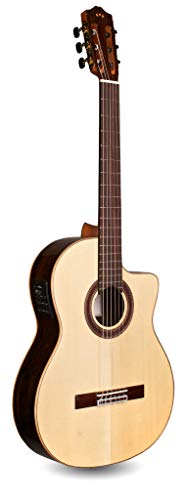
1. Cordoba GK Studio Negra: Best Black-Back Flamenco-Style Stage Guitar
- Nylon-string acoustic-electric in a flamenco-influenced design, with a black (negra) look
- Part of Cordoba’s GK Studio range of flamenco-influenced nylon-string guitars
- Cutaway and onboard electronics as shown in the listing family
- Upper-middle of the under-1000 band
Best for: players who want flamenco-style attack with a modern, plug-in-ready design.
Skip if: you want a purely traditional unplugged flamenco sound.
Pros
- Electronics and a cutaway make it practical on stage.
- A rosewood-style negra voice is warmer and rounder than a pure blanca.
- Modern construction is stable in changing conditions.
Cons
- Not a traditional unplugged instrument.
- Check Cordoba’s page for tonewoods and tap plate details.
The GK Studio Negra is a good fit for flamenco-pop, rumba and Latin acoustic playing, where the guitar is amplified and the sound needs to cut through.
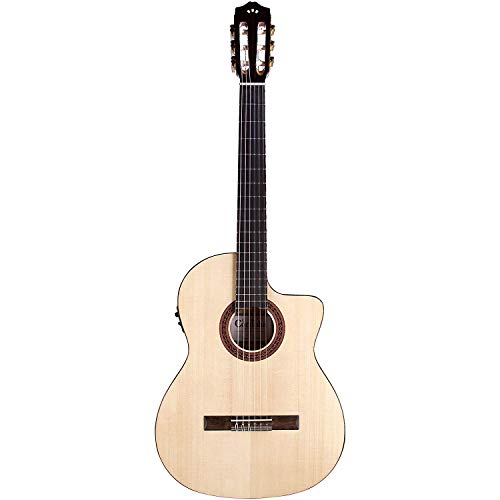
2. Cordoba GK Studio Flamenco: Best Traditional Look With a Pickup
- Listed with a solid spruce top (SS) and electronics
- Flamenco styling in Cordoba’s GK Studio range
- Upper-middle of the under-1000 band
- Confirm back and sides wood on the maker page
Best for: players who want a flamenco-style guitar with a solid top and a built-in pickup.
Skip if: you want an all-solid handmade guitar.
Pros
- A solid spruce top is an upgrade over laminated tops at lower tiers.
- Electronics included.
- Pairs traditional styling with modern convenience.
Cons
- Back and sides may not be solid.
- Listings vary in detail.
It is a flexible choice for a player who has outgrown a beginner guitar but is not ready for a handmade instrument.
3. Kremona Rosa Blanca: Best All-Solid Flamenco for Serious Study
- All-solid flamenco guitar, handmade in Europe, per the listing
- Deluxe hardshell case included
- No electronics
- Premium tier, above the under-1000 band
Best for: committed students and players who want an unplugged instrument with the full flamenco voice.
Skip if: you need a pickup or have a limited budget.
Pros
- All-solid construction gives the best tonal depth and response of the list.
- A hardshell case is included, which saves a purchase.
- Hand-built guitars tend to hold value better.
Cons
- Priced well above entry options.
- Solid wood requires humidity care.
If you are serious about studying flamenco technique, the Rosa Blanca is the sort of guitar that rewards years of practice.
4. Kremona Rosa Luna CW: Best Cutaway Flamenco With Electronics
- Acoustic-electric flamenco guitar with cutaway (CW), handmade in Europe
- Padded gig bag included in the listing
- Around the 1000 mark
- Check Kremona’s page for exact tonewoods and tap plate
Best for: working flamenco players who need a plug-in guitar with real flamenco voicing.
Skip if: you want a hardshell case in the box.
Pros
- Combines handmade quality with stage electronics.
- Cutaway aids upper-fret access.
- Gig bag included.
Cons
- Higher cost than the Cordoba models.
- A gig bag offers less protection than a hardshell case.
The Rosa Luna CW is the guitar to choose when you need flamenco tone on stage without compromising on build quality.
5. WishMade Flamenco Acoustic: Best First Flamenco Guitar
- Spruce top, cypress back and sides, with a transparent protective plate per the listing
- Acoustic only
- Lower end of the under-500 band
- Specs beyond those in the listing are brief; confirm scale and nut width with the seller
Best for: a first flamenco guitar for a beginner who wants to try the style without a big commitment.
Skip if: you need a refined tone or long-term durability.
Pros
- Cypress back and sides give the right look and tone profile for the price.
- A tap-plate style protective sheet is included.
- Very low entry cost.
Cons
- Lesser-known brand with limited published reviews.
- Expect to need a setup to dial in the action.
It is a sensible way to test the water. If you enjoy flamenco, you will probably upgrade; if not, you have lost little.
6. WishMade Flamenco Acoustic-Electric: Best Budget Practice Guitar With a Plug
- Cutaway body with a 2-band EQ pickup, per the listing
- Flamenco-style build, with a protective plate
- Lower end of the under-500 band
- Confirm tonewoods and tuner type
Best for: students who want to practise quietly with headphones or play at small events.
Skip if: you want premium electronics or tone.
Pros
- Pickup and EQ at an entry price.
- Cutaway for upper-fret access.
- Works for practice amp use.
Cons
- Basic electronics.
- Limited published reviews.
The electronics are simple, but they get the job done for home and small-room use.
Also Consider
- Cordoba C5: a solid cedar-top classical that is a good choice if you are not sure whether you want a flamenco or classical voice.
- Yamaha CGS103AII student classical: a low-cost full-size classical for beginners who are still deciding between flamenco and classical study.
- Systematic Studies for Flamenco Guitar: a popular instructional book for building technique.
- Alba guitar beads: decorative beads that fit nylon strings, used in flamenco and classical guitars as a visual accessory.
Flamenco Versus Classical: Which Should a Beginner Buy?
If your goal is to play flamenco, buy a flamenco guitar. The low action, bright tone and tap plate are part of the style, and a classical guitar will feel too deep and mellow. If you want to learn general nylon-string technique and may move between styles, a classical guitar is a more flexible first instrument. Many teachers recommend that beginners start on the instrument that suits their goal, because the playing technique and the sound are closely tied to the guitar.
What Flamenco Techniques Ask of the Guitar
The design of a flamenco guitar is easier to understand once you know what the player does with it. Flamenco is a percussive, rhythm-driven style, and its core techniques place specific demands on the instrument.
- Rasgueado. A rapid strumming technique where the fingers flick outward across the strings in sequence. It needs a responsive top and low action so the strings speak instantly, and it rewards a bright tone that stays clear at speed.
- Picado. Fast single-note runs played with alternating index and middle fingers. Low action and a crisp attack help every note stand out without ringing into the next.
- Golpe. A tap on the top with the ring or middle finger, usually near the bridge or below the soundhole, to mimic a percussion hit. This is why a tap plate is fitted: without one the finish gets scarred quickly.
- Alzapúa. A thumb technique that mixes strumming and picking. It needs a stable, even response across the bass strings.
- Compás. The rhythmic cycle that underpins each flamenco form. The guitar must be tuned precisely and project clearly enough to lock in with a singer or dancer.
Each of these techniques is easier on a lighter, brighter guitar, which is the reasoning behind the classic flamenco design. A heavy, sustaining classical guitar can play the same notes, but the rhythmic bite is softer and the tap marks show.
Match the Flamenco Guitar to Your Situation
| Your situation | What matters most | Good fits here |
|---|---|---|
| Complete beginner trying the style | Low cost, tap plate, playable action | WishMade Flamenco Acoustic |
| Student who practises with headphones or an amp | Pickup, cutaway, low cost | WishMade Flamenco Acoustic-Electric |
| Player in a flamenco-pop or Latin band | Stage electronics, warm tone, cutaway | Cordoba GK Studio Negra, Cordoba GK Studio Flamenco |
| Professional accompanist | Handmade quality, projection, plug-in option | Kremona Rosa Luna CW |
| Dedicated student of traditional flamenco | All-solid construction, unplugged voice, hardshell case | Kremona Rosa Blanca |
Setup Tips That Matter More Than the Brand
A flamenco guitar lives or dies by its setup. Even a premium instrument can feel wrong if the action is too high, and a budget guitar can feel excellent after an hour of adjustment. A few points are worth discussing with a technician.
- Saddle height. Lowering the saddle is the quickest way to reduce action. Ask the technician to leave enough height to avoid dead notes on the lower frets.
- Nut slots. Slots that are too high make the first few frets stiff; slots that are too low cause buzzing on open strings. A small adjustment makes a large difference.
- Neck relief. On a nylon guitar the neck is stable, but it can still develop too much forward bow or back bow. A technician can check it with a straightedge.
- Tap plate placement. Make sure the plate covers the area you strike. If your hits land outside it, ask for a larger or repositioned plate.
- Strings. Try normal and hard tension and see which gives the attack you want. Fresh strings are important for brightness.
Common Mistakes When Buying a Flamenco Guitar
- Buying a classical guitar and hoping it will behave like a flamenco guitar. A classical guitar has deeper sustain and higher action. It can be adapted, but it will not match a purpose-built instrument.
- Ignoring the tap plate. If you plan to play golpes and your guitar has none, add one before the top is scarred.
- Paying for electronics you will not use. A pure flamenco student at home is better served by a better top than by a pickup.
- Underestimating humidity. Thin flamenco tops are sensitive. Store the guitar in its case in dry weather and use a humidifier if indoor air is dry.
- Expecting the cheapest guitar to need no work. Budget flamenco guitars frequently need a setup. Budget money for it.
Looking After Your Nails and Your Practice
Flamenco is played with fingernails as much as flesh, and nail care is part of the craft. Keep the nails of the right hand filed smooth, with a slight curve that follows the finger. Players often use a nail file, fine sandpaper or a glass file for fine adjustment. Some players add a nail strengthener or use extra layers of wrap for protection.
A short, regular practice routine builds technique faster than long, occasional sessions. A typical structure is a warm-up of scales and arpeggios, a rasgueado drill with a metronome, a picado exercise at a slow tempo, and then work on a piece or a falseta. Use a metronome from the start because compás is the foundation of the style. Record yourself occasionally; the buzz and attack that sound normal in the room often tell a different story on tape.
Flamenco Guitar Buying Guide
Blanca versus negra
Blanca guitars use pale woods, typically cypress, and have the traditional dry, fast sound. Negra guitars use rosewood and sound warmer and fuller. If you play with a singer or dancer in a tight rhythmic style, a blanca is the classic choice. If you play solo or in fusion settings, a negra gives a little more sustain.
Action
Action should be low but not so low that notes die. A small amount of buzz on open strings is part of the sound, but excessive buzzing on all frets is a setup problem. A shop can adjust the saddle height and truss rod to find the right balance.
Tap plate
A tap plate (golpeador) protects the top. Check whether it is fitted and what it covers. If you play many golpes, a larger plate near the soundhole and under the bridge is useful.
Tuners
Gear-type tuners are easier to use and more stable than friction pegs. Traditionalists may prefer friction pegs, but they take practice and can slip.
Electronics
If you play live, a pickup is practical. For percussive playing, look for a system that captures taps, such as under-saddle piezo systems with a good preamp. If you only play at home, skip electronics and spend on the top.
Strings
Standard nylon sets work, and many flamenco players choose normal or hard tension for volume and attack. Ball-end versions simplify stringing.
Solid versus laminate
Solid tops give a more responsive, resonant tone. All-solid guitars add depth but need humidity control; maker guidance generally recommends 40 to 50 percent relative humidity.
Spanish guitars
The phrase Spanish guitar usually refers to the nylon-string tradition rather than a place of manufacture. Several of the guitars in this guide are listed as handmade in Europe or built elsewhere, so focus on build and sound rather than the label.
Left-handed players
Some models appear in left-handed versions, such as the GK Studio Negra, but availability changes. Confirm before ordering.
Flamenco Guitar Care: Protect the Top and the Finish
Flamenco guitars have thinner tops than most classical guitars, so they need a little extra care. Keep the guitar in its case when you are not playing, and avoid leaving it near heaters or windows. Wipe down the strings and fingerboard after each session, and clean the tap plate with a soft cloth. If the plate begins to lift at the edges, a technician can reattach it before moisture gets underneath.
Check the bridge periodically. A flamenco guitar is often strummed hard, and the bridge glue line can be stressed. If you see a gap between the bridge and the top, stop playing and have a repairer look at it. Replace strings regularly, because fresh strings give flamenco its characteristic brightness. Many players change them every few weeks if they practise daily, and less often if they play occasionally.
When travelling, loosen the strings slightly, use a hardshell case where possible, and avoid leaving the guitar in a hot car. A humidifier in the case during dry months is cheap insurance, especially for all-solid guitars such as the Kremona Rosa Blanca.
Frequently Asked Questions
What is the difference between a flamenco and a classical guitar?
A flamenco guitar has a lighter build, lower action, a brighter and drier tone, and a tap plate. A classical guitar is deeper, more sustaining and more mellow.
What are the best flamenco guitars for beginners?
The WishMade Flamenco Acoustic and Acoustic-Electric are the lowest-cost options, and the Cordoba GK Studio models are good step-ups with electronics.
Do I need a tap plate?
If you play golpes or strong rasgueados, yes. A tap plate protects the finish and the top from scratches and dents.
Can I play classical music on a flamenco guitar?
You can, but the tone and action are optimised for flamenco. Classical repertoire often sounds better on a classical guitar with a warmer voice.
Why is my flamenco guitar buzzing?
A small buzz is normal because of the low action. If it buzzes badly on every fret, a technician can adjust the setup.
What are the best Spanish classical guitars?
Spanish classical guitars are nylon-string instruments in the classical tradition. The Cordoba C5 and C7 are classical alternatives to the flamenco models here.
How should I care for a cypress-back guitar?
Treat it like any solid-wood guitar: stable humidity, a case in dry weather and no exposure to heat.
Which Flamenco Guitar Should You Buy?
- Stage-ready black-back style: Cordoba GK Studio Negra.
- Traditional look with a solid top and pickup: Cordoba GK Studio Flamenco.
- Serious unplugged study: Kremona Rosa Blanca.
- Handmade with electronics: Kremona Rosa Luna CW.
- Cheapest first guitar: WishMade Flamenco Acoustic.
- Cheapest with a plug: WishMade Flamenco Acoustic-Electric.
Sources
Cordoba Guitars and Kremona Guitars product listings; WishMade product listings; D’Addario and Ernie Ball string pages; Martin and Taylor care guidance for humidity.
Last updated: October 2026




Write Your Review
No reviews yet. Be the first to share your experience!