

Key takeaways
- Blues tone families map to pickup types: single coils for Texas and country blues, humbuckers for Chicago and blues-rock, P-90s and hollow bodies for rough, vocal tones, and resonators for the Delta.
- Scale length shapes bending: a 25.5 inch scale feels tighter and snappier, while a 24.75 inch scale feels looser and easier to bend.
- For slide, raise the action a little, use heavier strings and learn open tunings such as open G or open D.
- A cheap guitar can sound great in blues; spend on the neck feel and a good cable and amp before expensive pickups.
The best guitars for blues are a single-coil Stratocaster or Telecaster for bright, snappy Texas and country-blues tone, a semi-hollow or Les Paul-style humbucker guitar for thick Chicago and blues-rock tone, a solid-top dreadnought for acoustic blues, and a resonator plus a glass slide for Delta-style playing. Blues rewards touch more than gear, so the guitars below are chosen for how clearly they respond to your hands, how well they clean up when you roll the volume back, and how comfortably they handle bends.
Our top picks


As an Amazon Associate we earn from qualifying purchases at no extra cost to you.
Key takeaways
- Blues tone families map to pickup types: single coils for Texas and country blues, humbuckers for Chicago and blues-rock, P-90s and hollow bodies for rough, vocal tones, and resonators for the Delta.
- Scale length shapes bending: a 25.5 inch scale feels tighter and snappier, while a 24.75 inch scale feels looser and easier to bend.
- For slide, raise the action a little, use heavier strings and learn open tunings such as open G or open D.
- A cheap guitar can sound great in blues; spend on the neck feel and a good cable and amp before expensive pickups.
Blues tone map: best guitars for blues compared
| Guitar | Blues style | Pickups or voice | Scale | Tier |
|---|---|---|---|---|
| Fender Player II Stratocaster | Texas, SRV-style, blues-pop | Three single coils | 25.5 in | Mid |
| Squier Classic Vibe 50s Telecaster | Country blues, rhythm and lead | Two single coils | 25.5 in | Mid |
| Epiphone ES-335 | Chicago, B.B.-style smooth lead | Two humbuckers, semi-hollow | 24.75 in | Mid |
| Epiphone Les Paul Standard 50s | Blues-rock, British blues | Two humbuckers | 24.75 in | Mid to upper-mid |
| Recording King RPH-R2 resonator | Delta, slide, open tunings | Resonator, acoustic | Varies by model | Mid |
| Yamaha FG830 | Acoustic fingerstyle blues | Solid-top dreadnought | About 25.5 in | Mid |
| Dunlop Derek Trucks glass slide | Slide on any guitar | Glass bottle-neck style | Not applicable | Accessory |
1. Fender Player II Stratocaster: Best for Texas-style blues
- Stratocaster body with three single-coil pickups and a five-way selector
- 25.5 inch scale · 22 frets · maple neck with a rosewood or maple fingerboard (3-Color Sunburst with rosewood on the listing)
- Vibrato bridge for subtle shimmer and dive effects
- Built in Mexico as part of the Player II range
Best for: bright, glassy tones, in-between pickup positions (the “quack” settings) and expressive bends. Skip if: your amp is noisy; single coils will hum under gain.
Pros: the five-way switch gives versatile clean tones; huge ecosystem of upgrades; very responsive to picking dynamics.
Cons: hum with gain; the vibrato needs tuning care if you bend heavily.
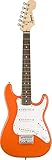
2. Squier Classic Vibe 50s Telecaster: Best for country blues and rhythm
- Telecaster body with two Fender-designed Alnico single-coil pickups
- 25.5 inch scale · maple neck and fingerboard · Butterscotch Blonde on the listing
- Simple controls: one volume, one tone, three-way switch
- Two-year warranty according to the Fender product page
Best for: fingerpicked blues, rockabilly-leaning blues and straightforward rhythm and lead. Skip if: you need thick humbucker sustain.
Pros: a bridge pickup with real bite; the neck pickup is warm when you roll the tone down; easy to modify.
Cons: can sound thin without a good amp; fewer tone options than a Strat.
3. Epiphone ES-335 Semi-Hollowbody: Best for smooth Chicago-style lead
- Semi-hollow body in the ES-335 tradition, Cherry on the listing
- Two humbucking pickups, tune-o-matic bridge, 24.75 inch scale
- Four controls and a three-way switch for independent pickup volume and tone
Best for: singing, sustained lead lines, jazz-blues crossover and warm rhythm. Skip if: you need a very light guitar or play at high gain.
Pros: a smooth, vocal tone; feedback is controlled by the center block; the shorter scale makes bends easy.
Cons: heavier than a Strat or Tele; a semi-hollow can feed back at loud volumes.
4. Epiphone Les Paul Standard 50s: Best for blues-rock and British blues
- Les Paul-style single-cut body, Vintage Sunburst on the listing
- Two humbuckers, tune-o-matic bridge and stopbar tailpiece · 24.75 inch scale
- Four controls: two volume and two tone
Best for: thick, singing sustain, overdriven tones and classic blues-rock. Skip if: you prefer a lighter guitar and bright single-coil snap.
Pros: the classic humbucker blues-rock sound; sustain that holds long bends; independent volumes let you clean up with your hand.
Cons: heavy; limited upper-fret access compared with a double-cut.
5. Recording King RPH-R2 Resonator: Best for Delta and slide
- Six-string resonator guitar (Matte Black and Wabash Blue finishes on the listings)
- Resonator design uses a metal cone to project sound without a conventional soundboard
- Suited to open tunings and slide playing; confirm details on the exact listing
Best for: Delta blues, slide in open G or open D and loud, metallic acoustic tone. Skip if: you prefer a mellow acoustic or want fingerstyle sweetness.
Pros: very loud without amplification; distinctive voice; a durable body.
Cons: the tone is a specialty sound; heavier than a conventional acoustic.
6. Yamaha FG830: Best acoustic for fingerstyle and country blues
- Dreadnought acoustic with a solid spruce top, Tobacco Sunburst on the listing
- Rosewood back and sides on the FG830, per Yamaha’s FG range
- Standard acoustic scale around 25.5 inches
- No onboard electronics; add a pickup if you plan to play live
Best for: fingerstyle blues, open-tuned slide on a regular acoustic and strumming songs. Skip if: you want a cutaway and built-in pickup out of the box.
Pros: solid top at a mid tier; balanced, full sound; widely trusted as a reliable build.
Cons: no pickup; a plain look.
7. Dunlop Derek Trucks Medicine Bottle slide: Best slide accessory
- Glass slide in a medicine-bottle style, per the listing
- Choose a size that fits your ring or pinky finger with a little space
- Glass gives a smooth, singing tone compared with brass or steel
Best for: players learning slide on an acoustic, resonator or electric. Skip if: you want the brighter, edgier tone of metal.
Pros: warm, vocal tone; affordable; works on any guitar.
Cons: glass can break if dropped; fit must be right for comfort.
Also consider
- Gretsch G5420T Electromatic Hollow Body: a fully hollow guitar with Filter’Tron humbuckers for a twangy, vocal blues tone at moderate volume.
- Fender Player II Telecaster: a Mexico-built Telecaster for players who want a step above the Squier.
- Gold Tone Paul Beard Signature Series GRE: an acoustic-electric resonator for players who want to plug in.
- Ernie Ball glass slide: an alternative glass slide in medium and large sizes.
Best electric guitars for blues: single-coil, humbucker or P-90?
Single-coil pickups are bright, clear and dynamic, and they respond strongly to your picking hand. Humbuckers are thicker, quieter and sustain longer, which suits singing leads. P-90s sit between: they have the body of a humbucker and the bite of a single coil. For clean blues and Texas shuffles, single coils are ideal. For slow-burn solos and blues-rock, humbuckers are a safe choice. If you cannot decide, a guitar with a coil split, or a semi-hollow with P-90s, gives you both flavors.
Best guitars for playing blues rock: what changes with gain
Blues-rock adds overdrive. Single coils can still work, but humbuckers handle gain with less noise. A Les Paul-style guitar through a mildly overdriven tube amp is the classic recipe for the blues-rock sound. If you use pedals, a transparent overdrive set to low gain keeps dynamics. Roll the guitar’s volume down to clean up and up for more drive; this technique is central to blues and works best with guitars that have independent volume controls.
Slide guitar basics: tunings, action and technique
- Choose an open tuning. Open G (D G D G B D) and open D (D A D F# A D) turn the open strings into a chord, so a straight slide across the frets makes music at once.
- Raise the action slightly. Slide playing needs room above the frets so the slide does not buzz. On an acoustic, a slightly higher action is common; on a resonator, it is the norm.
- Use heavier strings. A set such as .012 to .053 for acoustic or .011 to .049 for electric gives better tone and keeps strings from bottoming out.
- Wear the slide on the ring or pinky finger. This leaves your other fingers free for fretting and muting behind the slide.
- Mute behind the slide. Rest your remaining fingers lightly on the strings behind the slide to stop unwanted ringing.
- Place the slide directly over the fret wire, not between frets. This is where the note is in tune.
Acoustic blues: dreadnought, parlor or resonator?
A dreadnought such as the Yamaha FG830 gives volume and bass, which suits strummed and fingerpicked blues. A parlor guitar gives a smaller, woody, vintage-sounding voice. A resonator is the loudest and most characterful option for slide and Delta styles. Many blues players eventually own a conventional acoustic and a resonator because they serve different jobs.
Pick by situation: a blues decision matrix
| Your situation | Start with | Why | Watch out for |
|---|---|---|---|
| Beginner who wants one electric | Squier Classic Vibe 50s Telecaster | Simple controls, clear note definition | Thin tone through a poor amp |
| Player seeking Texas tone | Fender Player II Stratocaster | Five-way switch and bright single coils | Hum and vibrato tuning |
| Jammer who wants smooth sustain | Epiphone ES-335 | Semi-hollow warmth and short scale | Weight and feedback |
| Band player who plays loud blues-rock | Epiphone Les Paul Standard 50s | Humbucker thickness | Heavy body |
| Porch picker, no amp | Yamaha FG830 | Solid-top acoustic volume | No pickup |
| Slide player who wants a loud acoustic | Recording King resonator plus glass slide | Projection and open-tuning character | Specialty tone |
Volume-knob technique: how to get blues tone from any of these guitars
Great blues tone is largely about touch and dynamics. These steps describe a common approach, based on how pickups and amps generally respond, and are not from our own playing.
- Set the amp to a slightly overdriven tone with the guitar volume at full. Aim for a sound that breaks up when you dig in.
- Roll the guitar volume back to clean up. At around seven or eight on a humbucker guitar, many amps clean up while still sounding warm.
- Use the neck pickup for warm rhythm and slow bends. The neck pickup is round and thick, suited to expressive lines.
- Switch to the bridge pickup for bite. The bridge pickup is brighter and cuts through the band for solos.
- Use the tone knob. Rolling the tone off a little removes harshness and gives a vocal quality.
- Vary your pick attack and angle. Light picking is clean and soft; hard picking pushes the amp into drive.
Starting points for amp settings
| Guitar type | Amp gain | Treble | Mids | Reverb |
|---|---|---|---|---|
| Single-coil (Strat or Tele) | Low to medium | Medium | Medium to high | Medium spring |
| Humbucker (Les Paul) | Medium | Medium to high to cut thickness | Medium | Low to medium |
| Semi-hollow (ES-335) | Low to medium | Medium | Medium | Medium |
| Acoustic (plugged in) | Clean | Medium | Slight cut | Light |
Ownership realities: what wears first on a blues guitar
Blues players bend a lot, so frets wear most on the first few positions where you bend and vibrato. Strings corrode with sweat; coated strings last longer, but many blues players change strings often for brightness. Vibrato bridges on Stratocaster-style guitars may need spring adjustment and a lubricated nut to hold tune. Pots and jacks wear when you use volume-knob technique heavily, so expect to replace a crackly pot at some point. For acoustics, solid tops such as the Yamaha FG830 respond to humidity; maker guidance from builders like Martin and Taylor suggests keeping them at about 40 to 50 percent relative humidity. Resonators are tougher, but the cone and biscuit should be left alone unless you know what you are doing.
Blues guitar neck feel: radius, profile and frets in practice
When people say a guitar feels “bluesy”, they often mean the neck and frets let long bends and wide vibrato happen without effort. A 9.5 inch radius, as on many Fender-style guitars, is rounded enough for chords but flat enough that bends do not choke out when pushed high. A rounder 7.25 inch vintage radius is comfortable for chording but can make high bends harder. Gibson-style guitars use a flatter radius around 12 inches and a looser scale, which suits long bends. Medium-jumbo frets give your finger some cushion; very tall frets can make you press too hard and pull notes sharp. If you can, hold the guitar in a shop and bend a note in the ninth or twelfth position before you decide.
A practical path for learning blues on these guitars
Choosing a guitar is only the start. If you are new to blues, a simple learning path makes the instrument pay off faster. These steps reflect common teaching practice and are not our own lessons.
- Learn the minor pentatonic scale in one position. It is the backbone of blues lead playing and sounds good immediately.
- Add the blues note. The flatted fifth turns pentatonic into the blues scale and gives the classic tension.
- Practice a twelve-bar progression with shuffle rhythm. Rhythm is half of blues; a steady shuffle teaches timing and feel.
- Work on bends and vibrato. Bend a note to pitch, then add vibrato. Use a heavier string set if bends feel too easy and go flat.
- Learn call-and-response phrase building. Play a short phrase, leave space, then answer it. Space is what makes blues sound vocal, and it costs nothing; many players find that leaving silence between phrases improves their solos more than any gear change.
- Add slide when you are ready. Open G or open D with a glass slide is a rewarding second skill.
Best acoustic guitars for blues: strings, tuning and action
Acoustic blues asks for different choices than electric. Phosphor-bronze strings in a light or medium gauge give a warm, full tone; many players choose .012 to .053 for fingerstyle and a heavier set for slide. A solid top matters for projection and tone growth. If you plan to use open tunings, expect to retune often, and keep a tuner handy. Raising the saddle slightly for slide is a job for a technician, since it affects playability for fretted notes. Finally, a parlor or small-body guitar offers a woody, dry sound favored for early blues, whereas a dreadnought provides power for strumming and flatpicking.
Cables, amps and pedals: the supporting cast
A blues guitar is only part of the signal chain. A small tube amp or a good modeling amp with a clean-to-crunch voicing is usually enough. A reverb setting adds space, and a gentle overdrive pedal pushes the amp for solos. Keep the pedal chain short: the less processing between the guitar and the amp, the more your touch comes through. A decent shielded cable preserves high frequencies and avoids noise, which matters most for single-coil guitars such as the Stratocaster and Telecaster.
How We Chose
We did not play or handle these guitars ourselves. The list is based on the maker and retailer information in each listing, widely published descriptions of how single-coil, humbucker and resonator guitars sound and on slide-playing guidance. Where a listing lacked a specification, such as the scale length of the resonator, we say to check the listing instead of guessing. We kept two guitars per brand at most, and we included an accessory because slide playing depends on it.
Buying guide: how to choose among the best guitars for blues
Scale length and bending
A 25.5 inch scale (Strat, Tele) has firmer strings, which suits snappy attack. A 24.75 inch scale (Les Paul, ES-335) feels looser, which makes bends easier. If you use light strings on a Fender, expect a tighter feel than the same set on a Gibson-style guitar.
Neck radius and frets
A medium radius (about 9.5 inches) suits chords and bends. Medium or medium-jumbo frets are easy to bend on. Avoid very high, narrow frets if you want a vintage, finger-friendly feel.
String gauge
Many blues players use .010 to .046 or .011 to .049. Heavier strings give a fuller tone and handle slide better but require a stronger bending hand.
Hollow versus solid
Solid-body guitars are stable and quiet; hollow and semi-hollow guitars have more air but can feed back. Choose a semi-hollow if you play at moderate volumes.
Amp and cable
A small tube amp or a good modeler with a clean-to-crunch voicing often matters more than the guitar. A decent cable keeps high frequencies intact.
Setup
A good setup gives low, even action and clean bends. It is the cheapest upgrade for any blues guitar.
Left-handed note
Many of these models are offered in left-handed versions, with limited stock.
Frequently Asked Questions
What are the best guitars for blues?
A Stratocaster or Telecaster for single-coil tone, a Les Paul or ES-335 for humbucker tone, an acoustic dreadnought for fingerstyle and a resonator for slide.
What are the best blues electric guitars?
The Fender Player II Stratocaster, Squier Classic Vibe 50s Telecaster, Epiphone ES-335 and Epiphone Les Paul Standard 50s cover the main blues tones.
What are the best guitars for blues rock?
Humbucker guitars such as the Epiphone Les Paul Standard 50s suit blues-rock, with strong sustain and tolerance for gain.
What is the best guitar for playing blues as a beginner?
A Squier Telecaster or Stratocaster is a good starting point because it is simple and responds to your playing. Add a decent small amp and learn the pentatonic scale.
Do I need a resonator for slide?
No. Slide works on any guitar. A resonator is loud and has a classic sound, but you can start with an electric or regular acoustic.
Should I use heavy strings for blues?
Many players like .011 to .049 for fuller tone. Heavy strings help slide but need more finger strength for bends.
Are single coils or humbuckers better for blues?
Neither is better; single coils are brighter and humbuckers are thicker. Choose according to the style you want.
Which one should you buy?
Buy the Fender Player II Stratocaster for Texas tone. Buy the Squier Classic Vibe 50s Telecaster for snappy rhythm and lead. Buy the Epiphone ES-335 for smooth Chicago-style lead. Buy the Epiphone Les Paul Standard 50s for blues-rock. Buy a Recording King resonator and a glass slide for Delta playing. Buy the Yamaha FG830 for acoustic fingerstyle.
If you can only afford one guitar and you are undecided, a Telecaster-style guitar is the safest blues starting point: it is simple, it teaches you to control tone with your hands and it keeps its value. Add a glass slide for a small cost and you have two playing styles in one purchase. If you already own a basic electric, the next most useful guitar is usually an acoustic, because it lets you practice anywhere without an amp. Whatever you buy, spend a little on a professional setup so that the strings sit low enough for easy bends and the intonation is accurate up the neck.
Finally, remember that blues is forgiving of modest gear. A well-set-up budget guitar played with feeling will always sound better than an expensive one played mechanically, so choose the instrument that makes you want to pick it up every evening.
Sources
- Fender and Squier product pages
- Epiphone product pages
- Yamaha acoustic guitar product pages
- Recording King product pages
- Jim Dunlop slide listings
Last updated: October 2026.




Write Your Review
No reviews yet. Be the first to share your experience!