

Key takeaways
- Nut width is the main number to check: classical guitars sit near 52 mm (about 2.05 inches), steel-string acoustics typically range from 1.69 to about 1.8 inches.
- Thick or short fingers need string spacing more than a long scale, so a wide nut with a standard scale is often better than a very long one.
- Chunky neck profiles such as the “50s” shapes on Les Paul and Telecaster models fill a large hand better than slim modern profiles.
- Skinny shred necks are the usual mistake for big-handed players.
- We did not personally play these guitars; picks come from maker specs and published reviews.
The best guitars for big hands have a wide nut, generous string spacing and a neck with enough depth to fill your palm. The Cordoba C5 classical guitar is the widest-necked pick here, the Seagull S6 Original is the best steel-string acoustic for large hands, and the Epiphone Les Paul Standard 50s is the best electric for players who like a chunky neck.
Large hands cause two different problems that are easy to confuse. Long fingers need room for a bigger stretch, while thick fingers need extra space between the strings so one fingertip doesn’t mute its neighbour. A wide nut solves the second problem, a longer scale helps the first, and a deeper neck prevents the cramped, pinched feeling many big-handed players report on thin, modern profiles. This guide separates those needs so you buy the right fix.
Our top picks


As an Amazon Associate we earn from qualifying purchases at no extra cost to you.
Key takeaways
- Nut width is the main number to check: classical guitars sit near 52 mm (about 2.05 inches), steel-string acoustics typically range from 1.69 to about 1.8 inches.
- Thick or short fingers need string spacing more than a long scale, so a wide nut with a standard scale is often better than a very long one.
- Chunky neck profiles such as the “50s” shapes on Les Paul and Telecaster models fill a large hand better than slim modern profiles.
- Skinny shred necks are the usual mistake for big-handed players.
- We did not personally play these guitars; picks come from maker specs and published reviews.
Best Guitars for Big Hands: Neck Dimensions Compared
| Pick | Type | Nut width | Scale | Neck feel |
|---|---|---|---|---|
| Cordoba C5 | Classical | About 52 mm (2.05 in) | 650 mm (25.6 in) | Wide, flat, shallow depth |
| Yamaha C40 | Classical | About 52 mm (2.05 in) | 650 mm (25.6 in) | Wide, flat |
| Seagull S6 Original | Steel-string dreadnought | About 1.8 in (46 mm) | 25.5 in | Wide, full |
| Martin 000-X2E | Acoustic-electric | About 1.75 in | About 24.9 in | Standard-wide |
| Epiphone Les Paul Standard 50s | Electric | About 1.69 in | 24.75 in | Chunky 50s profile |
| Squier Classic Vibe ’50s Telecaster | Electric | About 1.65 in | 25.5 in | Chunky U-shape |
Treat the inch figures marked “about” as maker-published or retailer-listed values that can vary slightly by production run. Always check the listing for the exact model before buying.
How We Chose These Guitars for Big Hands
We did not personally play these guitars. We used manufacturer specifications, retailer spec tables and published reviews that mention neck width and profile. Each pick had to satisfy at least one of three criteria: a nut width of 1.75 inches or wider, a full 25.5-inch (or longer) scale, or a documented chunky neck profile. We avoided guitars whose main selling point is a slim, fast neck and left out unbranded copies with unreliable dimensions. Each brand has at most two entries.
1. Cordoba C5: Best Wide-Neck Guitar Overall
- Nylon-string classical · solid cedar top · mahogany back and sides
- About 52 mm nut width · 650 mm scale
- Rosewood fingerboard and traditional classical neck
- A C5CE electronics version exists for plugging in
Best for: players with thick fingers who find steel-string necks cramped and don’t mind nylon strings.
Skip if: you want a bright steel-string sound or play with a pick.
Pros
- The widest string spacing on this list
- Low string tension is easy on thick fingertips
- Solid cedar top responds warmly
- Well regarded for its price tier
Cons
- Flat, shallow neck can feel different from steel-string necks
- Nylon strings suit classical, flamenco and folk styles more than strumming rock
If your complaint is that your fingers land on two strings at once, this is the most direct fix. The 52 mm nut creates roughly 0.37 inches of spacing between strings at the nut, assuming about a tenth of an inch of margin on each side, compared with about 0.30 inches on a 1.69-inch steel-string nut. That is nearly a quarter more space for each fingertip.
2. Yamaha C40: Best Budget Wide-Neck Guitar
- Full-size nylon-string classical · spruce top
- About 52 mm nut · 650 mm scale
- Tan finish in the listing
Best for: big-handed beginners who want to find out whether a wide neck helps before spending more.
Skip if: you need electronics or a solid-wood top.
Pros
- Wide string spacing at a lower price tier
- Gentle on fingertips
- Long-standing student guitar from a major maker
Cons
- Student-grade construction limits tone
- Basic hardware
The C40 is the cost-conscious route into wide-neck playing. It gives you the same 52 mm nut as more expensive classicals, which is the dimension that matters for finger room.
A practical note on nylon strings: they run at much lower tension than steel, so the fingertips of a beginner with large hands usually hurt less in the first weeks. Many adults who tried steel-string guitars and gave up find that a classical guitar removes both the width and the pain problem at once. The trade-off is style, because a nylon-string guitar is voiced for fingerpicking, classical, flamenco, bossa nova and gentle strumming rather than hard pick-driven rock.
3. Seagull S6 Original: Best Wide-Neck Steel-String Acoustic
- Dreadnought steel-string · solid cedar top · wild cherry laminate back and sides, per the maker
- About 1.8-inch nut · 25.5-inch scale
- Rosewood fingerboard · semi-gloss finish
- Cedar Original Slim version available with a narrower neck; avoid it for big hands
Best for: large-handed strummers and fingerstylists who want a steel-string sound with a roomier neck.
Skip if: you have small hands, or want a very slim neck.
Pros
- Wider nut than most dreadnoughts
- Solid cedar top gives a warm, immediate tone
- Full-length scale gives strong low-end and tension
- Stable, well-regarded build
Cons
- Mid-tier price tier
- No built-in electronics on this version
Be careful to pick the Original rather than the Slim. The Slim variant is designed with a narrower neck for players who find standard necks too wide, which is the opposite of what you want here.
The Seagull is aimed at a specific type of buyer: a steel-string player who has been fighting narrow necks. Seagull has built a reputation for wide, full necks and a solid cedar top, and that combination is why it appears so often in advice threads for large-handed players. The wider nut also gives fingerstyle players extra room to separate strings cleanly. If your hands are large, treat the Slim variant as a different guitar and avoid it.
4. Martin 000-X2E: Best Modern Acoustic-Electric With a Roomy Feel
- 000 (auditorium) body · spruce top · high-pressure laminate back and sides
- About 1.75-inch nut width
- Onboard electronics for amplified playing
- X Series construction aimed at accessible pricing from Martin
Best for: players who want a Martin acoustic with a roomier-than-average neck and the ability to plug in.
Skip if: you want solid back and sides.
Pros
- 1.75-inch nut gives extra room for fingertips
- 000 body is balanced for strumming and fingerpicking
- Electronics included
Cons
- Laminate back and sides
- Pricier than the Yamaha and Cordoba picks
The 000-X2E offers a different compromise. A 000 body sits between a dreadnought and a parlor, which makes it balanced for strumming and picking, and the roughly 1.75-inch nut gives larger fingers a bit more room than the 1.69-inch standard. The laminate back and sides keep the price lower than a solid-wood Martin, and the onboard electronics make it a practical choice if you play at gatherings or small venues. It is the right pick when you want a respected brand but don’t need a premium all-solid build.
5. Epiphone Les Paul Standard 50s: Best Electric With a Chunky Neck
- Mahogany body with maple top · set neck · 24.75-inch scale
- Chunky 50s-style neck profile
- Two humbuckers with coil-splitting on many versions
- Epiphone “Inspired by Gibson” version includes a bag in the listing
Best for: electric players with big or thick hands who want the classic fat Les Paul neck.
Skip if: you play fast technical solos and prefer a thin profile.
Pros
- Neck depth fills a large hand
- 24.75-inch scale suits shorter, thicker fingers
- Classic humbucker tones
Cons
- Heavy compared with many electrics
- Chunky necks can slow rapid runs
On electric guitars, the Les Paul Standard 50s is the clearest example of a deliberately thick neck. The 50s profile is traditionally described as rounded and full, and it fills the palm in a way thin shred profiles do not. The 24.75-inch scale makes it friendlier to short, thick fingers than a 25.5-inch guitar, since frets are slightly closer together. The price you pay is weight, because mahogany-and-maple Les Paul-style bodies are among the heavier electric designs, so a wide strap is worth buying.
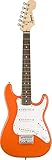
6. Squier Classic Vibe ’50s Telecaster: Best Bolt-On Electric for Big Hands
- 25.5-inch scale · pine body · maple neck
- Chunky U-shape neck profile
- Two single-coil pickups with a three-way switch
- Maple fingerboard options
Best for: players who want a longer scale and a thick, handful-of-wood neck at a mid price tier.
Skip if: you want humbuckers or a slim neck.
Pros
- Thick neck shape fits large palms
- Simple, durable bolt-on design
- Full 25.5-inch scale gives room for stretches
Cons
- Single-coils can hum
- Rounded edges are less pronounced than on premium models
The Telecaster-style Classic Vibe ’50s gives you a chunky neck on a lighter bolt-on body. Its 25.5-inch scale offers more room between frets for long fingers, and the U-shaped back of the neck gives large hands something to hold. If you are choosing between this and the Les Paul, decide whether you want the longer scale and single-coil bite of the Telecaster or the shorter scale and humbucker warmth of the Les Paul.
Also Consider
- Cordoba C5CE: the same wide neck with electronics for plugging in.
- Cordoba C7: a step up in classical build with a solid cedar top.
- Fender CD-60S: a standard dreadnought with a 1.69-inch nut, a baseline for comparison.
- Yamaha FG830: a solid-top dreadnought with a standard 43 mm nut, for players whose hands are large but not unusually thick.
Which Problem Do You Have? A Quick Matrix
| Your complaint | What to look for | Best match here |
|---|---|---|
| Fingers mute neighbouring strings | Widest nut available | Cordoba C5 or Yamaha C40 |
| Hand cramps on slim necks | Deep, rounded profile | Epiphone Les Paul Standard 50s |
| Want steel strings but need room | 1.75 to 1.8 inch nut | Seagull S6 Original or Martin 000-X2E |
| Long fingers, want more fret spacing | Full 25.5 inch scale | Squier Classic Vibe ’50s Telecaster |
| Short and thick fingers | Wide nut with shorter scale | Epiphone Les Paul Standard 50s |
Why Hand Size Isn’t One Problem
Long fingers
Players with long fingers rarely struggle with reach. Their issues are usually cramped fingertips on thin necks and fingers that collide on tight chord shapes. The answer is a wider nut, a longer or standard scale and a neck with more depth so the palm can rest naturally.
Thick fingers
Thick fingertips cover more string area and tend to mute adjacent strings. The fix is more space between strings, which means a wider nut and wider bridge spacing. Steel-string guitars rarely exceed 1.8 inches at the nut, while classical guitars reach about 2 inches. That is why a nylon-string guitar is often the single biggest comfort upgrade.
Short, thick fingers
The searches for guitars for short fat fingers describe a specific combination: you need wide spacing but not a long reach. A wide nut on a standard or slightly shorter scale is the best match. The Epiphone Les Paul Standard 50s, with its 24.75-inch scale and chunky neck, fits this profile better than a 25.5-inch Telecaster, and a 650 mm classical may feel a stretch if your fingers are also short.
Wide palms and long hand spans
A big palm benefits from neck depth. Thin D-shaped profiles can cramp the hand, whereas fuller C and U shapes support it. If you often feel your thumb pushing hard against the back of the neck, a deeper profile is the right correction.
Buying Guide: What to Check Before You Spend
Nut width thresholds
- Under 1.65 inches: narrow, best avoided for big hands.
- 1.69 to 1.75 inches: standard to slightly wide for steel-string guitars.
- 1.8 inches and up: wide steel-string territory.
- About 2 inches (52 mm): classical standard and the widest common option.
Neck profile terms
Look for descriptions such as “50s,” “U-shape,” “full C,” “chunky” or “baseball bat” if you want depth. Be wary of “slim,” “thin,” “shred” or “SlimTaper” necks. Bolt-on Fender-style necks are often thicker than Gibson-style slim-taper necks, but check the exact profile named in the spec.
Fingerboard radius
A flatter radius, such as 12 inches or more, gives thick fingertips a more even surface. Rounder radii like 7.25 inches can feel tight when chording. Check the spec for the exact radius.
String gauge and tension
Thick fingers can find light strings easier to fret but harder to separate at the fingertips. Medium-tension nylon strings and standard-gauge steel sets are usually a safe middle ground. Ask a technician about action height, which matters more than gauge for comfort.
Body size
Large hands are often paired with larger frames. A dreadnought or jumbo body gives your arm room, while small-bodied guitars can feel cramped. The Seagull S6 and Epiphone Les Paul are full-sized for that reason.
How to Check a Neck Fit Before You Buy
- Look up the nut width. Enter the exact model name with “nut width” and compare it with the thresholds above. If a spec sheet is vague, ask the retailer.
- Compare against a guitar you know. If you own an instrument, measure its nut with a ruler. Aim for at least a quarter inch more if you are looking for a wide neck.
- Check the neck depth. Maker pages often list thickness at the first and twelfth frets. Deeper than about 0.85 inches at the first fret is generally considered chunky.
- Read what reviewers say about the profile. Words like “full,” “chunky,” “handful” and “baseball bat” are positive for big hands.
- Confirm the return policy. A neck that looks right on paper can still feel wrong, so choose a seller who allows returns.
Strings, Action and Setup for Roomy Necks
Wide necks do not remove the need for a good setup. Because fingertips on a large hand press with a bigger contact area, action that is too high can still cause fatigue, while action that is too low can cause buzz when you dig in. A technician can set the action to a comfortable middle ground. Players with thick fingers often prefer slightly lighter string tension on steel guitars, such as extra-light or custom-light sets, because the wider fingertip contact area makes string bending easier even when gauges are modest.
Fingernail and fingertip care also matter. Classical guitar players with large hands often keep nails short on the fretting hand and use a gentle arch at the knuckle so the fingertip lands close to the string. That posture reduces accidental contact with adjacent strings more than any gear change can.
Fingerstyle, Strumming and Lead: How Playing Style Changes the Choice
Hand size interacts with playing style in ways that a generic recommendation misses. Fingerstyle players with large hands benefit most from a wide nut and wide bridge spacing, because the right-hand fingers also need room to pluck one string without touching its neighbour. That makes the Cordoba C5, the Yamaha C40 and the Seagull S6 particularly good fits. Strummers care more about neck depth and body size, since the fretting hand holds chord shapes for longer and a full neck reduces strain.
Lead players have a different priority. They bend and slide across the whole fretboard, so a very chunky neck can slow them down. If you play a lot of lead, the Squier Classic Vibe ’50s Telecaster, with its longer scale and slightly flatter feel, may be easier than the Les Paul 50s profile. A good compromise is to pick a full-profile neck but keep the nut width moderate, which keeps strings close enough for fast phrases.
Finally, remember that most of these guitars come in right-handed versions, and left-handed availability varies. If you play left-handed, confirm that the exact model, not just the series, is offered before you commit to a purchase.
Frequently Asked Questions
What is the best guitar for big hands?
The Cordoba C5 is the widest-necked option here, and the Seagull S6 Original is the best steel-string acoustic. For electric players, the Epiphone Les Paul Standard 50s offers a chunky neck that fills a large hand.
What are the best guitars for fat fingers?
Choose a guitar with a wide nut so strings are further apart. Classical guitars with a 52 mm nut are the roomiest, while wide steel-string necks around 1.75 to 1.8 inches are a good compromise.
What are the best guitars for short fat fingers?
Look for a wide nut paired with a standard or slightly shorter scale. The Epiphone Les Paul Standard 50s with its 24.75-inch scale and thick neck is a good example.
What is the best wide neck guitar?
Classical guitars such as the Cordoba C5 and Yamaha C40 have the widest necks. Among steel-string guitars, the Seagull S6 Original and the Martin 000-X2E are wider than average.
Are thin necks bad for big hands?
Not always, but they often feel cramped. A slim neck gives less support to a large palm and fingers can collide on tight chord shapes, so many big-handed players prefer fuller profiles.
Do big hands need a longer scale?
Not necessarily. A longer scale spaces the frets further apart, which helps long fingers stretch. Thick but short fingers may prefer a standard scale with a wide nut.
Is a classical guitar a good choice if I want to play rock or pop?
It can be a comfortable way to learn chords and finger independence, and many pop songs sound fine on nylon strings. If your goal is loud, pick-driven rock, a steel-string acoustic such as the Seagull S6 Original or an electric guitar with a chunky neck will match the style better.
Will a wider neck make chords harder to reach?
Slightly, because the fingers must cover a bigger distance across the board. For large hands the effect is small and is usually outweighed by the benefit of cleaner finger placement. If you also have short fingers, pair the wide nut with a shorter scale.
Can I get a wide neck on an electric guitar?
Yes, but options are fewer. Look for guitars with 1.69-inch or wider nuts and thicker profiles, such as the Les Paul-style 50s necks and the Telecaster U-shape. Some makers also offer wider-nut models in their custom ranges.
Which One Should You Buy?
- Widest neck overall: Cordoba C5.
- Budget wide neck: Yamaha C40.
- Best steel-string acoustic: Seagull S6 Original.
- Best acoustic-electric: Martin 000-X2E.
- Best chunky electric: Epiphone Les Paul Standard 50s.
- Best bolt-on electric: Squier Classic Vibe ’50s Telecaster.
Start with nut width. If you can only compare one dimension, make it that one, and let the neck profile and scale decide among the finalists.
Sources
- Cordoba Guitars product specifications
- Yamaha product specifications
- Seagull Guitars product pages
- Martin Guitar product specifications
- Epiphone, Fender and Squier product pages
Last updated: October 2026




Write Your Review
No reviews yet. Be the first to share your experience!