

Key takeaways
- Folk and singer-songwriter playing is mostly accompaniment, so a guitar that leaves room for your voice matters more than one that is merely loud.
- A solid top is the single biggest upgrade over a laminate top; every pick below except the Martin DX1E has one, according to maker spec sheets.
- Shorter scale lengths (23.5 to 25 inches) lower string tension by roughly 6 to 15 percent against a 25.5-inch scale, which helps long writing sessions and open-tuning experiments.
- Bluegrass and flatpicking lean toward a full-size dreadnought; fingerstyle folk leans toward a concert or auditorium body.
- If you play out, an on-board pickup is not a luxury; budget for it or pick a model that already has one.
The best guitars for folk and singer-songwriters are the ones that stay balanced under a voice: a dreadnought such as the Yamaha FG830 for strumming and flatpicking, a warm-voiced Seagull S6 Original for songs that sit low in your register, and a compact Taylor GS Mini Mahogany for writing anywhere. Below are seven picks, four more worth a look, and the reasoning that actually separates one folk guitar from another: scale length, body depth, top wood and how the guitar behaves when you add a microphone and a pickup.
Our top picks



As an Amazon Associate we earn from qualifying purchases at no extra cost to you.
Key takeaways
- Folk and singer-songwriter playing is mostly accompaniment, so a guitar that leaves room for your voice matters more than one that is merely loud.
- A solid top is the single biggest upgrade over a laminate top; every pick below except the Martin DX1E has one, according to maker spec sheets.
- Shorter scale lengths (23.5 to 25 inches) lower string tension by roughly 6 to 15 percent against a 25.5-inch scale, which helps long writing sessions and open-tuning experiments.
- Bluegrass and flatpicking lean toward a full-size dreadnought; fingerstyle folk leans toward a concert or auditorium body.
- If you play out, an on-board pickup is not a luxury; budget for it or pick a model that already has one.
Quick Comparison: Best Guitars for Folk and Singer-Songwriters
| Pick | Best for | Body | Scale length | Nut width | Top | Pickup |
|---|---|---|---|---|---|---|
| Yamaha FG830 | Strumming and flatpicking | Dreadnought | 25.6 in (650 mm) | 1.69 in (43 mm) | Solid spruce | No |
| Seagull S6 Original | Warm vocal accompaniment | Dreadnought | 25.5 in | 1.8 in | Solid cedar | No |
| Yamaha FS830 | Fingerstyle folk | Concert | 25 in (634 mm) | 1.69 in (43 mm) | Solid spruce | No |
| Taylor GS Mini Mahogany | Writing and travel | Compact | 23.5 in | 1.69 in | Solid mahogany | No |
| Epiphone J-45 Studio | Country and roots strumming | Round-shoulder dreadnought | 24.75 in | 1.69 in | Solid spruce | Yes |
| Taylor 214ce | Gigging singer-songwriters | Grand Auditorium cutaway | 25.5 in | 1.69 in | Solid Sitka spruce | Yes (ES2) |
| Martin DX1E | Rough-and-ready gigging | Dreadnought | 25.4 in | 1.75 in | HPL (laminate-style) | Yes |
Specs come from maker and retailer spec sheets; variants sold under the same name (different finishes, a newer revision) can differ slightly, so confirm the listing before you buy.
1. Yamaha FG830: Best for Strumming and Flatpicking
The FG line has been a common first serious guitar for decades, and the FG830 is the solid-top step in that family. Its scalloped bracing and dreadnought body make it a natural for strumming patterns and bluegrass-style rhythm, and the longer 25.6 in scale means the strings feel taut and lively under a pick. It is plain, durable and easy to like, which is exactly what a songwriting workhorse should be.
Yamaha FG830 · dreadnought · solid spruce top · laminated rosewood back and sides · 25.6 in scale · 1.69 in nut
- Solid spruce top with scalloped bracing, which published reviews credit for an open, projecting voice.
- Rosewood fingerboard and bridge on a nato neck.
- Gloss finish; no on-board electronics.
- Long 650 mm scale gives a firm, snappy feel under a flat pick.
Best for: anyone who writes by strumming open chords and wants a guitar that cuts through a room without electronics, including bluegrass rhythm and flatpicked melodies.
Skip if: you mainly play soft fingerstyle or have small hands; the dreadnought body and long scale can feel big.
Pros:
- A solid top at an accessible tier of the market.
- Strong low-end support under a sung melody.
- Widely used, so strings, cases and repair knowledge are easy to find.
Cons:
- No pickup, so playing out means adding one.
- Back and sides are laminated, per published reviews, so the tone is slightly less complex than an all-solid build.
2. Seagull S6 Original: Best for Warm Vocal Accompaniment
The S6 Original is a long-standing reference for players who want a solid-top dreadnought with a slightly sweeter voice than a typical spruce guitar. Because cedar responds quickly, light strumming already produces a full sound, which suits intimate rooms. The wider nut gives fingers more clearance on barre chords and arpeggio patterns. If you record at home, its natural warmth also means less EQ work to keep a vocal and a guitar from clashing.
Seagull S6 Original · dreadnought · solid cedar top · wild cherry back and sides · 25.5 in scale · 1.8 in nut
- Solid cedar top; cedar tends to sound warmer and respond faster at low volume than spruce.
- Wild cherry laminate back and sides, silver leaf maple neck, rosewood fingerboard.
- 1.8 in nut is a little wider than most competitors, which gives fingerpicking room.
- Semi-gloss finish and a 16 in fingerboard radius.
Best for: songwriters whose voice sits in a lower or mid register and who want a guitar that blends rather than competes.
Skip if: you need a built-in pickup or a very bright, chiming flatpicking tone.
Pros:
- Warm, close-sounding midrange that suits accompaniment.
- Wider nut and tidy neck for chord changes and fingerstyle.
- Distinctive build that holds up well in published reviews.
Cons:
- Cedar tops can feel a touch less punchy when you dig in hard.
- The plug-in version is a separate listing, so check the model before ordering.
3. Yamaha FS830: Best for Fingerstyle Folk
Concert-size bodies suit the way many songwriters actually play: seated, fingerpicking patterns under a melody. The FS830 trims about an inch off the scale of the FG830 and sits more comfortably on the knee. The result is a sweeter, more intimate voice that does not try to fill a hall, which is often exactly what a vocal needs.
Yamaha FS830 · concert body · solid spruce top · rosewood back and sides · 25 in scale · 1.69 in nut
- Smaller concert body (about 497 mm long) with a comfortable shallow depth.
- 634 mm scale, shorter than the FG830, so the strings feel looser.
- Solid spruce top with scalloped bracing; urea nut and saddle.
- No on-board electronics.
Best for: fingerstyle and clawhammer-leaning players who sit down to write and want the guitar to be easy on the picking arm.
Skip if: you flatpick hard in a loud jam; the smaller body has less bass and volume headroom.
Pros:
- Comfortable for long sessions, especially seated.
- Balanced sound between voice-friendly mids and clear trebles.
- Shares the dependable Yamaha build quality of its dreadnought sibling.
Cons:
- Less low-end volume than a dreadnought.
- No pickup; you will need to add one for stage use.
4. Taylor GS Mini Mahogany: Best for Writing Anywhere
A guitar you actually pick up gets more songs written. The GS Mini is small enough to sit on a sofa arm or fit in an overhead bin, yet its solid mahogany top produces a focused, woody tone that records well. Players who tune down a step or use a capo high on the neck often prefer it because the lower tension reduces fretting effort. Think of it as a writing and travel guitar first, and a stage guitar second unless you choose the electric version.
Taylor GS Mini Mahogany · compact body · solid mahogany top · layered sapele back and sides · 23.5 in scale · 1.69 in nut
- Solid mahogany top with layered sapele back and sides, per Taylor’s spec.
- Shortest scale on this list at 23.5 in, with an ebony fingerboard and 20 frets.
- Includes a structured gig bag.
- The e-suffix version adds electronics; check the listing for which one you are viewing.
Best for: songwriters who write on the couch, on the road or on the porch, and who like capoed or open-tuned ideas that benefit from lower tension.
Skip if: you want a full, room-filling dreadnought low end.
Pros:
- Light, easy to carry, and surprisingly resonant for its size.
- Low tension is friendly to tired fingers and detuned writing.
- A warm mahogany voice that sits well with vocals.
Cons:
- Not a full replacement for a big guitar on a loud stage.
- Compact fret spacing can feel tight to players with large hands.
5. Epiphone J-45 Studio: Best for Country and Roots Strumming
The appeal of a round-shoulder dreadnought is its mid-heavy, compressed response, which tends to make strummed chords sound complete without much low-end rumble. That makes it a good partner for a singing voice, particularly in country and roots arrangements where the guitar is the main instrument. On the Studio version, the plug-in system means you can walk into a venue without extra gear. Because Epiphone has revised the Studio line, confirm the scale length and electronics on the exact listing.
Epiphone J-45 Studio · round-shoulder dreadnought · solid spruce top · layered mahogany back and sides · 24.75 in scale · 1.69 in nut
- Round-shoulder dreadnought shape associated with country, folk and roots music.
- Solid spruce top; layered mahogany back and sides, per the maker.
- Shorter 24.75 in scale than most dreadnoughts; Fishman S-Core under-saddle pickup and Presys preamp on the plug-in version, per the maker.
- Gig bag included on the listing shown.
Best for: players who want a woody, mid-focused strummer that can plug in without a second purchase.
Skip if: you want the extended low end of a rosewood guitar.
Pros:
- Plug-and-play for open mics and small stages.
- Shorter scale softens string feel.
- Classic look that suits the music.
Cons:
- Older and newer Studio versions differ in scale and neck profile, so verify the listing.
- Layered back and sides rather than all-solid wood.
6. Taylor 214ce: Best for Gigging Singer-Songwriters
The Grand Auditorium shape is Taylor’s all-rounder: bigger than a concert body, less bulky than a dreadnought. For a working songwriter, that means one guitar can cover a quiet duo set and a full-band rhythm slot. The Expression System 2 pickup is positioned behind the saddle, and the onboard controls give quick volume and tone changes between songs. Treat this as the pick for people who play out regularly and want to stop thinking about gear.
Taylor 214ce · Grand Auditorium cutaway · solid Sitka spruce top · layered rosewood back and sides · 25.5 in scale · 1.69 in nut
- Grand Auditorium body is the all-rounder shape, balanced for both strumming and fingerpicking.
- Expression System 2 pickup (behind-the-saddle piezo) is built in.
- Ebony fingerboard, Venetian cutaway, and a structured gig bag.
- Check the wood listed on your version; Taylor also sells 214ce variants with different back and sides.
Best for: working musicians who need one guitar that records, plays live and travels.
Skip if: you only play at home and want to spend less; the plug-in system is the reason for the higher tier.
Pros:
- Even, vocal-friendly voicing across the strings.
- Cutaway and low action for lead lines and capoed upper-fret work.
- Stage-ready electronics out of the box.
Cons:
- Higher price tier within this list.
- Layered back and sides keep it from the full all-solid voice.
7. Martin DX1E: Best for Rough-and-Ready Gigging
Laminate does not carry the same prestige as solid wood, but it has a practical side: it is stable. A guitar that lives in a car, a rehearsal room and a bar needs to survive temperature swings without the top cracking or the action moving. The X Series is Martin’s answer to that problem, and it keeps the familiar dreadnought dimensions and a slightly wider 1.75 in nut for comfortable chording.
Martin DX1E · dreadnought · HPL top, back and sides · 25.4 in scale · 1.75 in nut · Fishman MX pickup
- High-pressure laminate construction on top, back and sides, with a spruce-pattern finish.
- Rust birch laminate neck and a Richlite fingerboard, per Martin’s X Series spec.
- Fishman MX electronics on most listings; Martin’s own E1 on others.
- Resists humidity swings that can crack thin solid tops.
Best for: players who commute, play outdoors or share a guitar between venues and cannot babysit it.
Skip if: you want the voice and ageing of a solid-wood top.
Pros:
- Tough, climate-resilient construction.
- Plug in and go.
- Reliable dreadnought projection for the cost.
Cons:
- Laminate tone is less open than a solid top.
- Does not improve with age the way solid spruce tends to.
Best Acoustic Guitars for Country, Bluegrass and Flatpicking: What Each Style Asks For
Folk is a broad word, and the guitar that suits a quiet coffeehouse set is not always the one for a bluegrass jam. Here is how the sub-styles change the shopping list.
- Country and roots strumming: a boxy, mid-forward dreadnought with a round shoulder or a classic square shoulder. You want a strong fundamental on the bass strings for boom-chuck patterns. The Epiphone J-45 Studio and Yamaha FG830 are the natural fits.
- Bluegrass: volume and note separation matter most because the guitar competes with banjo and fiddle. A full-size spruce-top dreadnought, a 25.5 in scale for string snap, and a medium-light string set are the traditional recipe.
- Flatpicking: the same dreadnought logic, plus a fingerboard that lets you play clean fast runs. Check that the action can be set low without buzzing; a shorter scale such as the J-45’s 24.75 in makes bends and slurs easier.
- Fingerstyle folk and Celtic-leaning writing: a concert or auditorium body, a comfortable nut width, and a sensitive top so quiet notes speak. The FS830 and Seagull S6 Original fit here.
- Intimate singer-songwriter sets: a guitar that records easily with one microphone and stays out of the vocal’s frequency range. Cedar and mahogany tops, along with smaller bodies, usually leave more midrange space for the voice.
The takeaway is that the same wood and shape choices that make a guitar loud also make it dominant under a voice. If the audience is mostly listening to words, a slightly softer guitar is often the better partner.
Decision Matrix: Match Your Situation to a Guitar
| Your situation | Priority | Look at |
|---|---|---|
| Weekly open mic, one guitar for everything | Built-in pickup, balanced voice | Taylor 214ce, Epiphone J-45 Studio |
| Writing at home, mostly seated | Comfort, low tension | Taylor GS Mini Mahogany, Yamaha FS830 |
| Weekend bluegrass jams | Volume, snap, 25.5 in scale | Yamaha FG830, Martin DX1E |
| Low, warm singing voice | Mid-range warmth | Seagull S6 Original, Taylor GS Mini Mahogany |
| Dry climate, travel by car or plane | Durability | Martin DX1E, Taylor GS Mini Mahogany (gig bag included) |
Also Consider
- Gretsch Jim Dandy Parlor: parlor body · short scale · vintage look. A character piece for blues-leaning folk and slide, and a fun second guitar.
- Fender CD-60S: dreadnought · solid top · all-mahogany body. A friendly neck and a sound starter for songwriters who want to move up from a student guitar.
- Washburn Harvest G7S: Grand Auditorium · solid spruce top · mahogany back and sides. Aimed at players who like a mid-sized body that handles both strumming and picking.
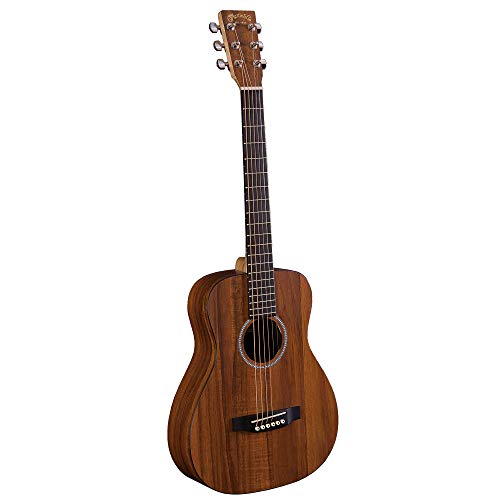
- Little Martin LX1E: travel body · solid Sitka spruce top · pickup. A compact Martin suited to quick demos, plane trips and songwriting on the move.
Week-One Setup: Make Any of These Sound and Play Better
Even a good folk guitar benefits from a short setup routine. These steps cost little and make a large difference in feel.
- Fit fresh strings suited to the guitar. Light-gauge sets (12-53) are the common starting point for dreadnoughts; extra-light sets (10-47) ease the strain on smaller bodies or if you play for long periods.
- Check the action at the 12th fret. Many players aim for around 2 to 2.5 mm on the bass side and 1.5 to 2 mm on the treble side as a rule-of-thumb target; a luthier or shop can adjust the saddle or neck relief to suit.
- Add a humidifier in dry months. Martin and Taylor care guidance both point to a humidity band of 40 to 50 percent, and solid-top guitars are the most exposed.
- Choose a capo that suits the neck radius. Songwriters use capos constantly, and a poor fit causes tuning drift and buzzing.
- Record a quick take before buying a pickup. Put your phone a foot from the 12th fret and listen back; it reveals whether the guitar’s tone sits well under your voice before you spend on electronics.
How We Chose
This list is built from research, not from handling the instruments. We compared maker spec sheets from Yamaha, Seagull, Taylor, Epiphone and Martin, retailer listings, and published player and magazine reviews. We prioritised guitars that fit the usual song-driven workflow: accompanying a voice, switching between strumming and picking, and travelling to a gig. Every guitar had to have a solid top or a clear reason to be on the list (the Martin DX1E is included for durability). We limited each brand to two picks and left out kit bundles, renewed instruments and off-brand copies whose specs we could not verify.
Buying Guide: Choosing a Folk or Singer-Songwriter Guitar
Match the body to how you play
A dreadnought is the traditional strummer: deep body, lots of bass, and enough volume to cover a band or a loud room. A concert or auditorium body leaves more midrange space for a voice and is easier on the right arm. If you flatpick bluegrass leads, choose a dreadnought with a 25.5 in scale; if you fingerpick most of the time, a concert or compact guitar is usually kinder.
Do the scale-length math
String tension at the same pitch is proportional to the square of the scale length. A 24.75 in scale against a 25.5 in scale is a ratio of 0.97, and 0.97 squared is about 0.94, so tension drops roughly 6 percent. A 23.5 in scale is a ratio of 0.92, squared 0.85, a drop of about 15 percent. That is why the Taylor GS Mini feels easy for bends, capos and open tunings.
Pick the top wood for your voice
Spruce is the bright, dynamic default and a good fit for strong flatpicking. Cedar and mahogany tops are warmer and quicker, which many songwriters prefer under a low or breathy voice. As a rule, a solid top beats a laminate top at the same price tier; maker and shop guidance both note that solid tops develop and improve with age.
Think about the nut width
A 1.69 in nut (43 mm) suits fretting chords and hybrid picking in most hands. Go to 1.75 in or 1.8 in if you fingerpick a lot and prefer wider string spacing; go narrower than 1.69 in only if you have small hands.
Plan the amplification
If you are going to play open mics, pay for a pickup now: the Epiphone J-45 Studio, Taylor 214ce and Martin DX1E arrive with one. For the others, a soundhole or under-saddle pickup is an easy add-on, usually at a lower total cost than buying a second guitar.
Mind the climate
Solid wood is sensitive to dryness. Maker care guidance from Martin and Taylor recommends keeping an acoustic at roughly 40 to 50 percent relative humidity, using a case humidifier in dry months. If you cannot do that, a laminate guitar such as the Martin DX1E may be the lower-stress choice.
Left-handed players
Left-handed versions exist for several of these lines (Fender and Epiphone, among others) but availability varies, so check the listing before you commit.
Frequently Asked Questions
What is the best acoustic guitar for a singer-songwriter?
For most people, a Grand Auditorium or dreadnought with a solid spruce top is the safest answer, which is why the Taylor 214ce and Yamaha FG830 anchor this list. Choose the one that matches your budget and whether you need a built-in pickup.
What are the best folk guitars for fingerstyle?
The Yamaha FS830 and Taylor GS Mini Mahogany stand out on this list, thanks to their smaller bodies and shorter scale lengths. The Seagull S6 Original’s wider nut also helps pattern-heavy picking.
Which guitar is best for bluegrass and flatpicking?
A full-size dreadnought with a spruce top and a 25.5 in scale, such as the Yamaha FG830 or Martin DX1E, offers the punch and string response flatpickers want. Bluegrass rhythm playing in particular benefits from the extra bass.
What is a good acoustic guitar for country music?
A round-shoulder dreadnought like the Epiphone J-45 Studio gives the boxy, strummy character associated with country and roots music, and it plugs in for gigs.
Do I need a cutaway?
Only if you play above the 12th fret regularly. For chord-and-voice folk, it is not essential, and a non-cutaway guitar generally keeps slightly more top area vibrating.
Are laminate guitars bad for folk music?
Not at all; they are durable and consistent, which is why many touring players use them. A solid top is better for tone and longevity, but a laminate guitar is a sensible choice where climate or abuse is a concern.
Should I buy a smaller guitar for songwriting?
If comfort keeps you playing, yes. Smaller bodies and shorter scales lower the barrier to picking up the guitar and writing, though you will give up some low-end volume.
Which One Should You Buy?
- Strummer who wants the safe choice: Yamaha FG830.
- Low or soft voice, warm tone: Seagull S6 Original.
- Fingerstyle at home: Yamaha FS830.
- Travel and write anywhere: Taylor GS Mini Mahogany.
- Country and roots, plug in: Epiphone J-45 Studio.
- Working gigs, studio and stage: Taylor 214ce.
- Climate worries or rough use: Martin DX1E.
Sources
Yamaha acoustic guitar specifications, Seagull Guitars (Godin) S6 specifications, Taylor Guitars GS Mini and 200 Series spec pages, Epiphone J-45 Studio collection specifications, Martin Guitar X Series specifications, Martin and Taylor guitar care guidance, and published retailer and magazine reviews.
Last updated: October 2026




Write Your Review
No reviews yet. Be the first to share your experience!