

Key takeaways
- SSS (three single-coils) gives the classic chime and spank; HSS adds a bridge humbucker for thicker rock and hard-blues tones.
- Squier Classic Vibe and Fender Player II both use alnico pickups; the entry-level Squier and Ibanez models use ceramic magnets, per the makers’ spec sheets.
- A 2-point synchronized tremolo suits gentle vibrato; if you never use the bar, you can block it for tuning stability.
- Neck radius matters: 9.5 inch is vintage-curved, while the Yamaha Pacifica models run a flatter 13.75 inch radius that suits bending.
- Spend on neck feel and fretwork first; pickups are cheap to swap later.
The best Strat style guitars for most players are the Squier Classic Vibe 60s Stratocaster for vintage chime on a mid-tier budget and the Fender Player II Stratocaster when you want the real brand with a refined bridge and neck. On a tighter budget the Squier Affinity Series Stratocaster HSS, the Yamaha Pacifica 112V and the Ibanez AZES40 each offer something extra, such as a humbucker, a coil tap or a flatter fretboard. All of them share the same bolt-on neck, 25.5 inch scale (25 inches on the Ibanez) and contoured body that made the design famous.
A Strat is less a single sound than a toolkit. The five-way pickup switch, two tone knobs and tremolo bridge give you glassy cleans, spiky “quack” positions, bluesy drive and gentle vibrato from one guitar. This guide sorts the field by pickup layout, bridge type and neck feel, so you can match the guitar to the music you actually play.
Our top picks


As an Amazon Associate we earn from qualifying purchases at no extra cost to you.
Key takeaways
- SSS (three single-coils) gives the classic chime and spank; HSS adds a bridge humbucker for thicker rock and hard-blues tones.
- Squier Classic Vibe and Fender Player II both use alnico pickups; the entry-level Squier and Ibanez models use ceramic magnets, per the makers’ spec sheets.
- A 2-point synchronized tremolo suits gentle vibrato; if you never use the bar, you can block it for tuning stability.
- Neck radius matters: 9.5 inch is vintage-curved, while the Yamaha Pacifica models run a flatter 13.75 inch radius that suits bending.
- Spend on neck feel and fretwork first; pickups are cheap to swap later.
Quick comparison: best Strat style guitars at a glance
| Guitar | Best for | Pickups | Scale | Fretboard radius | Frets | Budget tier |
|---|---|---|---|---|---|---|
| Squier Affinity Series Stratocaster HSS | First serious Strat | Ceramic HSS | 25.5 in | 9.5 in | 21 | Entry |
| Yamaha Pacifica 112V | Value and coil split | Alnico V HSS | 25.5 in | 13.75 in | 22 | Entry to lower-mid |
| Ibanez AZES40 | Modern feel, many tones | Ceramic HSS with Alter switch | 25 in | 9.84 in | 22 | Entry to lower-mid |
| Squier Classic Vibe 60s Stratocaster | Vintage chime | Alnico SSS | 25.5 in | 9.5 in | 21 | Mid |
| Fender Player II Stratocaster | All-round gigging | Alnico V SSS | 25.5 in | 9.5 in | 22 | Upper-mid |
| Fender Player II Stratocaster HSS | Rock-leaning Strat | Alnico II humbucker + Alnico V singles | 25.5 in | 9.5 in | 22 | Upper-mid |
| Yamaha Pacifica 612VIIX | Upgraded pickups and tuners | Seymour Duncan HSS | 25.5 in | 13.75 in | 22 | Upper-mid |
What makes a guitar a Strat style guitar
The defining traits are a double-cutaway contoured body, a bolt-on maple neck, a 25.5 inch scale, a pickguard-mounted pickup trio and a vibrato bridge. The offset body curves comfortably against your ribs and forearm, and the bolt-on neck gives a bright, springy attack compared with a glued-in single-cut. Bodies are usually alder, poplar or a similar medium-weight wood; the maker spec sheet will tell you which.
The guitars below keep those traits and vary the details: humbucker or no humbucker, ceramic or alnico magnets, shallow or flat radius, simple or upgraded hardware. That is where you find the real differences in sound and playability.
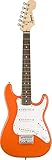
1. Squier Affinity Series Stratocaster HSS: Best entry-level Strat with a humbucker
- 25.5 inch scale · slim C-shaped maple neck · Indian laurel fingerboard, 9.5 inch radius
- 21 medium jumbo frets · synthetic bone nut
- Ceramic humbucker at the bridge, ceramic single-coils in neck and middle · 5-way switch
- Poplar body (some listings differ) · 2-point synchronized tremolo · sealed die-cast tuners
Best for: new players who want the classic look plus a thicker bridge pickup for rock and pop-punk.
Skip if: you want alnico-style single-coil sparkle, which the Classic Vibe offers.
Pros
- HSS layout covers both chime and crunch in one guitar
- Slim neck is comfortable for smaller hands
- Lightweight body is easy to hold through long practice sessions
- Entry-level pricing for a familiar, well-supported platform
Cons
- Ceramic pickups sound brighter and harder than alnico
- Body wood and fingerboard type can vary by production year or colour
2. Yamaha Pacifica 112V: Best value for coil-split flexibility
- 25.5 inch scale · bolt-on maple neck, C shape · rosewood fingerboard, 13.75 inch radius
- 22 medium frets · 1.614 inch nut width
- Two Alnico V single-coils plus an Alnico V bridge humbucker · master tone with push-pull coil tap
- Alder body · vintage-style tremolo with block saddles
Best for: players who want more tonal range than a standard HSS Strat and a flatter fretboard for string bending.
Skip if: you prefer a thick vintage neck or a very curved fretboard.
Pros
- Alder body and alnico pickups at a lower-tier budget
- Coil tap on the bridge humbucker adds a Strat-like single-coil voice
- Flatter 13.75 inch radius makes bends and fast lead lines easier
- Well-regarded factory setups are mentioned in many published reviews
Cons
- The body outline is slightly different from a classic Strat, which purists may notice
- Stock tremolo is serviceable rather than stable under heavy dive-bomb use
3. Ibanez AZES40: Best for modern feel and extra pickup combinations
- 25 inch (635 mm) scale · bolt-on maple neck · jatoba fingerboard, 250 mm (about 9.84 inch) radius
- 22 medium frets · 42 mm nut
- Essentials single-coils at neck and middle, Accord humbucker at the bridge · all ceramic
- Poplar body · T106 tremolo with round steel saddles · 5-way switch plus an Alter switch
Best for: players who like the Strat shape but want a lower-tension feel and a few extra tones from the Alter switch.
Skip if: you want a true 25.5 inch scale with full vintage string tension.
Pros
- Slightly shorter scale makes bending feel a touch easier
- Alter switch gives nine pickup combinations, per Ibanez
- Comfortable modern neck shape
- Strong entry-tier choice for players moving beyond a first guitar
Cons
- Ceramic pickups are less sweet than alnico
- Shorter scale means slightly less snap in the “quack” positions
4. Squier Classic Vibe 60s Stratocaster: Best for vintage chime
- 25.5 inch scale · maple neck, slim C profile · Indian laurel fingerboard, 9.5 inch radius
- 21 narrow-tall frets · bone nut, 1.650 inch (42 mm) width
- Three Fender-designed alnico single-coil pickups · 5-way switch · vintage-style tremolo
- Gloss urethane finish · body wood is listed as nato on current builds, alder on older ones
Best for: blues, surf, indie and classic rock players who want a vintage-voiced single-coil Strat without a premium price.
Skip if: you need a humbucker for high-gain music.
Pros
- Alnico single-coils sound open and dynamic in the in-between positions
- Bone nut helps tuning and sustain
- Classic proportions and finishes appeal to vintage fans
- Popular platform for pickup and hardware upgrades
Cons
- Narrow-tall frets feel different from the jumbo frets on other models
- Standard single-coils pick up some hum in noisy rooms
5. Fender Player II Stratocaster: Best all-round gigging Strat
- 25.5 inch scale · Modern C maple neck with satin back · maple or rosewood fingerboard, 9.5 inch radius
- 22 medium jumbo frets · rolled fingerboard edges
- Player Series Alnico V single-coil pickups · 5-way switch
- Contoured alder body (chambered ash and mahogany versions exist) · 2-point synchronized tremolo · ClassicGear tuners
Best for: working guitarists and serious hobbyists who want the genuine Fender build with modern playability.
Skip if: you only need a practice guitar or an inexpensive first instrument.
Pros
- 22 frets and rolled edges feel finished and comfortable
- Alnico V pickups give classic Strat voicing
- Made in Mexico, with solid parts availability
- Strong resale and upgrade support
Cons
- Upper-mid pricing compared with Squier alternatives
- Stock tuners and saddles are reliable but not premium
6. Fender Player II Stratocaster HSS: Best Strat for rock-leaning players
- 25.5 inch scale · maple or rosewood fingerboard, 9.5 inch radius · 22 medium jumbo frets · 42 mm nut
- Player Series Alnico II humbucker at the bridge, Alnico V single-coils in neck and middle
- Contoured alder body (other woods available) · 2-point synchronized tremolo · ClassicGear tuners
Best for: players who want Strat feel with a fuller bridge sound for rock, classic metal or gain-heavy lead tones.
Skip if: you want a coil split, which per the maker spec list belongs to the Modified series instead of this standard HSS.
Pros
- Humbucker in the bridge gives noise-free drive
- Single-coils retain the classic neck and middle voices
- Same neck, frets and hardware as the standard Player II
- Good fit for one-guitar gigging
Cons
- No coil split on the standard model
- Costs more than the SSS version for an extra pickup type
7. Yamaha Pacifica 612VIIX: Best with upgraded pickups and tuners
- 25.5 inch scale · bolt-on maple neck · rosewood fingerboard, 13.75 inch (350 mm) radius
- 22 medium frets · Graph Tech TUSQ nut and string trees
- Seymour Duncan SSL-1 neck and middle single-coils, Seymour Duncan Custom 5 TB-14 bridge humbucker · push-pull coil split
- Alder body · Wilkinson VS50 vibrato · Grover locking tuners
Best for: players who would otherwise buy a mid-tier Strat and immediately upgrade pickups and tuners.
Skip if: you want an exact vintage Strat body outline.
Pros
- Brand-name pickups and locking tuners are included from the factory
- Flat radius supports big bends
- Coil split offers more variety
- Strings stay in tune well thanks to the nut and tuner quality
Cons
- Priced at the upper end of the Pacifica line
- Flatter radius may feel less familiar to players raised on vintage Strats
Also consider
- Squier Sonic Stratocaster: 25.5 inch scale · poplar body · maple or laurel fingerboard, 9.5 inch radius · 21 frets · three ceramic single-coils · 2-point tremolo (HT and HSS versions also exist). A very low-cost starter.
- Sterling by Music Man Sub Cutlass HSS: 25.5 inch scale · hard maple bolt-on neck with 12 inch radius · 22 frets · one alnico humbucker and two alnico single-coils · Fulcrum tremolo. A modern take on the Strat layout; sources differ on poplar or jabon body wood.
- Donner DST-152B: 25.5 inch scale · poplar body · maple fingerboard · 22 frets · HSS with push-pull coil split · tremolo. A kit-style starter with an amp and accessories for those buying their first guitar.
- Squier Debut Stratocaster: a basic, lighter-spec starter model for children and new adults who want the shape at the smallest outlay.
How We Chose
This is a research-based list: we did not personally use the products. We read maker spec sheets, retailer listings and published reviews to identify which Strat style guitars offer a clear step up at each budget tier. Each pick had to be a currently listed, full-size, bolt-on-neck guitar with a Strat-inspired body and three pickup positions or an HSS equivalent.
We spread the picks across entry, mid and upper-mid tiers, limited each brand to two main entries, and avoided quoting prices because they change often. Where retailers disagree about body wood or fingerboard, we say so and recommend you confirm the exact variant before buying.
Strat pickup switch positions and the tones they give
| Position | Pickups | Character | Good for |
|---|---|---|---|
| 1 | Bridge | Bright, cutting, edgy | Country twang, lead lines |
| 2 | Bridge + middle | Hollow, glassy “quack” | Funk, clean rhythm |
| 3 | Middle | Round, clear, mellow | Soft rhythm, arpeggios |
| 4 | Middle + neck | Smooth, bell-like | Blues, soul, jangle |
| 5 | Neck | Warm, thick, singing | Slow blues, solos |
On an HSS guitar, position 1 swaps the bright single-coil for a humbucker, giving a fatter, louder bridge sound with less hum. On guitars with coil taps, such as the Yamaha Pacifica 112V, the push-pull control brings back a more single-coil flavour from that humbucker.
Buying guide: choosing a Strat style guitar by pickups, bridge and neck
SSS versus HSS layouts
An SSS guitar is the purist choice: three single-coils for sparkle and clarity, with some mains hum in noisy rooms. An HSS guitar swaps the bridge pickup for a humbucker, which is quieter and thicker. If most of your music is blues, indie, funk or clean rock, SSS is the better fit. If you play louder rock, punk or classic metal, HSS handles gain with less noise.
Ceramic versus alnico pickups
Ceramic magnets are cheaper and give a brighter, more compressed sound. Alnico magnets sound sweeter and respond more subtly to pick attack. Entry-tier guitars like the Squier Affinity and Ibanez AZES40 use ceramic pickups; the Classic Vibe, Pacifica and Player II models use alnico types. If you plan to upgrade later, the pickup swap is among the easiest ways to move up a tier.
Tremolo type
A 2-point synchronized tremolo floats slightly and returns to pitch after small vibrato moves. A hardtail bridge is fixed and holds tuning better. Many players leave the bar off or add a spring-tension block for stability. If you want light vibrato for blues and surf, a standard 2-point tremolo is ideal; if you want dive bombs, a Strat style guitar with a locking tremolo is a different category.
Neck radius and nut width
A 9.5 inch radius is a vintage-curved shape that feels natural for chords. A 12 inch radius is a compromise, and a 13.75 inch radius flattens the fingerboard for bends and lead work. Nut width on these models sits around 42 mm (1.65 inches), which is comfortable for most hands. Satin-finished necks feel faster to many players than gloss.
Body wood and weight
Alder bodies are the classic balanced choice and appear on the Player II and Pacifica models. Poplar and nato are lighter, lower-cost alternatives. Published weights for these guitars run roughly 7.5 to 8.5 pounds, though individual instruments vary. A lighter guitar is easier on the shoulder during long sets.
Scale length and string feel
Most Strat style guitars use a 25.5 inch scale, which gives a snappy attack and a firm string feel. The Ibanez AZES40 uses a 25 inch scale, a half-inch shorter, so the same string gauge feels slightly looser and bends take a little less effort. If you tune down a half step for singing comfort, or you have small hands, that difference is noticeable. If you like crisp chords and a tight low end, stay with 25.5 inches and consider a slightly heavier set such as 10 to 46.
Frets and playability
Narrow-tall frets feel vintage and precise, while medium jumbo frets are easier for bends. A guitar with 22 frets gives one extra fret of range, which matters for lead players who like to reach the higher notes.
Budget thresholds
Entry-tier Strat guitars often use ceramic pickups, a poplar body and a basic tremolo. Mid-tier models add alnico pickups, better tuners and bone nuts. Upper-mid models add improved hardware, refined necks and brand-name pickups. If you can reach the mid-tier, you usually skip the first round of upgrades you would otherwise want.
Setting up a new Strat
Take a few minutes to adjust the tremolo springs so the bridge sits flush with the body or slightly raised, check the intonation at the twelfth fret and set the pickup heights so the strings do not magnetically choke. These steps cost little but make a noticeable difference to tone and tuning.
Matching a Strat style guitar to your music
Blues and soul players usually gravitate to the Squier Classic Vibe 60s Stratocaster or the Fender Player II Stratocaster, because the alnico single-coils respond to picking dynamics and the neck-and-middle position gives the smooth, bell-like voice associated with the style. Country and pop players lean on the bridge and bridge-plus-middle positions for twang and snap, which the SSS guitars deliver most clearly. Rock, pop-punk and alternative players tend to prefer an HSS guitar such as the Squier Affinity HSS, the Pacifica 112V or the Player II HSS, since a bridge humbucker pushes an overdriven amp harder without the buzz of a single-coil.
If you play several styles in one week, the Yamaha Pacifica 612VIIX and the Ibanez AZES40 are the most flexible, because their switching options give you more tones from the same body. If you do session or studio work, quieter pickups matter more, so a humbucker or noiseless design can save time in editing.
What wears first, and common upgrades
- Strings and nut: strings need replacing every few weeks of regular playing, and a poorly cut nut is the usual cause of tuning drift after bends. A graphite or bone nut helps.
- Tremolo springs and saddles: springs can stretch over time, and a bar that sits too high or low is usually a spring-tension setting rather than a fault.
- Pots and switches: the five-way switch and tone pots can get scratchy in dusty or humid environments; contact cleaner usually solves it.
- Tuners: sealed die-cast tuners are fine for most players, while locking tuners speed up string changes.
- Pickups: the most common upgrade for entry-tier ceramic sets, swapping to an alnico set or a noiseless set changes the character more than any other single part.
As a rule of thumb, buy the guitar whose neck and body you love. Electronics and hardware are replaceable; neck shape, fret quality and body balance are not.
Which one should you buy?
- Tightest budget: Squier Affinity Series Stratocaster HSS, or the Squier Sonic in the also-consider list.
- Best bends and flexible pickups: Yamaha Pacifica 112V.
- Modern feel and many pickup combinations: Ibanez AZES40.
- Vintage sound: Squier Classic Vibe 60s Stratocaster.
- One guitar for everything: Fender Player II Stratocaster.
- Rock-leaning gigging: Fender Player II Stratocaster HSS or Yamaha Pacifica 612VIIX.
Frequently Asked Questions
What is the best Strat style guitar for beginners?
The Squier Affinity Series Stratocaster HSS and the Yamaha Pacifica 112V are strong beginner choices. Both offer playable necks and pickup flexibility at an entry-level tier.
Is a Squier Stratocaster as good as a Fender?
A Squier Classic Vibe offers much of the vintage Strat sound at a lower price tier, while a Fender Player II adds more refined hardware, a Mexican build and higher resale value. Which is better depends on your budget and gigging needs.
Should I choose SSS or HSS?
SSS suits clean, funk, blues and indie playing. HSS is better for rock and heavier music because the humbucker is quieter and thicker. A coil-split HSS gives you both in one guitar.
Do I need a Strat with a tremolo?
Not necessarily. The vibrato bar is optional, and many players rarely use it. If tuning stability matters most, choose a hardtail version or block the tremolo.
Are 22 frets better than 21?
It is a small difference. The extra fret gives one more note on the high E string and a slightly different upper-fret feel, but most players rarely use that range.
What strings come with these guitars?
Most ship with light gauge strings, around 9 to 42. Some makers state this on the spec sheet; the Yamaha Pacifica 612VIIX, for example, is listed with a 0.009 to 0.042 set.
How do I choose between a Squier and a Yamaha Pacifica?
Choose a Squier if you want the authentic Fender body outline and headstock shape, and a Pacifica if you want a flatter radius, coil-tap options and alnico pickups at a similar tier. Both are respected as starting platforms, and both take upgrades well.
Can a Strat style guitar play metal?
Yes, especially in HSS form. A bridge humbucker handles high gain with far less noise than a single-coil, and a flatter radius such as the Pacifica’s 13.75 inches helps with fast legato and bends.
Are left-handed models available?
Some of these models have left-handed versions from the makers, but finishes and stock vary. Check the retailer listing.
Sources
Fender and Squier product pages; Yamaha product pages; Ibanez product pages; Sterling by Music Man product pages; Guitar World; Guitar.com; retailer specification listings.
Last updated: October 2026




Write Your Review
No reviews yet. Be the first to share your experience!